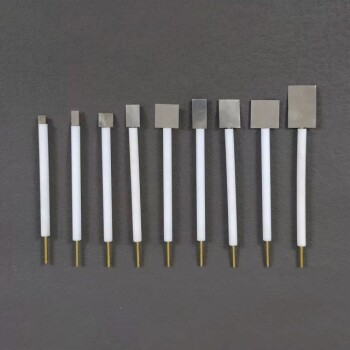
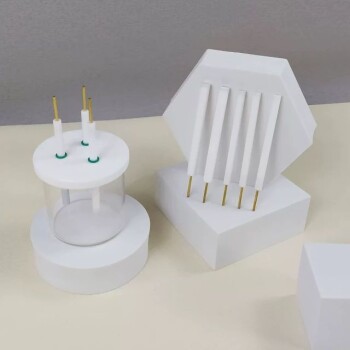
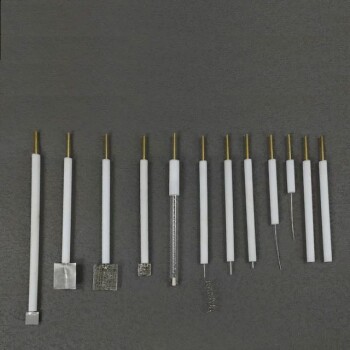
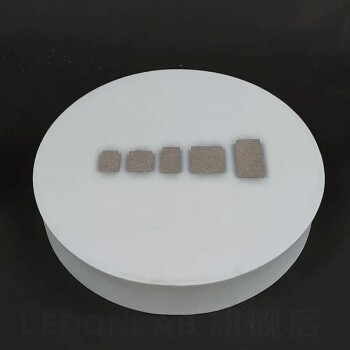
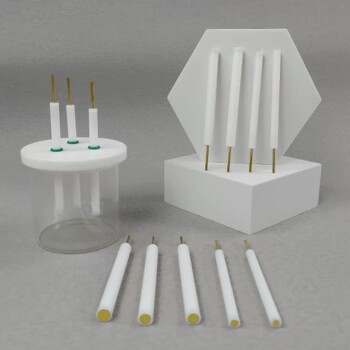
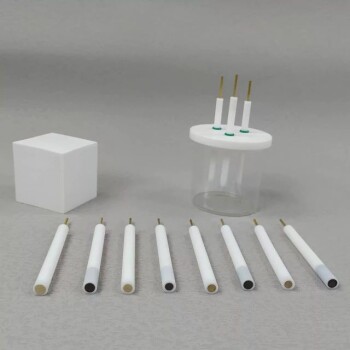
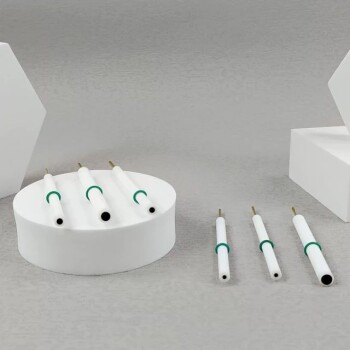
Platinum (Pt) sheets are the premier choice for auxiliary electrodes due to a combination of superior chemical inertness and excellent electrical conductivity. By selecting a platinum sheet, you ensure the electrode completes the electrical circuit efficiently without participating in the reaction itself, guaranteeing that the test results isolate the corrosion behavior of the sample rather than artifacts from the test equipment.
The auxiliary electrode serves as a medium for current transfer, not a participant in the chemical reaction. Platinum is selected because it provides a stable, non-reactive surface that facilitates electron flow without dissolving or contaminating the electrolyte, ensuring the accuracy of corrosion kinetic measurements.
The Core Technical Requirements
To understand why platinum is the standard, one must understand the role of the auxiliary (counter) electrode. It acts as the "source" or "sink" for electrons required by the working electrode (your sample).
Unwavering Chemical Inertness
The primary reference highlights that platinum does not participate in oxidation-reduction (redox) reactions during testing.
It remains thermodynamically stable across a very wide potential range. This ensures the electrode does not corrode or dissolve, which is critical for long-term test stability.
High Electrical Conductivity
Platinum is an excellent conductor. This property allows it to facilitate electron transfer with minimal resistance.
Low resistance is essential for maintaining the necessary current flow in the circuit, particularly when testing highly resistive electrolytes or samples.
Impact on Data Accuracy
The physical properties of the platinum sheet directly influence the quality of the polarization curves generated during the experiment.
Prevention of Electrolyte Contamination
Because platinum is inert, it does not release impurity ions into the solution.
As noted in the supplementary references, materials that dissolve can alter the chemistry of the electrolyte (e.g., a 3% NaCl or acidic solution). Preventing this contamination ensures the corrosive environment remains constant throughout the test.
Accurate Current Measurement
The auxiliary electrode must support the current demands of the working electrode without limiting the reaction.
If the auxiliary electrode were to undergo its own reaction (such as anodic dissolution), the total current measured would be a mix of the sample's corrosion and the auxiliary electrode's reaction. Platinum eliminates this variable.
The Importance of Geometry: Why a "Sheet"?
The prompt specifically asks about a platinum sheet, rather than a wire or rod. The geometry is not a trivial detail; it is a functional requirement for precision.
Uniform Current Distribution
The primary reference states that a sheet ensures a uniform current distribution.
A sheet creates a parallel electric field relative to the flat surface of the working electrode. This prevents "hot spots" of high current density that can occur with wire electrodes, which would distort the polarization data.
Reduction of Polarization Resistance
A platinum sheet provides a large surface area relative to the working electrode.
A large surface area effectively reduces the polarization resistance at the auxiliary electrode. This ensures smooth current transmission and prevents the auxiliary electrode from becoming the limiting factor in the circuit.
Understanding the Trade-offs
While platinum is the technical gold standard, it is important to acknowledge practical limitations to ensure your test setup is optimized.
High Material Cost
Platinum is a precious metal, making these electrodes significantly more expensive than graphite or stainless steel alternatives. This often leads to the use of smaller sheets to save money, which can inadvertently compromise the test (see below).
Surface Area Ratios
A common pitfall is using a platinum sheet that is smaller than the working electrode.
If the auxiliary electrode has a smaller surface area than the sample, it can become the rate-limiting component of the cell. This "chokes" the current, leading to artificial plateaus in your polarization curves that do not reflect the sample's true behavior.
Making the Right Choice for Your Goal
To maximize the value of a platinum auxiliary electrode, ensure your physical setup complements the material's properties.
- If your primary focus is Precision: Ensure the surface area of the platinum sheet is equal to or larger than that of the working electrode to guarantee uniform current distribution.
- If your primary focus is Chemical Stability: Use platinum specifically when working in aggressive media (strong acids or bases) where cheaper alternatives like graphite might disintegrate or contaminate the solution.
By using a platinum sheet with sufficient surface area, you remove the test apparatus as a variable, leaving you with pure, actionable corrosion data.
Summary Table:
| Feature | Platinum (Pt) Sheet Advantage | Impact on Testing |
|---|---|---|
| Chemical Stability | Highly inert; resists corrosion in aggressive media | Prevents electrolyte contamination and artifacts |
| Conductivity | Exceptional electrical conductivity | Ensures minimal resistance for efficient current flow |
| Geometry (Sheet) | Large, flat surface area | Promotes uniform current distribution and reduces polarization |
| Data Integrity | Non-participatory in redox reactions | Isolates the corrosion behavior of the sample only |
Elevate Your Electrochemical Research with KINTEK
Precision in corrosion testing starts with high-quality components. KINTEK specializes in premium laboratory equipment and consumables, providing the high-performance Platinum (Pt) electrodes and electrolytic cells required for unwavering data accuracy.
Whether you are conducting advanced material research or routine quality control, our extensive portfolio—from high-temperature furnaces and hydraulic presses to PTFE consumables and cooling solutions—is designed to meet the rigorous demands of your lab.
Ready to eliminate variables and achieve superior results? Contact our experts today to find the perfect solution for your lab!
References
- Mirco Peron, Jan Torgersen. Stress corrosion cracking behavior of zirconia ALD–coated AZ31 alloy in simulated body fluid. DOI: 10.1002/mdp2.126
This article is also based on technical information from Kintek Solution Knowledge Base .
Related Products
- Platinum Sheet Electrode for Laboratory and Industrial Applications
- Platinum Sheet Electrode for Battery Lab Applications
- High Purity Gold Platinum Copper Iron Metal Sheets
- Rotating Platinum Disk Electrode for Electrochemical Applications
- Gold Electrochemical Sheet Electrode Gold Electrode
People Also Ask
- What is a common use for a platinum sheet electrode? As a Reliable Counter Electrode in Electrochemical Cells
- What is the most critical guideline for immersing a platinum sheet electrode in an electrolyte? Ensure Accurate Electrochemical Measurements
- What is the purity of the platinum sheet in a platinum sheet electrode? The Key to Reliable Electrochemical Data
- What is the expected lifespan of a platinum sheet electrode? Maximize Your Electrode's Service Life
- What are the available specifications for platinum sheet electrodes? Find the Perfect Fit for Your Electrochemical Needs