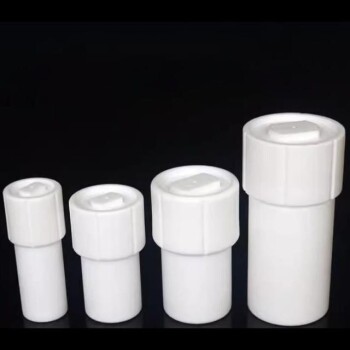
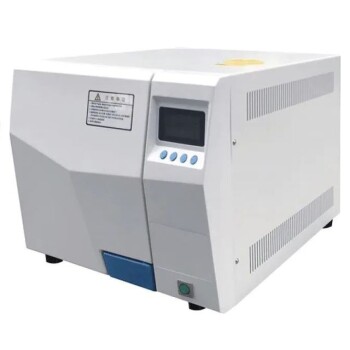
A PTFE-lined high-pressure autoclave serves as a specialized reaction vessel that facilitates the solvothermal or hydrothermal synthesis of carbon nanostructures. It enables chemical reactions to occur at temperatures exceeding the solvent's boiling point by creating high internal autogenous pressure. The Polytetrafluoroethylene (PTFE) liner acts as a critical chemical barrier, protecting the stainless steel reactor from aggressive precursors while ensuring the resulting carbon nanostructures remain free of metallic impurities.
Core Takeaway: The autoclave provides a hermetically sealed, high-energy environment necessary for radical coupling and self-assembly of carbon precursors. By combining mechanical strength with chemical inertness, it allows for the precise control of morphology and porosity at the nanoscale.
Creating the High-Energy Reaction Environment
Achieving Subcritical and Supercritical Conditions
The autoclave allows solvents to reach a subcritical state, where they behave differently than at standard atmospheric pressure. This state induces specific chemical reactions, such as disproportionation and complexation, which are necessary for forming nanostructures.
Harnessing Autogenous Pressure
As the temperature rises within the sealed vessel, the solvent generates autogenous pressure. This internal pressure promotes the radical coupling reactions of halogenated hydrocarbons or other precursors, which would be impossible in an open-system environment.
Enabling Structural and Morphological Control
Facilitating Radical Coupling and Self-Assembly
The high-pressure environment promotes the self-assembly of carbon precursors around template agents. This process is essential for creating ordered mesoporous channel structures and regular spherical morphologies in the final carbon product.
Precise Positioning and Diffusion Depth
The controlled environment allows for the precise positioning of species on the surface of carbon substrates. It also helps manage the diffusion depth of ions, which protects the internal elasticity of carbon fibers from issues like metal embrittlement during doped-structure synthesis.
Ensuring Material Purity and Vessel Integrity
The Critical Role of the PTFE Liner
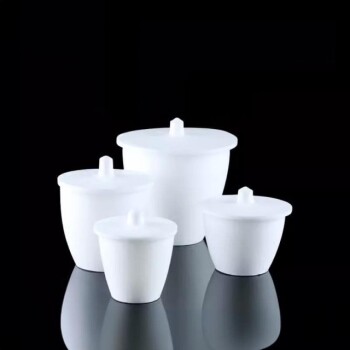
The PTFE liner provides exceptional chemical stability against harsh agents, including metallic sodium and strong reducing agents like sodium borohydride. Without this liner, these reactive chemicals would corrode the reactor walls and compromise the synthesis.
Prevention of Metal Contamination
By acting as a barrier between the reactants and the stainless steel vessel body, the liner prevents the introduction of metallic impurities. This ensures that the synthesized porous carbon maintains the high purity required for electrochemical or catalytic applications.
Understanding the Trade-offs and Limitations
Temperature Constraints of PTFE
While PTFE is highly inert, it has a thermal threshold, typically losing structural integrity above 250°C. Syntheses requiring higher temperatures must utilize alternative liners, such as PPL (Polyphenylene polymers) or quartz, though these may offer different chemical resistance profiles.
Mechanical vs. Chemical Demands
The stainless steel exterior is designed to handle mechanical pressure loads, while the liner handles chemical compatibility. A failure in the liner can lead to catastrophic stress corrosion cracking of the outer steel shell if halogenated vapors escape during the reaction.
How to Apply This to Your Project
When selecting an autoclave for carbon nanostructure synthesis, consider your specific chemical and structural goals:
- If your primary focus is high-purity porous structures: Ensure your PTFE liner is pristine and free of scratches to prevent the stainless steel vessel from leaching transition metals into your carbon matrix.
- If your primary focus is morphological control (e.g., nanospheres): Prioritize autoclaves with precise temperature ramping, as the rate of self-assembly is highly sensitive to the internal thermal gradient.
- If your primary focus is safety during radical coupling: Verify the pressure rating of the stainless steel jacket against the vapor pressure of your specific solvent at the target temperature.
By mastering the high-pressure environment of the autoclave, you can transform simple liquid precursors into sophisticated, high-performance carbon architectures.
Summary Table:
| Feature | Function in Carbon Synthesis | Key Benefit |
|---|---|---|
| PTFE Liner | Acts as a chemical barrier against aggressive precursors | Prevents metal contamination and ensures material purity |
| Autogenous Pressure | Facilitates radical coupling and self-assembly | Enables the formation of ordered mesoporous structures |
| Sealed Environment | Reaches subcritical and supercritical solvent states | Promotes specific reactions impossible at atmospheric pressure |
| Temperature Control | Manages thermal gradients and reaction rates | Allows for precise control over nanosphere morphology |
| Stainless Steel Shell | Provides mechanical strength for high-pressure loads | Ensures safety and vessel integrity during high-energy reactions |
Elevate Your Nanomaterial Synthesis with KINTEK
Precision is paramount when engineering advanced carbon architectures. KINTEK specializes in high-performance laboratory equipment, offering a comprehensive range of high-temperature high-pressure reactors and autoclaves designed specifically for the rigorous demands of solvothermal and hydrothermal synthesis.
Beyond our specialized reactors, our portfolio includes CVD/PECVD systems, muffle furnaces, and precision hydraulic presses, alongside essential consumables like PTFE liners and ceramics. Whether you are focusing on electrochemical purity or morphological control, KINTEK provides the reliable tools needed to achieve consistent, high-quality results.
Ready to optimize your lab’s synthesis capabilities? Contact KINTEK today to discuss your custom reactor requirements and discover how our expertise can drive your research forward!
References
- Cheng Wang, Anthony K. Cheetham. Alcohol imination catalyzed by carbon nanostructures synthesized by C(sp2)-C(sp3) free radical coupling. DOI: 10.1016/j.isci.2023.106659
This article is also based on technical information from Kintek Solution Knowledge Base .
Related Products
- Laboratory High Pressure Horizontal Autoclave Steam Sterilizer for Lab Use
- Stainless High Pressure Autoclave Reactor Laboratory Pressure Reactor
- Portable High Pressure Laboratory Autoclave Steam Sterilizer for Lab Use
- Desktop Fast High Pressure Laboratory Autoclave Sterilizer 16L 24L for Lab Use
- Laboratory High Pressure Steam Sterilizer Vertical Autoclave for Lab Department
People Also Ask
- Why is a laboratory high-pressure autoclave sterilizer necessary? Ensure Accuracy in Antibacterial Research
- What is the role of a laboratory high-pressure autoclave in the conversion of furfural to piperidine? Optimize Yields
- What is the primary function of a laboratory autoclave in the pre-treatment of medical plastic waste for liquid fuel?
- What is an autoclave laboratory equipment? The Ultimate Guide to Steam Sterilization
- What is a laboratory autoclave? A Guide to Sterilization with Pressurized Steam