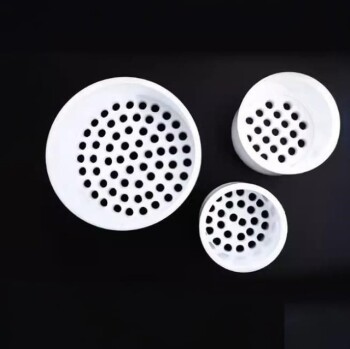
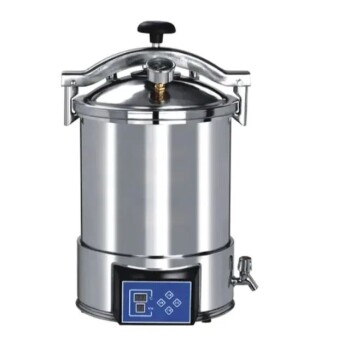
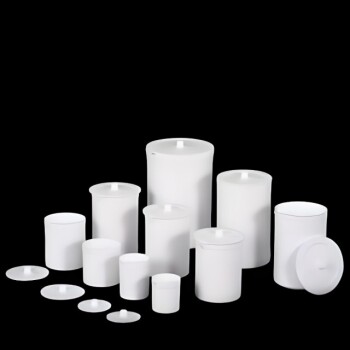
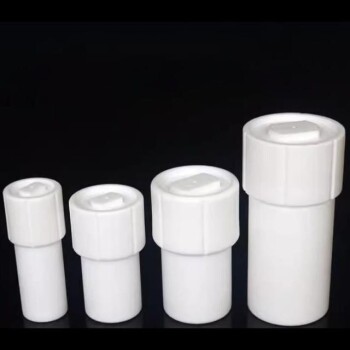
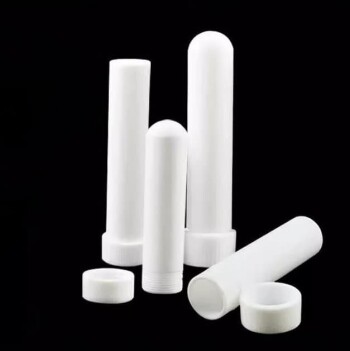
A PTFE-lined stainless steel autoclave serves as a chemically inert, high-pressure reaction vessel. Its primary function is to create a sealed environment that can sustain the elevated temperatures (such as 200°C) and pressures required to simulate deep geological conditions, while isolating the reaction fluids from the metallic equipment.
The Critical Insight: The true value of this apparatus is not just its ability to hold pressure, but its ability to ensure chemical purity. By isolating the reaction from the steel shell, the PTFE liner prevents the equipment from corroding and, more importantly, stops external metal impurities from leaching into your fluid, guaranteeing that your data on background ion effects is accurate.
Creating the Deep Earth Environment
To simulate the formation of dolomite in deep geological settings, you must replicate the physical conditions of the earth's crust.
Withstanding Extreme Physical Stress
The stainless steel outer shell of the autoclave provides the necessary mechanical strength.
It creates a sealed system capable of containing the significant pressure generated when fluids are heated to hydrothermal temperatures (e.g., 200°C).
Thermal Stability
Inside this steel shell, the PTFE (polytetrafluoroethylene) liner maintains its structural integrity.
It provides exceptional thermal stability, allowing the system to operate effectively at high temperatures without degrading or contaminating the sample.
Preserving Experimental Integrity
In dolomitization simulations, the chemistry of the fluid is just as critical as the temperature.
Resisting Corrosion from Saline Fluids
Deep geological simulations often require high-salinity fluids to mimic natural brines.
These fluids are highly corrosive to metals, particularly at high temperatures. The chemically inert PTFE liner acts as a barrier, preventing these aggressive fluids from corroding the stainless steel walls of the autoclave.
Ensuring Data Accuracy
Perhaps the most critical function of the liner is preventing "back-contamination."
Without the liner, the steel vessel would leach metal ions into the reaction fluid. The PTFE liner eliminates this variable, ensuring that any ion effects observed are from your experimental design, not from the equipment itself.
Understanding the Trade-offs
While PTFE-lined autoclaves are the standard for these experiments, they do have operational limits that must be respected to maintain safety and data quality.
Temperature Ceilings
While the stainless steel shell can handle immense heat, the PTFE liner is the limiting factor.
At temperatures significantly exceeding 200°C-250°C, PTFE can begin to soften, deform, or release off-gases. This can compromise the seal or introduce carbon contamination into the experiment.
Pressure Deformations
Under extreme hydrostatic pressures, the liner acts as a distinct component from the steel shell.
If the pressure ramp-up is too rapid or exceeds the liner's specific design rating, the PTFE may deform permanently. This deformation can lead to leaks or difficulties in extracting the sample after the experiment.
Ensuring Validity in Geochemical Simulations
When designing your hydrothermal experiments, the choice of vessel dictates the reliability of your chemical data.
- If your primary focus is Equipment Longevity: The PTFE liner is essential to protect your stainless steel investment from the pitting and corrosion caused by high-salinity brines.
- If your primary focus is Chemical Precision: The liner is non-negotiable for preventing trace metal contamination, ensuring that your results regarding background ion effects are statistically valid.
By utilizing a PTFE-lined system, you isolate the variables of geology from the variables of your equipment, ensuring your results reflect the earth, not the laboratory.
Summary Table:
| Feature | Component | Primary Function in Dolomitization |
|---|---|---|
| Mechanical Strength | Stainless Steel Shell | Sustains high pressure & prevents vessel rupture |
| Chemical Inertness | PTFE Liner | Prevents corrosion & trace metal leaching into brines |
| Heat Resistance | Composite System | Maintains stability up to 200°C-250°C for crustal simulation |
| Data Integrity | Sealed Environment | Ensures background ion effects are from samples, not equipment |
Elevate Your Geochemical Precision with KINTEK
When simulating complex deep-earth conditions, the integrity of your equipment defines the validity of your data. KINTEK specializes in high-performance laboratory equipment, providing researchers with the precision-engineered high-temperature high-pressure reactors and autoclaves needed to withstand corrosive brines and extreme thermal stress.
Beyond our specialized reactors, KINTEK offers a comprehensive range of solutions including:
- Advanced Crushing & Milling Systems and Hydraulic Presses for sample preparation.
- High-Temperature Furnaces (Muffle, Vacuum, CVD) for material synthesis.
- Battery Research Tools, Electrolytic Cells, and premium PTFE/Ceramic Consumables.
Don't let equipment leaching or corrosion compromise your results. Partner with KINTEK for durable, inert, and reliable laboratory solutions.
Ready to upgrade your hydrothermal setup? Contact us today to find the perfect solution for your lab!
References
- Veerle Vandeginste, Yukun Ji. Dolomitisation favoured by Lewis acidic background compounds in saline fluids. DOI: 10.1007/s12665-023-11180-y
This article is also based on technical information from Kintek Solution Knowledge Base .
Related Products
- Custom PTFE Teflon Parts Manufacturer for Hydrothermal Synthesis Reactor Polytetrafluoroethylene Carbon Paper and Carbon Cloth Nano-growth
- High Pressure Laboratory Autoclave Reactor for Hydrothermal Synthesis
- Stainless High Pressure Autoclave Reactor Laboratory Pressure Reactor
- Custom PTFE Teflon Parts Manufacturer for Centrifuge Tube Racks
- Mini SS High Pressure Autoclave Reactor for Laboratory Use
People Also Ask
- What is the function of a PTFE reactor in MXene etching? Ensure Safe, High-Purity MAX Phase Conversion
- Why is a PTFE reactor required for titanium-based nano-ceramic coating solutions? Ensure Chemical Inertness & Purity
- Why must a Polytetrafluoroethylene (PTFE) reactor be used for Ti3C2TX MXene etching? Ensure Safety and Purity
- Why are PTFE reactors preferred for silver phosphate glass testing? Ensure Purity and Kinetic Accuracy
- What are the advantages of using polytetrafluoroethylene (PTFE) liners in hydrothermal synthesis reactors? High Purity