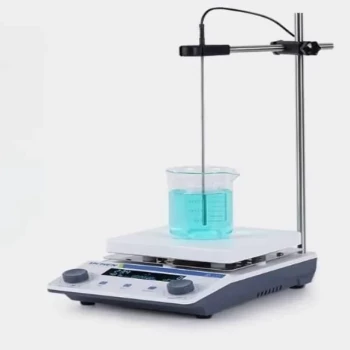
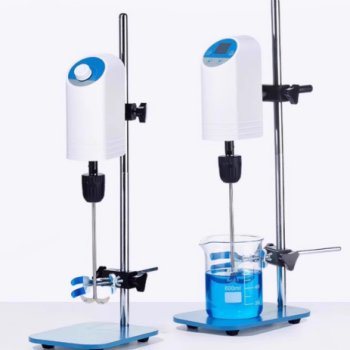
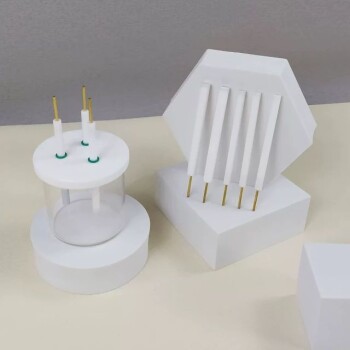
The primary function of a magnetic stirring system in glycerol electrolysis is to ensure continuous agitation of the electrolyte. This physical movement is critical for accelerating the diffusion of glycerol molecules and electrochemical mediators toward the electrode surface. Without this active mixing, the reaction environment becomes stagnant, preventing the system from reaching its optimal performance potential.
Core Takeaway Magnetic stirring eliminates concentration polarization at the electrode-electrolyte interface, ensuring the reaction is limited only by the catalyst's speed, not by how fast molecules can move. This is the only way to isolate and measure the intrinsic activity of the catalyst accurately.
The Role of Agitation in Electrochemical Kinetics
Overcoming Mass Transfer Limitations
In a static solution, the reaction rate is often dictated by how quickly reactants can drift (diffuse) to the electrode. This is known as being "mass transfer limited."
Magnetic stirring disrupts this limitation. By actively circulating the electrolyte, the system forces glycerol molecules and mediators to the electrode surface much faster than natural diffusion allows.
Eliminating Concentration Polarization
As the electrolysis proceeds, reactants are consumed at the electrode surface, creating a localized zone of depletion.
This phenomenon, known as concentration polarization, acts as a barrier that slows down the reaction. Continuous agitation refreshes the fluid at the interface, maintaining a constant supply of reactants and preventing this barrier from forming.
Ensuring Data Integrity
Revealing Intrinsic Catalyst Activity
The ultimate goal of many electrolysis experiments is to determine how good the catalyst is.
If the system is limited by mass transfer (lack of stirring), your data will reflect the speed of diffusion, not the chemistry of the catalyst. Stirring ensures the reaction is under kinetic control, meaning the data collected accurately reflects the catalyst's true, intrinsic capabilities.
Common Pitfalls: The Risks of Inadequate Agitation
Misinterpreting Catalyst Performance
A common error in batch electrolysis is assuming a low reaction rate is due to a poor catalyst.
If the stirring is absent or insufficient, a highly active catalyst may appear inefficient simply because it is starved of reactants. You risk rejecting a promising material because the physical setup failed to support the chemical potential.
Inconsistent Experimental Data
Without a standardized stirring mechanism, diffusion rates can vary based on minor temperature changes or viscosity.
This introduces uncontrolled variables into your data. A magnetic stirring system removes this variability, ensuring that changes in current or potential are due to electrochemical parameters, not random fluctuations in fluid dynamics.
Optimizing Your Experimental Setup
To ensure your glycerol electrolysis data is valid and reproducible, apply the following guidelines:
- If your primary focus is Catalyst Benchmarking: Ensure vigorous stirring to eliminate mass transfer effects so the data reflects the catalyst's true speed.
- If your primary focus is Process Optimization: Use the stirring system to maintain a homogeneous mixture, preventing localized "dead zones" where the reaction might stall.
Consistent agitation is the bridge between a theoretical catalyst design and its proven experimental reality.
Summary Table:
| Feature | Impact on Glycerol Electrolysis | Scientific Benefit |
|---|---|---|
| Mass Transfer | Accelerates reactant diffusion to electrode | Overcomes diffusion-limited reaction rates |
| Concentration Gradient | Eliminates localized depletion zones | Prevents concentration polarization |
| Data Integrity | Ensures kinetic control of the reaction | Accurately measures intrinsic catalyst activity |
| Agitation Consistency | Removes random fluid dynamics variables | Ensures reproducible and standardized results |
Elevate Your Electrochemical Research with KINTEK
Precision in the lab starts with the right equipment. KINTEK specializes in high-performance laboratory solutions, from advanced electrolytic cells and electrodes to precision magnetic stirring systems and homogenizers. Whether you are benchmarking catalysts or optimizing glycerol electrolysis, our comprehensive range of high-temperature furnaces, crushing systems, and cooling solutions (like ULT freezers and cold traps) provides the reliability your research demands.
Don't let mass transfer limitations compromise your data.
Contact KINTEK Experts Today to find the perfect equipment for your specific application and ensure your results reflect the true potential of your materials.
References
- Michael Guschakowski, Uwe Schröder. Direct and Indirect Electrooxidation of Glycerol to Value‐Added Products. DOI: 10.1002/cssc.202100556
This article is also based on technical information from Kintek Solution Knowledge Base .
Related Products
- Custom PTFE Teflon Parts Manufacturer for Magnetic Stirring Bar
- Laboratory Small Constant Temperature Heated Magnetic Stirrer Heater and Stirrer
- Optical Water Bath Electrolytic Electrochemical Cell
- Customizable CO2 Reduction Flow Cell for NRR ORR and CO2RR Research
- Thin-Layer Spectral Electrolysis Electrochemical Cell
People Also Ask
- What is the function of a magnetic stirrer during the alkaline etching of nano-silicon carbide? Essential Mixing Guide
- Why is a powerful magnetic stirrer essential during photocatalytic degradation? Ensure Accurate Catalyst Performance
- What is the function of a magnetic stirrer in simulating industrial sulfolane environments? Master Fluid Dynamics
- What is the function of a magnetic stirrer in MgAl-LDH coprecipitation? Ensure Uniformity and Precision
- What is the function of a magnetic stirrer in co-precipitation? Ensure Homogeneity in Doped ZnO Synthesis