The primary function of a Teflon-lined stainless steel high-pressure autoclave is to facilitate hydrothermal synthesis by creating a sealed, heated environment that withstands high pressure while simultaneously preventing chemical contamination. This apparatus allows reactions to occur at temperatures significantly exceeding the boiling point of the solvent, a condition necessary for the effective crystallization of Zinc Oxide (ZnO) nanoparticles.
Core Takeaway The autoclave serves a dual purpose: the stainless steel shell contains the high pressure required to increase precursor solubility and reactivity, while the internal Teflon lining acts as a critical barrier to ensure chemical inertness, preventing metallic impurities from compromising the purity of the ZnO nanomaterials.
The Mechanics of Hydrothermal Synthesis
Creating Subcritical Conditions
The stainless steel shell provides the structural integrity needed to seal the reaction environment completely.
By heating the vessel above the solvent's standard boiling point, the autoclave generates high internal pressure. This increases the vapor pressure and solubility of the reactants, allowing the chemical precursors to dissolve and react more efficiently than they would under standard ambient conditions.
Enhancing Reaction Kinetics
The high-pressure environment does more than just heat the solvent; it fundamentally alters the reaction dynamics.
These conditions accelerate diffusion rates and promote uniform particle nucleation. For ZnO nanoparticles, this controlled environment is essential for ensuring that the precursor materials decompose fully and crystallize into uniform nanostructures.
The Critical Role of the Teflon Liner
Preventing Equipment Corrosion
While the stainless steel shell handles the pressure, it is susceptible to chemical attack.
Hydrothermal synthesis often involves acidic or alkaline solutions which can be highly corrosive to metals. The Teflon (PTFE) lining offers exceptional chemical inertness, acting as a shield that prevents the reaction liquid from corroding the stainless steel outer wall.
Ensuring Nanoparticle Purity
For semiconductor materials like ZnO, purity is paramount; even trace metal ions can ruin electronic or optical properties.
The Teflon liner creates a barrier that avoids the introduction of metallic impurities (such as iron or chromium from the steel) into the synthesis solution. This ensures that the final ZnO powder remains chemically pure and free of external contaminants.
Understanding the Trade-offs
Temperature Limitations
While the stainless steel shell is robust, the Teflon liner introduces a thermal ceiling.
Teflon typically begins to soften or deform at extremely high temperatures (often above 200°C - 250°C, depending on the specific grade). Therefore, while the autoclave is excellent for hydrothermal synthesis, it is not suitable for reactions requiring ultra-high temperatures that exceed the melting point of the polymer liner.
Pressure and Volume Safety
The sealed nature of the autoclave creates a closed system where pressure builds rapidly.
Overfilling the liner (usually beyond 80% capacity) can lead to dangerous pressure spikes as the liquid expands. You must balance the need for high pressure with the safety limits of the vessel design, ensuring the liner does not rupture or leak into the steel shell.
Making the Right Choice for Your Project
If you are setting up a synthesis protocol for ZnO nanoparticles, consider the following based on your specific requirements:
- If your primary focus is high purity: Rely on the Teflon liner to prevent leaching. This is critical if the ZnO is intended for sensitive applications like UV sensors or photovoltaics.
- If your primary focus is controlling particle size: Utilize the high-pressure capabilities to adjust solubility. Higher pressures (via temperature control) generally improve the uniformity of nucleation.
The Teflon-lined autoclave is the industry standard for bridging the gap between high-pressure thermodynamics and strict chemical purity.
Summary Table:
| Feature | Function in ZnO Synthesis | Key Benefit |
|---|---|---|
| Stainless Steel Shell | Provides structural integrity for high-pressure containment. | Enables subcritical heating above boiling point. |
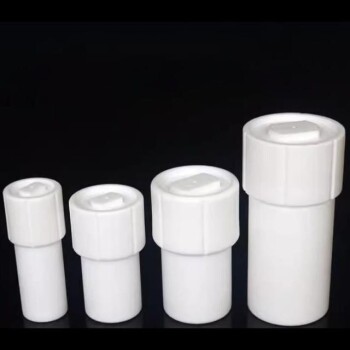
| Teflon (PTFE) Liner | Acts as a chemically inert barrier between precursors and metal. | Prevents metallic contamination and equipment corrosion. |
| Sealed Environment | Creates a closed system for hydrothermal reaction. | Increases reactant solubility and promotes uniform nucleation. |
| Temperature Control | Facilitates the decomposition of chemical precursors. | Ensures effective crystallization of ZnO nanostructures. |
Elevate Your Nanomaterial Synthesis with KINTEK
Precision in ZnO nanoparticle preparation requires the perfect balance of pressure resistance and chemical purity. KINTEK specializes in high-performance high-temperature high-pressure reactors and autoclaves, designed with premium Teflon liners to protect your research from metallic impurities and corrosive synthesis environments.
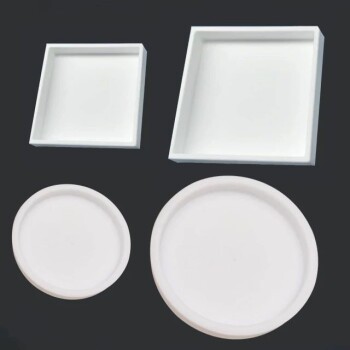
Whether you are focusing on UV sensors, photovoltaics, or advanced battery research, our comprehensive range of laboratory equipment—from muffle and tube furnaces to hydrothermal reactors and PTFE consumables—ensures your materials meet the highest standards of excellence.
Ready to optimize your hydrothermal synthesis? Contact KINTEK Today to Find the Right Autoclave for Your Lab
References
- Naim Aslan. Synthesis and Characterization of ZnO@Fe3O4 Composite Nanostructures by Using Hydrothermal Synthesis Method. DOI: 10.46810/tdfd.1011220
This article is also based on technical information from Kintek Solution Knowledge Base .
Related Products
- Stainless High Pressure Autoclave Reactor Laboratory Pressure Reactor
- Mini SS High Pressure Autoclave Reactor for Laboratory Use
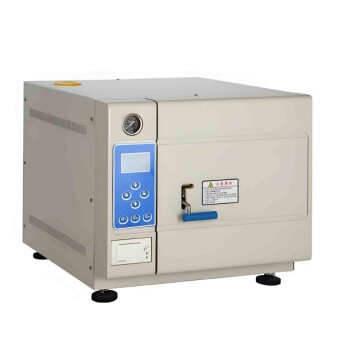
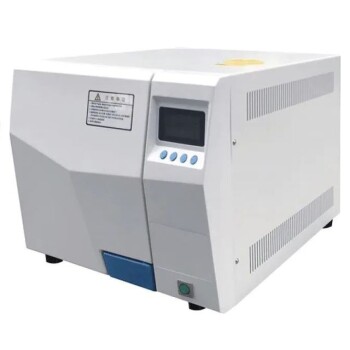
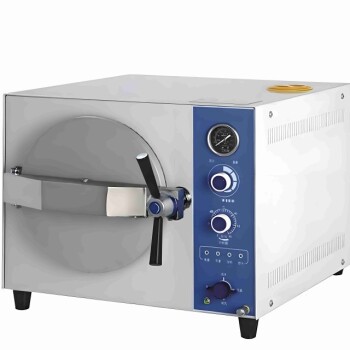
- Desktop Fast High Pressure Laboratory Autoclave Sterilizer 16L 24L for Lab Use
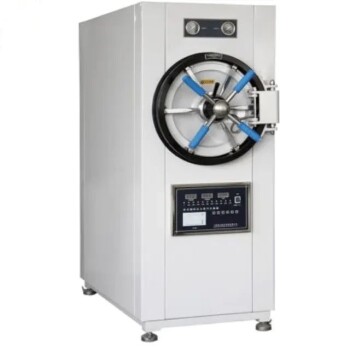
- Laboratory High Pressure Horizontal Autoclave Steam Sterilizer for Lab Use
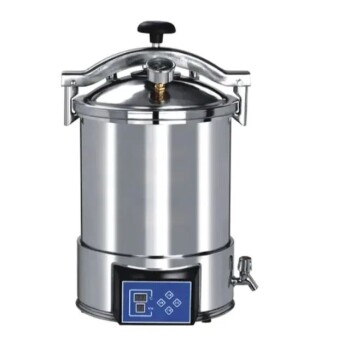
- Portable High Pressure Laboratory Autoclave Steam Sterilizer for Lab Use
People Also Ask
- Why is a laboratory high-pressure reactor necessary for synthesizing fly ash-based zeolite? Achieve Pure Crystallization
- Why is a laboratory high-pressure reactor used in the hydrothermal synthesis of hydroxyapatite catalysts?
- What role does a laboratory high-pressure reactor play in the leaching process of spent cathode materials? Optimize Recovery
- What conditions do laboratory high-pressure reactors provide for HTC? Optimize Your Biochar Production Processes
- How are high-pressure reactors used to prepare metaphosphate electrocatalysts? Master In-Situ Precursor Growth