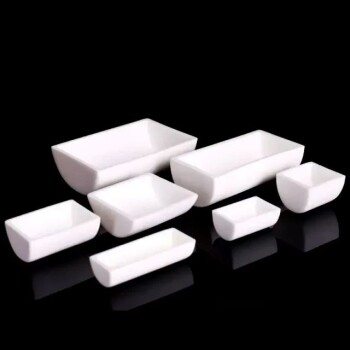
The primary purpose of a porcelain combustion boat is to serve as a chemically inert and thermally stable carrier for precursors. It acts as the physical vessel that transports solution-based or solid-state materials into the high-temperature core of a tube furnace. By maintaining stability at temperatures reaching 1000°C, it enables the synthesis of turbostratic graphene without introducing contaminants into the reaction.
The porcelain combustion boat provides a controlled environment for synthesis, ensuring that the vessel itself does not react with chemical precursors or degrade under extreme heat, thereby preserving the purity of the final graphene product.
The Role of Material Stability in High-Temperature Synthesis
Withstanding Extreme Heat
Porcelain is specifically utilized because it can withstand temperatures up to 1000 degrees Celsius without losing structural integrity. This thermal resilience is vital for turbostratic graphene synthesis, which requires high-energy environments to transform precursors.
Ensuring Chemical Inertness
The chemical stability of porcelain ensures that it does not react with the reactants during the heating process. This inert nature is a prerequisite for maintaining the chemical purity of the synthesized graphene, preventing unwanted side reactions.
Logistical Function Within the Tube Furnace
Secure Precursor Transport
The combustion boat serves as the primary mechanism for placing precursor solutions and dried solid blocks into the core heating zone. Its design allows for the precise positioning of materials within the most stable temperature region of the furnace.
Facilitating Uniform Reaction
The shallow, open-top structure of the boat provides an optimized surface area for the precursor. This geometry supports even heat distribution and allows for efficient gas-solid interactions during the graphene formation process.
Understanding the Trade-offs and Limitations
Sensitivity to Thermal Shock
While porcelain is highly heat-resistant, it can be vulnerable to thermal shock if subjected to rapid temperature fluctuations. Heating or cooling the furnace too quickly can lead to structural failure or cracking of the boat.
Temperature Ceiling Constraints
Standard porcelain is generally limited to a maximum operating temperature of 1000°C. If a specific synthesis process requires temperatures exceeding this limit, the porcelain may soften or begin to react, necessitating the use of alternative materials like alumina or quartz.
Optimizing the Use of Combustion Boats
When selecting and using a combustion boat for your synthesis, consider the specific requirements of your laboratory environment and target material properties.
- If your primary focus is product purity: Always use high-grade porcelain to ensure that no trace elements leach into the graphene lattice during long dwell times.
- If your primary focus is equipment longevity: Implement gradual ramp-up and cool-down rates in your furnace programming to prevent the boat from cracking due to thermal stress.
- If your primary focus is material yield: Select a boat size that maximizes the available volume in the furnace's "sweet spot" while still allowing for adequate airflow around the precursor.
Selecting the appropriate vessel is a fundamental step in ensuring the consistency and quality of high-performance carbon materials.
Summary Table:
| Key Feature | Role in Graphene Synthesis | Critical Limitation |
|---|---|---|
| Thermal Stability | Withstands temperatures up to 1000°C for precursor transformation. | Sensitive to rapid temperature changes (thermal shock). |
| Chemical Inertness | Prevents reactions between the vessel and precursors, ensuring high purity. | May soften or react if temperatures exceed 1000°C. |
| Physical Design | Acts as a secure carrier and optimizes surface area for gas-solid interaction. | Size must be calibrated to the furnace's "sweet spot." |
Elevate Your Material Synthesis with KINTEK
Achieving high-purity turbostratic graphene requires precision at every step—from the furnace to the vessel. KINTEK specializes in high-performance laboratory equipment, providing the reliability your research demands. Whether you need high-temperature tube furnaces for precise thermal processing or premium ceramic consumables, crucibles, and combustion boats designed for maximum chemical inertness, we have the solution.
Our extensive portfolio also includes crushing and milling systems, hydraulic presses, and specialized reactors to streamline your entire workflow. Don't compromise on purity or consistency. Contact our experts today to find the perfect equipment and consumables for your laboratory's specific requirements!
References
- Phurida Kokmat, Akkawat Ruammaitree. Growth of High-Purity and High-Quality Turbostratic Graphene with Different Interlayer Spacings. DOI: 10.1021/acsomega.2c06834
This article is also based on technical information from Kintek Solution Knowledge Base .
Related Products
- Aluminized Ceramic Evaporation Boat for Thin Film Deposition
- Ceramic Evaporation Boat Set Alumina Crucible for Laboratory Use
- Tungsten Evaporation Boat for Thin Film Deposition
- Molybdenum Tungsten Tantalum Special Shape Evaporation Boat
- Hemispherical Bottom Tungsten Molybdenum Evaporation Boat
People Also Ask
- What is the source of evaporation for thin film? Choosing Between Thermal and E-Beam Methods
- Why are high-purity ceramic boats used for lignin activation? Ensure Purity & Thermal Stability
- Why is an alumina boat and Ti3AlC2 powder bed necessary for Ti2AlC sintering? Protect MAX Phase Purity
- Why use an alumina boat for high-temperature carbon activation? Ensure Maximum Material Purity & Thermal Stability
- Why is an alumina boat selected for catalyst precursors? Ensure Sample Purity at 1000 °C