The primary role of an electronic shaker in diesel adsorption desulfurization is to provide consistent mechanical power that maintains the adsorbent in full suspension. By rotating at specific speeds, such as 500 rpm, the shaker ensures maximum physical contact between the mesoporous silica MCM-41 particles and the diesel oil, preventing the solids from settling.
By generating forced convection, the electronic shaker actively reduces liquid-phase mass transfer resistance. This accelerates the diffusion of sulfide molecules from the bulk liquid to the adsorbent surface, allowing the experiment to reach necessary adsorption equilibrium within a set time.
The Mechanics of Efficient Desulfurization
To understand the shaker's value, one must look beyond simple mixing and understand the kinetics of the reaction.
Maintaining Adsorbent Suspension
In these experiments, the adsorbent (MCM-41) is a solid dispersed in a liquid (diesel). Without mechanical intervention, gravity causes these particles to settle at the bottom of the container.
Maximizing Surface Contact
The electronic shaker applies mechanical power to keep the silica particles suspended throughout the fluid. This ensures that the entire surface area of the adsorbent is accessible to the sulfur compounds, rather than just the top layer of a settled pile.
Overcoming Mass Transfer Resistance
The central challenge in adsorption is moving the target molecule (sulfide) to the capture site. The shaker creates forced convection, which drastically reduces liquid-phase mass transfer resistance. This facilitates the movement of sulfide molecules from the bulk oil to the surface of the adsorbent.
Achieving Experimental Precision
The use of an electronic shaker is not just about mixing; it is about ensuring the validity and repeatability of experimental data.
Accelerating Diffusion
Passive diffusion is often too slow for practical experimentation. The shaker accelerates this process, ensuring that sulfide molecules travel efficiently through the liquid medium to reach the active sites on the silica.
Reaching Equilibrium
For data to be valid, the system must reach a stable state known as adsorption equilibrium. The mechanical agitation provided by the shaker ensures this state is reached within a defined, practical timeframe, allowing for accurate measurement of the adsorbent's capacity.
Operational Considerations
While the shaker is essential, understanding its operational parameters is critical for consistent results.
The Necessity of Specific Speeds
The reference highlights specific rotation speeds, such as 500 rpm, as a standard operating parameter. This specific speed is chosen to provide adequate energy to suspend the particles without introducing excessive turbulence that might complicate the phase interaction.
The Consequence of Inadequate Power
If the shaker fails to provide sufficient mechanical power, the mass transfer resistance remains high. This leads to incomplete adsorption and inaccurate data regarding the desulfurization efficiency of the material.
Making the Right Choice for Your Experiment
To ensure your diesel desulfurization data is accurate and reproducible, consider the following regarding your equipment setup:
- If your primary focus is Kinetics: Ensure your shaker allows for precise speed control (e.g., 500 rpm) to eliminate mass transfer limitations effectively.
- If your primary focus is Capacity: Verify that the shaking duration is sufficient for the specific viscosity of your diesel sample to reach true equilibrium.
The electronic shaker is the critical driver that bridges the gap between theoretical adsorption potential and measurable experimental results.
Summary Table:
| Feature | Role in Diesel Desulfurization |
|---|---|
| Mechanical Power | Keeps MCM-41 adsorbent in full suspension, preventing settling. |
| Convection Type | Generates forced convection to reduce liquid-phase resistance. |
| Kinetic Impact | Accelerates sulfide diffusion from bulk liquid to adsorbent surface. |
| Standard Speed | Typically 500 rpm to ensure maximum surface contact without turbulence. |
| Goal | Ensures system reaches adsorption equilibrium for accurate data. |
Elevate Your Research Precision with KINTEK
Are you looking to eliminate experimental variables and achieve true adsorption equilibrium? KINTEK specializes in high-performance laboratory equipment designed for the most demanding research environments. From precision electronic shakers and homogenizers to high-temperature vacuum furnaces and reactors, our solutions ensure your diesel desulfurization and material science experiments yield repeatable, high-quality data.
Our value to you:
- Precision Control: Maintain exact mechanical power and speeds for critical mass transfer.
- Comprehensive Lab Solutions: A one-stop-shop for autoclaves, milling systems, and essential consumables like crucibles and PTFE products.
- Expert Support: Equipment tailored for battery research, chemical engineering, and advanced materials.
Ready to optimize your lab's efficiency? Contact us today to find the perfect equipment for your workflow!
References
- Ammar Kadhum, Talib M. Albayati. Desulfurization of Real Diesel Fuel onto Mesoporous Silica MCM-41 Implementing Batch Adsorption Process: Equilibrium, Kinetics, and Thermodynamic Studies. DOI: 10.30684/etj.2022.132385.1110
This article is also based on technical information from Kintek Solution Knowledge Base .
Related Products
- Laboratory Test Sieves and Vibratory Sieve Shaker Machine
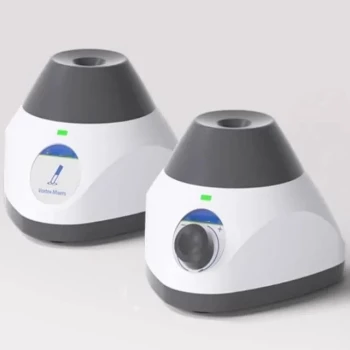
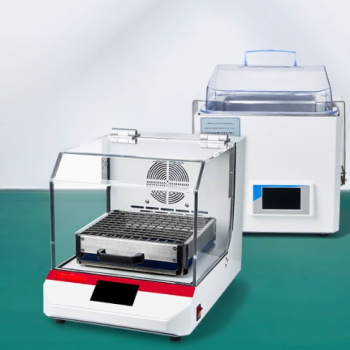
- Laboratory Multifunctional Small Speed-Adjustable Horizontal Mechanical Shaker for Lab
- Laboratory Vortex Mixer Orbital Shaker Multifunctional Rotation Oscillation Mixer
- Laboratory Vibratory Sieve Shaker Machine Slap Vibrating Sieve
- Vibratory Sieve Shaker Machine Dry Three-Dimensional Vibrating Sieve
People Also Ask
- How does a laboratory vibratory sieve shaker facilitate the microstructural study of gas-atomized alloy powders?
- What role does a laboratory vibrating sieve shaker play in the LiFePO4 powder processing workflow? Ensure Batch Quality
- What is the use of vibratory sieve shaker? Achieve Precise Particle Size Analysis for Your Lab
- How is a vibratory sieve shaker used in the particle size analysis of mechanically alloyed powders? Expert Guide
- Why use a vibratory sieve shaker for PET powder? Achieve Precise Particle Size Control for Chemical Research