The purpose of high-temperature vacuum degassing is to prepare the Zirconia catalyst surface by stripping away physically adsorbed water and atmospheric impurities. By subjecting the material to heat—typically around 250°C—under a vacuum, you actively remove contaminants that clog pore channels, ensuring these blockages do not interfere with subsequent analysis.
Accurate BET analysis requires a pristine surface. Degassing removes external moisture and gases that would otherwise occupy pore space, ensuring that the nitrogen physisorption data reflects the material's actual structure rather than its contaminants.
The Mechanics of Surface Preparation
Removing Adsorbed Impurities
Zirconia catalysts naturally adsorb moisture and gases from the atmosphere when stored or handled.
These physically adsorbed contaminants settle onto the surface and inside the porous network of the material.
High-temperature degassing provides the thermal energy required to break the weak physical bonds holding these water molecules and impurities to the catalyst, allowing them to be evacuated by the vacuum system.
Clearing Pore Channels
The primary goal of this process is to unblock pore channels.
If impurities remain within the pores, they effectively reduce the available volume that the analysis gas (nitrogen) can access.
Clearing these channels is the only way to ensure the gas can penetrate the entire pore network during the measurement phase.
The Impact on Data Integrity
Revealing True Physical Properties
Once the surface is clean, nitrogen physisorption measurements can be conducted with confidence.
Because the pores are free of obstructions, the resulting data accurately represents the true pore structure, pore volume, and specific surface area of the Zirconia.
Without this step, the surface area would likely be underestimated, and the pore volume data would be skewed by the volume of the retained moisture.
Assessing Metal Loading Effects
Degassing is particularly critical when studying how metal loading alters the catalyst support.
To understand how adding a metal affects the physical properties of the Zirconia, you must start with an accurate baseline of the support material.
Proper degassing ensures that any observed changes in surface area or pore structure are actually caused by the metal loading, rather than inconsistent levels of contamination.
Common Pitfalls to Avoid
The Cost of Incomplete Degassing
If the degassing temperature is too low or the duration is too short, contaminants will remain trapped in the smaller pores.
This leads to erroneous data, specifically artificially low surface area values and inaccurate pore size distributions.
The analysis will essentially measure the surface of the water/impurities sitting on the catalyst, rather than the catalyst itself.
Making the Right Choice for Your Goal
To ensure your BET analysis provides reliable data for your Zirconia catalysts, align your preparation method with your analytical objectives:
- If your primary focus is determining specific surface area: Prioritize a degassing protocol that completely removes physically adsorbed water to prevent pore blockage and surface masking.
- If your primary focus is evaluating metal loading impacts: Maintain consistent degassing conditions (temperature and vacuum level) across all samples to accurately isolate the physical changes caused by the metal addition.
A rigorous degassing protocol is the invisible foundation of reproducible and accurate material characterization.
Summary Table:
| Process Parameter | Purpose | Impact on Analysis |
|---|---|---|
| High Temperature (250°C) | Breaks physical bonds of adsorbed moisture | Prevents underestimation of surface area |
| Vacuum Application | Evacuates released gases and impurities | Ensures nitrogen gas reaches internal pore networks |
| Surface Preparation | Clears pore channel blockages | Reveals true physical properties and pore volume |
| Consistency | Maintains uniform baseline across samples | Enables accurate assessment of metal loading effects |
Elevate Your Material Characterization with KINTEK
Precise BET analysis starts with flawless sample preparation. KINTEK provides the advanced high-temperature vacuum systems and laboratory equipment necessary to ensure your Zirconia catalysts and porous materials are perfectly degassed for accurate data.
Our comprehensive range of laboratory solutions includes:
- High-Temperature Furnaces & Reactors: Precise thermal control for rigorous degassing protocols.
- Crushing & Milling Systems: Achieve the ideal particle size for consistent surface area measurements.
- Specialized Consumables: High-quality ceramics and crucibles to maintain sample purity.
Don't let adsorbed impurities compromise your research integrity. Contact KINTEK today to discover how our high-performance equipment can enhance your lab's efficiency and analytical accuracy.
References
- Nomthandazo Mkhize, Viswanadha Srirama Rajasekhar Pullabhotla. Catalytic Oxidation of 1,2-Dichlorobenzene over Metal-Supported on ZrO2 Catalysts. DOI: 10.1007/s11244-023-01876-7
This article is also based on technical information from Kintek Solution Knowledge Base .
Related Products
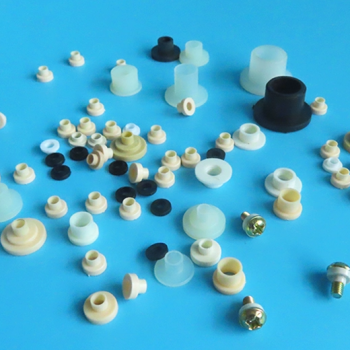
- Zirconia Ceramic Gasket Insulating Engineering Advanced Fine Ceramics
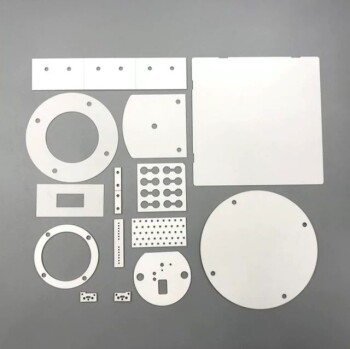
- Custom-Made Alumina Zirconia Special-Shaped Ceramic Plates for Engineering Advanced Fine Ceramics Processing
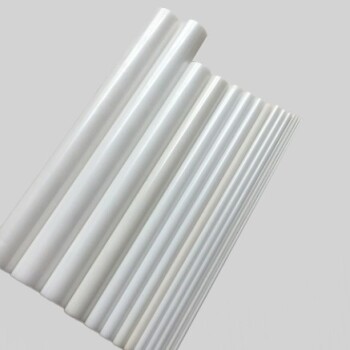
- Precision Machined Yttrium Stabilized Zirconia Ceramic Rod for Engineering Advanced Fine Ceramics
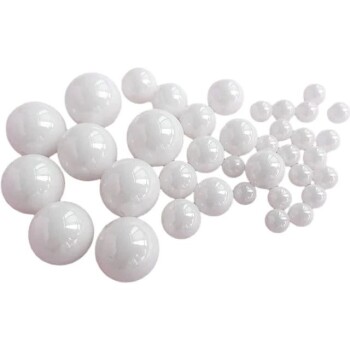
- Precision Machined Zirconia Ceramic Ball for Engineering Advanced Fine Ceramics
- Iridium Dioxide IrO2 for Water Electrolysis
People Also Ask
- What are the applications of zirconia ceramics? Unlock High-Performance Solutions for Extreme Environments
- What ceramics are used for insulation? Choose the Right Material for Thermal or Electrical Needs
- What is the main disadvantage of zirconia? Balancing Strength, Aesthetics, and Tooth Wear
- What is the strongest type of zirconia? A Guide to Choosing the Right Dental Zirconia
- What are the failures of zirconia? Avoid Fracture and Debonding with Proper Protocol