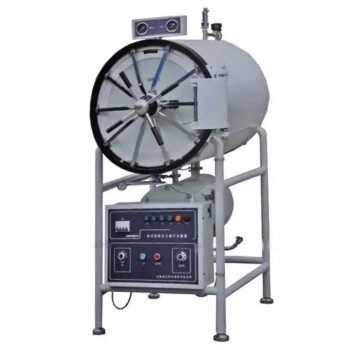
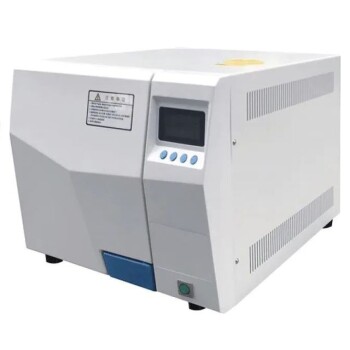
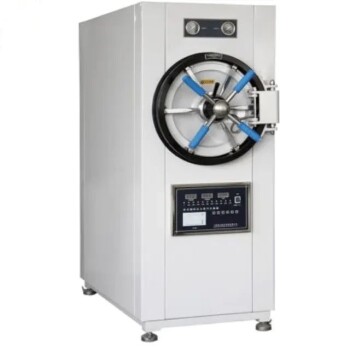
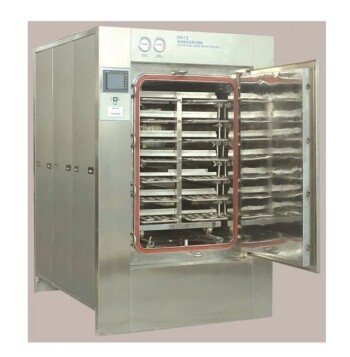
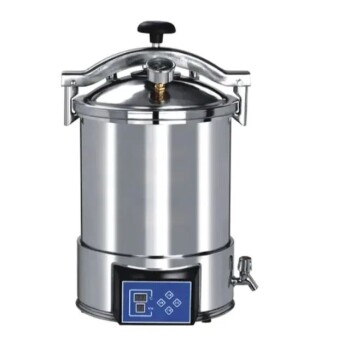
The high-pressure digestion tank, or hydrothermal autoclave, is the fundamental reactor that enables the synthesis of spinel-type oxide nanosheets by providing a hermetically sealed environment for hydrothermal processing. This equipment allows reaction solvents to reach a subcritical state, facilitating the controlled decomposition of metal salts and urea. Through this process, chemical species undergo precise heterogeneous nucleation and growth on substrates like carbon paper, resulting in nanostructures with high crystallinity and abundant active sites.
The hydrothermal autoclave acts as a precision reactor that utilizes high temperature and autogenous pressure to force precursors into a reactive, subcritical state. This environment is essential for the in-situ growth of nanosheets with specific morphologies that are otherwise impossible to achieve under standard atmospheric conditions.
Creating the Subcritical Reaction Environment
Harnessing High Temperature and Pressure
The primary role of the digestion tank is to maintain a sealed environment where temperatures can exceed the boiling point of the solvent. This creates autogenous pressure, which elevates the solvent to a subcritical state, significantly increasing its kinetic energy.
Enhancing Precursor Solubility and Reactivity
Under these elevated conditions, the solubility of metal salts and reducing agents—such as urea or hydrazine hydrate—is greatly enhanced. This increased reactivity is critical for the thorough contact and redox reactions required to form complex spinel structures like $FeCo_2O_4$ or $MnCo_2O_4$.
Facilitating Controlled Growth and Morphology
Heterogeneous Nucleation on Substrates
The autoclave environment facilitates controlled heterogeneous nucleation, where the oxide crystals grow directly onto a conductive substrate like carbon paper. This "in-situ" growth ensures a strong mechanical bond and efficient electron transfer for future electrocatalytic applications.
Achieving High Specific Surface Area
By maintaining constant pressure and temperature over an extended period, the tank allows nanosheets to grow in a vertically staggered or three-dimensional layered orientation. This specific morphology maximizes the surface area, providing the "open-framework" necessary for high-performance electrocatalysis and photocatalysis.
Promoting Structural Crystallinity
The stable, high-pressure environment is essential for the oriented growth of crystals and the stable insertion of metal ions into the molecular framework. High crystallinity directly translates to better chemical stability and improved charge separation efficiency in the final catalyst.
Ensuring Purity and Material Integrity
The Role of PTFE Liners
Most high-pressure digestion tanks are equipped with a Polytetrafluoroethylene (PTFE) liner. This liner is critical for resisting corrosion from the aggressive organic solvents, acids, or bases used during the synthesis of $Co_3O_4$ and other oxides.
Preventing Contamination
The inert nature of the PTFE liner ensures that no metallic impurities from the outer steel vessel leach into the reaction. This results in high-purity reaction products, which is vital for maintaining the integrity of the catalyst's active sites.
Understanding the Trade-offs
Safety and Operational Constraints
While autoclaves are powerful, they require strict adherence to safety protocols due to the risks of high-pressure failure. Overloading the liner (typically beyond 80% capacity) or exceeding temperature limits can lead to catastrophic vessel failure.
Batch Consistency and Scalability
Hydrothermal synthesis is often a "black box" process where real-time monitoring of crystal growth is difficult. This can lead to batch-to-batch variability in nanosheet thickness and morphology, posing challenges for industrial-scale replication.
Making the Right Choice for Your Goal
How to Apply This to Your Project
- If your primary focus is maximizing catalytic activity: Prioritize longer dwell times in the autoclave to ensure the full development of high-surface-area nanosheet morphologies.
- If your primary focus is material purity: Always utilize a high-quality PTFE or PPL liner and ensure thorough cleaning between runs to prevent cross-contamination of metal ions.
- If your primary focus is structural stability: Focus on precise temperature control during the cooling phase to prevent thermal shock and cracking of the synthesized nanosheets on the substrate.
The high-pressure digestion tank is the indispensable tool that transforms simple metal precursors into the complex, high-performance nanostructures required for modern energy conversion.
Summary Table:
| Feature | Role in Synthesis | Key Benefit for Catalysts |
|---|---|---|
| Subcritical Environment | High temperature & autogenous pressure | Enhanced precursor solubility & reactivity |
| In-situ Growth | Heterogeneous nucleation on substrates | Strong mechanical bond & efficient electron transfer |
| Morphology Control | Vertically staggered/3D growth | Maximized specific surface area & active sites |
| PTFE/PPL Liner | Chemical resistance & inertness | Prevents metallic contamination & ensures high purity |
| Thermal Stability | Controlled cooling & oriented growth | High crystallinity & improved charge separation |
Elevate Your Nanomaterial Research with KINTEK
Precision is the heartbeat of high-performance catalyst synthesis. At KINTEK, we understand that achieving the perfect spinel-type oxide nanosheet requires more than just a reaction—it requires a controlled, reliable environment. Our premium range of high-temperature high-pressure reactors and autoclaves, featuring high-quality PTFE or PPL liners, is engineered to withstand aggressive solvents while ensuring the structural integrity of your samples.
Beyond hydrothermal synthesis, KINTEK specializes in a comprehensive suite of laboratory equipment, including:
- High-Temperature Furnaces: Muffle, tube, and vacuum systems for precise annealing.
- Material Processing: Hydraulic pellet presses, crushing, and milling systems.
- Essential Consumables: High-purity ceramics, crucibles, and PTFE labware.
Ready to optimize your synthesis workflow? Contact KINTEK today to explore how our specialized equipment can enhance your lab's efficiency and ensure reproducible, high-purity results for your next breakthrough.
References
- Junwei Yao, Yongmeng Wu. Alkynes Electrooxidation to α,α-Dichloroketones in Seawater with Natural Chlorine Participation via Competitive Reaction Inhibition and Tip-Enhanced Reagent Concentration. DOI: 10.1021/acscentsci.3c01277
This article is also based on technical information from Kintek Solution Knowledge Base .
Related Products
- High Pressure Laboratory Autoclave Reactor for Hydrothermal Synthesis
- Automatic High Temperature Heated Hydraulic Press Machine with Heated Plates for Lab
- Laboratory High Pressure Steam Sterilizer Vertical Autoclave for Lab Department
- Manual High Temperature Heated Hydraulic Press Machine with Heated Plates for Lab
- Automatic Heated Hydraulic Press Machine with Heated Plates for Laboratory Hot Press
People Also Ask
- What role does a high-pressure reactor (autoclave) play in the synthesis of NiCuFe-LDH? Master Hydrothermal Growth
- What Role Does a High-Pressure Reactor or Autoclave Play in HA Catalyst Synthesis? Achieve High Surface Area Materials
- What equipment is required for hydrothermal synthesis of Ga0.25Zn4.67S5.08? Optimize Your Semiconductor Production
- What is the function of a high-pressure reactor in the hydrothermal synthesis of boehmite? Expert Process Insights
- What role does an autoclave play in the synthesis of MnO2 nanofibers? Mastering Hydrothermal Growth