The PTFE-lined high-pressure autoclave acts as the critical reaction vessel that facilitates the hydrothermal synthesis of MoNiO4 nanorod arrays. It creates a hermetically sealed environment where metal salt solutions reach subcritical temperatures and high pressures, enabling the in-situ growth of nanorods directly onto nickel foam substrates with high adhesion and controlled morphology.
The autoclave provides the necessary physical conditions—extreme pressure and heat—to drive chemical reactions that would be impossible at standard boiling points. By using a chemically inert PTFE liner, the system ensures the structural integrity and purity of the MoNiO4 nanorods by preventing corrosion and metallic contamination.
Creating the Hydrothermal Environment
Achieving Subcritical Conditions
The primary function of the autoclave is to maintain temperatures and pressures far exceeding the standard boiling point of the solvent. Under these subcritical hydrothermal conditions, the precursor solution undergoes controlled chemical reactions that facilitate the formation of complex oxide structures.
Facilitating In-Situ Growth
The high-pressure environment promotes the direct crystallization of MoNiO4 nanorods onto the surface of nickel foam. This results in cluster structures that exhibit high adhesion, ensuring that the catalyst remains stable and does not detach from the substrate during subsequent use.
The Critical Role of the PTFE Liner
Ensuring Chemical Purity
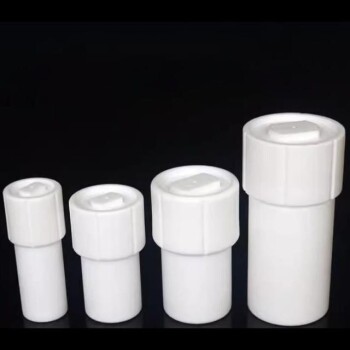
The Polytetrafluoroethylene (PTFE) liner is essential because it is chemically inert and highly resistant to corrosion. It prevents the precursor solution from reacting with the stainless steel body of the autoclave, thereby eliminating metal ion contamination that could compromise the crystalline structure of the nanorods.
Protecting the Pressure Vessel
In addition to ensuring purity, the PTFE liner protects the structural integrity of the autoclave itself. The metal salts used in MoNiO4 synthesis can be highly reactive; the liner acts as a barrier that prevents these chemicals from eroding the metal walls under high-temperature and high-pressure conditions.
Driving Morphology and Structure
Directional Nanorod Growth
The autoclave maintains a stable environment that allows for the hydrolysis and directional growth of nanostructures. This stability is what transforms a simple chemical mixture into organized, regular nanorod array structures rather than random bulk precipitates.
Enhancing Surface Adhesion
By allowing the reaction to occur directly at the interface of the nickel foam and the precursor solution, the autoclave enables a stronger bond between the MoNiO4 and the substrate. This in-situ process is superior to external coating methods, as it leverages the hydrothermal energy to "lock" the nanostructures in place.
Understanding the Trade-offs
Temperature and Pressure Limitations
While PTFE is highly resistant to chemicals, it has a lower thermal threshold than the stainless steel jacket, typically limited to 200°C–250°C. Exceeding these temperatures can cause the liner to soften or deform, potentially compromising the seal and leading to a dangerous loss of pressure.
Cooling and Safety Risks
The autoclave must be cooled slowly to prevent thermal shock to the PTFE liner and to ensure uniform crystal growth. Rapid cooling can cause the liner to contract at a different rate than the steel body, leading to leaks or structural failure of the internal vessel.
How to Apply This to Your Project
Making the Right Choice for Your Goal
To achieve the best results in hydrothermal synthesis, your equipment configuration should align with your specific material requirements.
- If your primary focus is High Purity: Ensure your PTFE liner is thoroughly cleaned and free of micro-scratches that can harbor contaminants from previous synthesis runs.
- If your primary focus is Structural Integrity: Closely monitor the cooling rate of the autoclave to ensure the MoNiO4 nanorods adhere uniformly to the nickel foam without cracking.
- If your primary focus is Scale and Safety: Always calculate the filling degree (typically 60-80%) of the PTFE liner to prevent excessive autogenous pressure from exceeding the safety limits of the stainless steel jacket.
The PTFE-lined high-pressure autoclave is the indispensable foundation for synthesizing high-performance MoNiO4 nanorod arrays with precision and purity.
Summary Table:
| Key Feature | Function in Synthesis | Impact on MoNiO4 Nanorods |
|---|---|---|
| Subcritical Conditions | Enables high-temp/pressure reactions | Drives controlled oxide formation |
| PTFE Liner | Provides a chemically inert barrier | Prevents metallic contamination and corrosion |
| In-Situ Growth | Direct crystallization on substrate | Ensures high adhesion to nickel foam foam |
| Hermetic Seal | Maintains autogenous pressure | Facilitates directional growth of arrays |
Precision and Purity for Your Advanced Material Synthesis
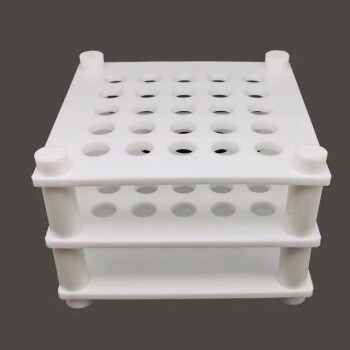
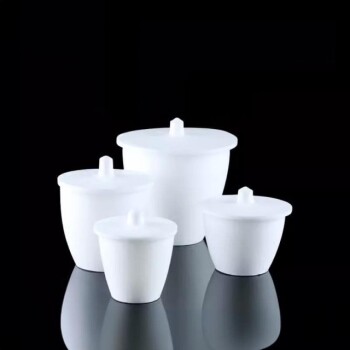
Achieving the perfect nanostructure requires equipment that can withstand extreme conditions without compromising chemical integrity. KINTEK specializes in high-performance laboratory solutions, offering a comprehensive range of high-temperature high-pressure reactors and autoclaves, as well as essential PTFE products, ceramics, and crucibles designed for demanding hydrothermal processes.
Whether you are focusing on catalyst development, battery research, or advanced nanomaterials, our tools provide the stability and purity your research demands.
Ready to elevate your lab's capabilities? Contact KINTEK today to explore our full range of synthesis solutions!
References
- Francesco Bàrtoli, Francesco Vizza. Probing the activity and stability of MoO<sub>2</sub> surface nanorod arrays for hydrogen evolution in an anion exchange membrane multi-cell water electrolysis stack. DOI: 10.1039/d2ta09339a
This article is also based on technical information from Kintek Solution Knowledge Base .
Related Products
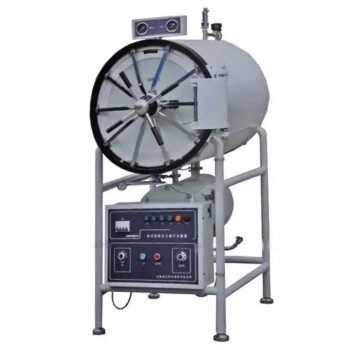
- Laboratory High Pressure Horizontal Autoclave Steam Sterilizer for Lab Use
- Stainless High Pressure Autoclave Reactor Laboratory Pressure Reactor
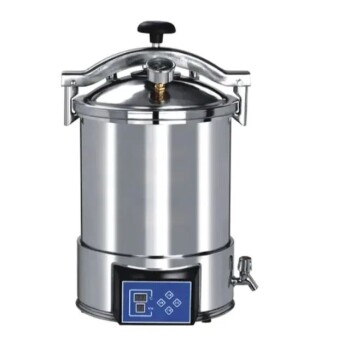
- Portable High Pressure Laboratory Autoclave Steam Sterilizer for Lab Use
- Desktop Fast High Pressure Laboratory Autoclave Sterilizer 16L 24L for Lab Use
- Laboratory High Pressure Steam Sterilizer Vertical Autoclave for Lab Department
People Also Ask
- Why is a laboratory high-pressure autoclave sterilizer necessary? Ensure Accuracy in Antibacterial Research
- What is the role of a laboratory high-pressure autoclave in the conversion of furfural to piperidine? Optimize Yields
- What is the primary function of a laboratory autoclave in the pre-treatment of medical plastic waste for liquid fuel?
- What is an autoclave laboratory equipment? The Ultimate Guide to Steam Sterilization
- What is a laboratory autoclave? A Guide to Sterilization with Pressurized Steam