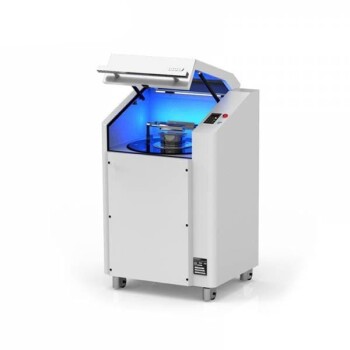
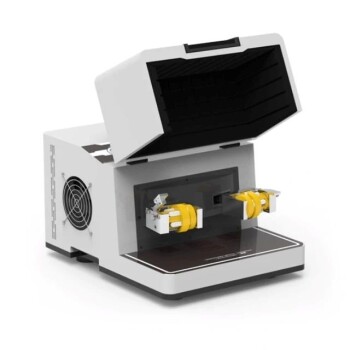
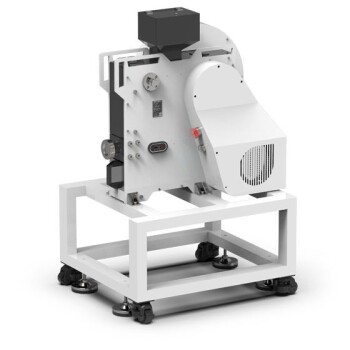
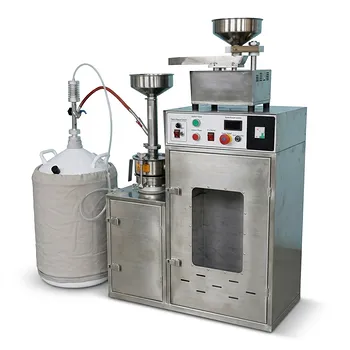
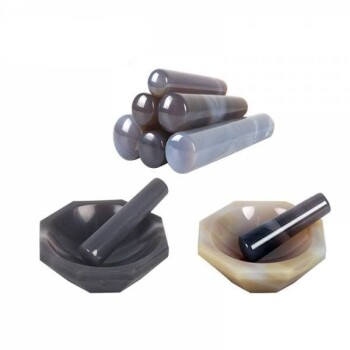
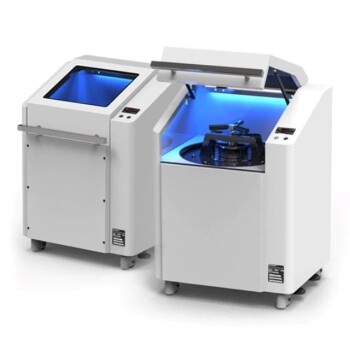
Precision grinding is the fundamental step that determines the optical quality of your samples in Fourier Transform Infrared (FTIR) analysis. By using tools such as a micro-mill equipped with a 0.2mm screen, you refine raw material into a fine powder, which is essential for minimizing optical artifacts and ensuring the infrared beam interacts properly with the material.
Sample particle size directly dictates spectral clarity. By increasing the specific surface area of the sample, precision grinding minimizes infrared light scattering and ensures a homogenous mixture with the Potassium Bromide (KBr) matrix, ultimately yielding high-fidelity data.
The Physics of Sample Preparation
Maximizing Specific Surface Area
To obtain reliable data, raw materials—particularly complex biomass like rice straw—must be mechanically refined. A precision grinder increases the specific surface area of the sample significantly.
Using a micro-mill with a fine screen (e.g., 0.2mm) ensures the particles are small enough to be optically uniform. This reduction in size is the prerequisite for all subsequent physical interactions in the analysis.
Homogenizing with the Matrix
FTIR often requires pelleting the sample with a matrix material, typically Potassium Bromide (KBr).
The increased surface area achieved through grinding allows the biomass components to mix thoroughly with the KBr. Without this intimate mixture, the sample cannot be pressed into a transparent pellet, leading to poor data quality.
Impact on Spectral Data
Reducing Scattering Loss
The primary enemy of FTIR transmission is light scattering. If particles are too large, they deflect the infrared beam rather than absorbing it.
Fine powder particles produced by precision grinding significantly reduce this scattering loss. This ensures that the infrared light passes through the sample, allowing the detector to measure absorption rather than deflection.
Enhancing Signal-to-Noise Ratio
When scattering is minimized, the quality of the resulting spectral map improves dramatically.
Precision grinding leads to spectral maps with a higher signal-to-noise ratio. This clarity distinguishes actual chemical data from background static or instrumental noise.
Clarifying Characteristic Peaks
For complex analyses, such as tracking changes in lignin and polysaccharide components, resolution is key.
Properly ground samples produce clearer characteristic peaks. This precision allows analysts to accurately reflect and interpret subtle chemical bond changes that would otherwise be lost in a noisy spectrum.
Understanding the Risks of Improper Preparation
The Trade-off of Particle Size
If a sample is not ground finely enough, you face immediate optical impedance. Coarse particles cause excessive scattering, which manifests as a sloping baseline or distorted peak shapes in the final spectrum.
Loss of Chemical Detail
Skipping the precision grinding step does not just lower aesthetic quality; it obscures quantitative data. Inadequate preparation prevents the accurate detection of specific chemical bond changes, rendering the analysis of complex structures like biomass ineffective.
Making the Right Choice for Your Goal
To ensure your FTIR data is actionable, tailor your preparation to your analytical needs:
- If your primary focus is spectral clarity: Ensure your grinder uses a screen size (such as 0.2mm) small enough to minimize scattering loss and boost the signal-to-noise ratio.
- If your primary focus is chemical characterization: Prioritize thorough mixing with KBr to ensure the characteristic peaks of components like lignin and polysaccharides are distinct and measurable.
Precision grinding is not merely a mechanical step; it is an optical necessity for accurate chemical analysis.
Summary Table:
| Preparation Factor | Impact on FTIR Analysis | Advantage of Precision Grinding |
|---|---|---|
| Particle Size | Affects infrared light scattering | 0.2mm screen ensures minimal scattering loss |
| Surface Area | Dictates interaction with KBr matrix | Increases area for a homogenous, transparent pellet |
| Data Integrity | Determines signal-to-noise ratio | Enhances clarity of characteristic peaks (e.g., lignin) |
| Optical Quality | Influences baseline stability | Prevents sloping baselines and peak distortion |
Elevate Your Analytical Precision with KINTEK
Don't let poor sample preparation compromise your research. KINTEK specializes in high-performance laboratory equipment designed for the most demanding FTIR and chemical analysis workflows. From our advanced crushing and milling systems that ensure perfect particle size to our precision hydraulic pellet presses, we provide the tools you need for high-fidelity data.
Our comprehensive range includes:
- Precision Milling & Sieving: Achieve the exact specific surface area required for clear spectra.
- Sample Preparation: High-quality KBr dies, hydraulic presses, and essential consumables like PTFE and ceramics.
- Advanced Thermal & Pressure Solutions: Muffle furnaces, high-pressure reactors, and CVD systems for material synthesis.
Whether you are analyzing complex biomass or advanced polymers, KINTEK provides the reliability and expertise your lab deserves. Contact us today to optimize your sample preparation workflow!
References
- Meng Li, Zhenzhong Gao. Synergistic effect of mixed fungal pretreatment on thermogravimetric characteristics of rice straw. DOI: 10.15376/biores.16.2.3978-3990
This article is also based on technical information from Kintek Solution Knowledge Base .
Related Products
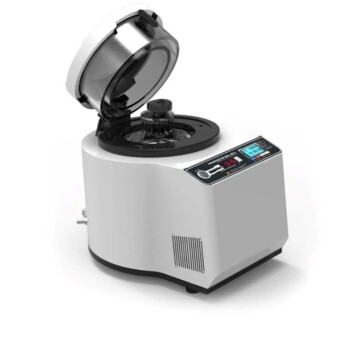
- Laboratory High Throughput Tissue Grinding Mill Grinder
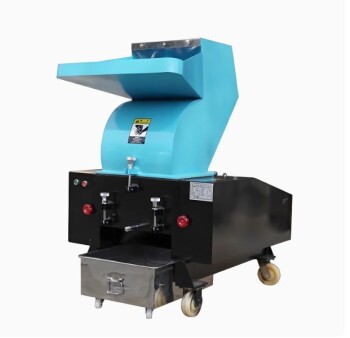
- Powerful Plastic Crusher Machine
- Three-dimensional electromagnetic sieving instrument
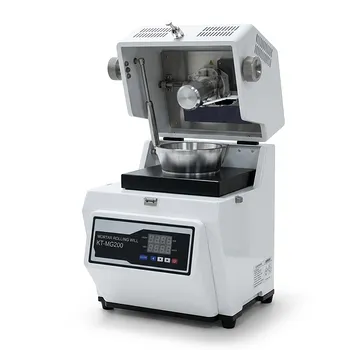
- Laboratory Grinding Mill Mortar Grinder for Sample Preparation
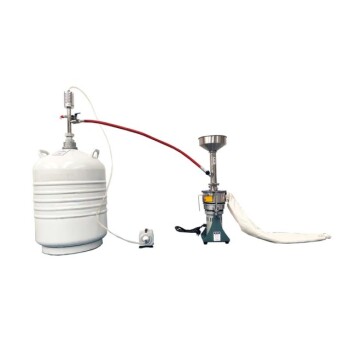
- Liquid Nitrogen Cryogenic Grinder Mill Cryomill Airflow Ultrafine Pulverizer
People Also Ask
- What is the purpose of using a laboratory grinder and standard sieves? Unlock Precise Rice Husk Pretreatment
- What is the purpose of using a laboratory grinder with specific mesh sieves for oat straw? Optimize Pellet Quality
- What is the role of laboratory-grade grinders and sieves in sample prep? Ensure High-Precision Corrosion Analysis
- How do laboratory grinders and standard sieving systems ensure the quality of feedstock for torrefaction?
- What does a grinder do in a laboratory? Achieve Homogeneous Sample Preparation for Accurate Analysis