Precision temperature controllers and heating systems act as the stabilizing backbone of high-pressure hydrogenation corrosion experiments. By utilizing high-accuracy sensors such as Pt100 resistance thermometers, these systems restrict temperature fluctuations to a tight range of ±5°C. This strict regulation is the primary defense against data distortion in highly sensitive reaction environments.
Accurate thermal regulation is not merely a safety feature; it is a prerequisite for scientific validity. Because corrosion kinetics are highly sensitive to heat, precise control guarantees reproducible results and enables the detailed analysis of microstructural changes like sulfide film evolution.
The Criticality of Thermal Stability
Sensitivity of Kinetic Parameters
In hydrogenation corrosion, the chemical behavior is defined by corrosion kinetics parameters. These include complex factors such as activation energy and enthalpy changes.
These parameters are not static; they are highly sensitive to temperature variations. Even a minor deviation in heat can exponentially alter reaction rates, rendering calculated values inaccurate.
Maintaining Specific Tolerances
To ensure data integrity, the system must prevent thermal drift. The industry benchmark described in high-quality setups involves maintaining fluctuations within ±5°C.
Achieving this requires the integration of precision controllers with responsive heating elements. This combination ensures the environment remains constant throughout the testing duration.
Ensuring Reproducibility and Observation
Repeatability of Experimental Data
Scientific rigor depends on the ability to replicate results. Stable heating and cooling curves are essential for guaranteeing the repeatability of experimental data.
If the temperature ramp is inconsistent, it introduces uncontrolled variables. Precision systems eliminate this noise, ensuring that changes in the data reflect the chemistry, not the equipment.
Capturing Microstructural Changes
Researchers often study the physical evolution of materials, such as the formation of sulfide films. These films evolve differently at specific temperature points.
precise control allows researchers to "freeze" or maintain specific conditions. This capability is vital for accurately capturing and analyzing how these films develop over time.
Understanding the Risks of Inaccuracy
The Cost of Thermal Instability
If a system fails to maintain the ±5°C threshold, the reliability of the experiment collapses. You risk calculating incorrect activation energies, leading to flawed conclusions about the material's lifespan.
Sensor Dependency
The effectiveness of the controller is entirely dependent on the sensor's accuracy. Relying on sensors inferior to Pt100 resistance thermometers introduces a weak link in the chain.
An inaccurate reading means the controller is stabilizing the system at the wrong temperature. This creates a false sense of security while corrupting the experimental baseline.
Making the Right Choice for Your Goal
To ensure your high-pressure hydrogenation corrosion experiments yield valid data, align your equipment capabilities with your analytical objectives.
- If your primary focus is determining Kinetic Parameters: Ensure your controller is calibrated to maintain fluctuations strictly within ±5°C to accurately calculate activation energy and enthalpy.
- If your primary focus is Microstructural Analysis: Prioritize systems with programmable, stable heating and cooling curves to accurately capture sulfide film evolution at precise points.
Ultimately, the precision of your thermal control dictates the validity of your corrosion data.
Summary Table:
| Feature | Specification/Requirement | Impact on Experiment |
|---|---|---|
| Temperature Tolerance | ±5°C | Prevents data distortion and ensures kinetic accuracy |
| Sensor Type | Pt100 Resistance Thermometer | Provides the high-accuracy baseline for stabilization |
| Kinetic Stability | Constant Thermal Environment | Essential for calculating activation energy and enthalpy |
| Thermal Curve | Programmable Heating/Cooling | Guarantees repeatability and captures microstructural changes |
Elevate Your Research Precision with KINTEK
Don't let thermal drift compromise your critical corrosion data. KINTEK specializes in high-performance laboratory solutions, providing the high-temperature high-pressure reactors and autoclaves necessary for advanced hydrogenation studies.
Our systems integrate high-accuracy controllers and robust heating elements to maintain the strict tolerances required for calculating precise kinetic parameters and analyzing microstructural evolution. Beyond reactors, we offer a comprehensive range of crushing systems, hydraulic presses, and specialized cooling solutions to support every stage of your material science workflow.
Ready to achieve superior scientific validity? Contact our technical experts today to find the perfect precision equipment for your laboratory.
References
- András Gergely, Tamás Kristóf. Hydrogen Sulfide Corrosion of Carbon and Stainless Steel Alloys in Mixtures of Renewable Fuel Sources under Co-Processing Conditions. DOI: 10.5539/mas.v12n4p227
This article is also based on technical information from Kintek Solution Knowledge Base .
Related Products
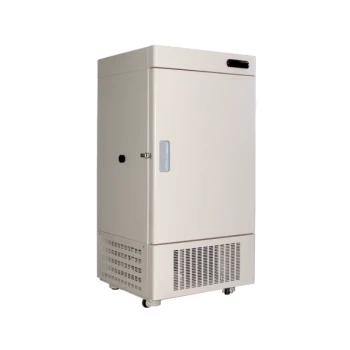
- 308L Precision Ultra Low Temperature Freezer for Laboratory Applications
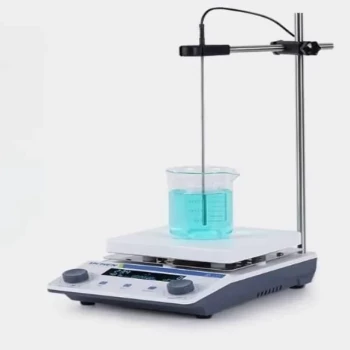
- Laboratory Small Constant Temperature Heated Magnetic Stirrer Heater and Stirrer
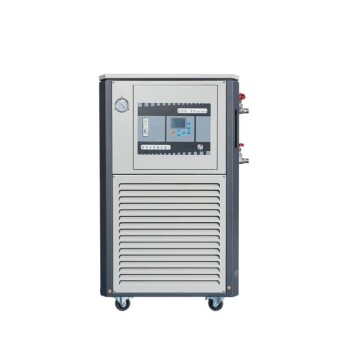
- 5L Heating Chilling Circulator Cooling Water Bath Circulator for High and Low Temperature Constant Temperature Reaction
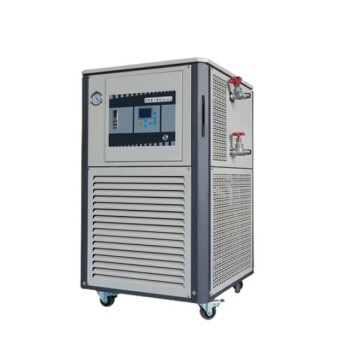
- 10L Heating Chilling Circulator Cooling Water Bath Circulator for High and Low Temperature Constant Temperature Reaction
- 100L Heating Chilling Circulator Cooling Water Bath Circulator for High and Low Temperature Constant Temperature Reaction
People Also Ask
- How does evaporation occur in Ultra Freezers? The Core Process for Deep Freezing
- How are ultra low temperature freezers used in pharmaceutical storage? Protect Your High-Value Biologics & Vaccines
- What is the price range for ultra low temperature freezers? Protect Your Samples with the Right Investment
- How are Ultra Freezers designed for easy movement in laboratories? Unlock Lab Flexibility with Swivel Castors
- How is temperature controlled in ultra low temperature freezers? A Guide to Stable -80°C Storage