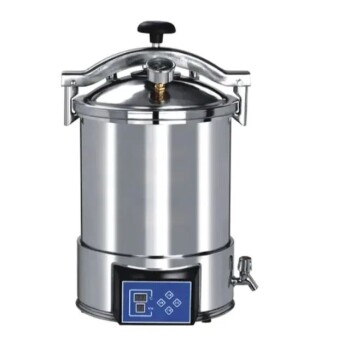
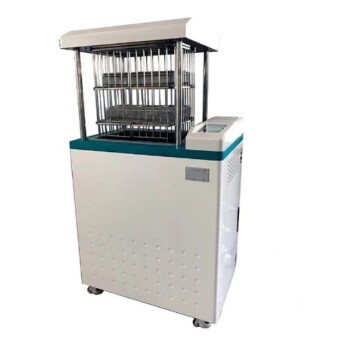
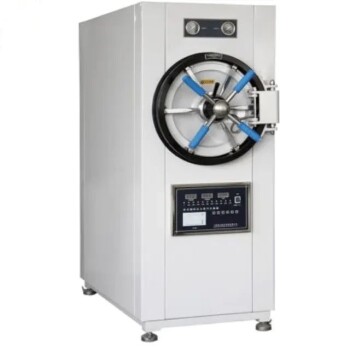
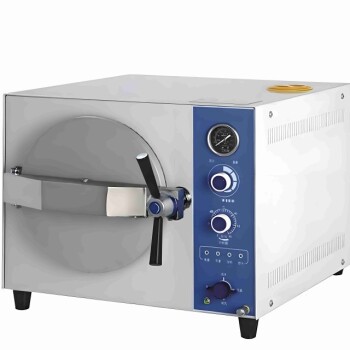
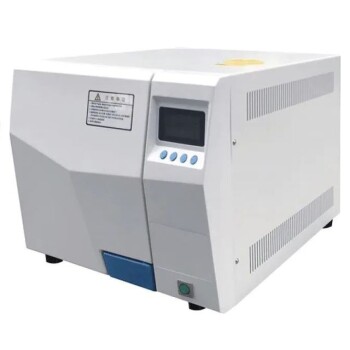
The high-pressure autoclave serves as the foundational reaction environment for the hydrothermal synthesis of CMB@1T-MoS2. By providing a sealed, high-temperature space, it facilitates the chemical reaction between molybdenum and sulfur sources while simultaneously anchoring the resulting nanosheets to the biochar substrate. This process is essential for achieving a uniform distribution of the metallic 1T phase, which is critical for the material’s performance.
The autoclave enables "in-situ" growth, meaning the MoS2 forms directly on the cow manure biochar (CMB) surface rather than separately. This high-pressure environment prevents the nanosheets from clumping together, ensuring the final composite maintains a high density of exposed active sites.
Facilitating the Hydrothermal Environment
Achieving Subcritical Conditions
The primary function of the autoclave is to maintain a sealed environment where solvents can be heated well beyond their atmospheric boiling points. At temperatures such as 200°C, the internal pressure rises significantly, creating subcritical water conditions.
These conditions drastically increase the solubility of precursors, such as ammonium molybdate and thiourea. This increased solubility allows for a more complete and rapid reaction than would be possible in an open system.
Enabling 1T-Phase Transformation
The high-pressure environment is instrumental in inducing the specific 1T crystalline phase of MoS2. Unlike the more common 2H phase, the 1T phase is metallic and highly conductive, making it superior for catalytic applications.
The autoclave provides the energy and confined space necessary to overcome activation energy barriers. This ensures the formation of monolayer or multilayer nanosheets with the precise structural integrity required for advanced electrochemical or environmental applications.
Optimizing Composite Structural Integrity
Promoting In-Situ Growth on Biochar
The autoclave ensures that the 1T-MoS2 nanosheets grow directly onto the surface of the cow manure biochar. This "in-situ" growth creates a much stronger bond between the catalyst and the substrate than simple physical mixing.
Because the reaction occurs in a confined, pressurized space, the precursors penetrate the porous structure of the biochar. This leads to stable loading and prevents the active materials from washing away during use.
Preventing Nanosheet Aggregation
One of the greatest challenges in nanomaterial synthesis is the tendency of sheets to "stack" or aggregate, which hides active sites. The high-pressure environment promotes uniform growth across the biochar surface.
By keeping the nanosheets separated and well-distributed, the autoclave ensures high exposure of active sites. This maximize the effective surface area of the CMB@1T-MoS2 composite, directly enhancing its performance.
Understanding the Trade-offs and Limitations
Safety and Equipment Requirements
Operating at 200°C under high autogenous pressure requires specialized Teflon-lined stainless steel autoclaves. Standard laboratory glassware cannot withstand these forces, increasing the initial setup cost and requiring strict safety protocols to prevent catastrophic failure.
Lack of Real-Time Monitoring
Because the reaction occurs inside a sealed, opaque pressure vessel, it is impossible to observe the synthesis in real-time. Researchers must rely on precise post-reaction analysis and iterative "trial and error" to optimize hold times and temperatures.
Scalability Constraints
Hydrothermal synthesis in an autoclave is inherently a batch process. Scaling production from grams to kilograms requires significantly larger, more expensive pressure vessels and complex thermal management systems to ensure uniform heating throughout the larger volume.
How to Apply This to Your Project
Optimizing Your Synthesis Strategy
To achieve the best results with CMB@1T-MoS2, your focus should shift based on your specific performance requirements.
- If your primary focus is Maximizing Catalytic Activity: Prioritize precise temperature control (e.g., 180°C–200°C) to ensure the formation of the 1T phase while preventing over-crystallization.
- If your primary focus is Long-Term Stability: Focus on the "in-situ" loading duration to ensure the MoS2 nanosheets are deeply anchored into the biochar pores, preventing leaching.
- If your primary focus is Material Uniformity: Ensure the precursor solution is thoroughly homogenized before sealing the autoclave to prevent localized concentration gradients.
The high-pressure autoclave is the indispensable engine that drives the transformation of raw precursors into high-performance, biochar-supported 1T-MoS2 composites.
Summary Table:
| Key Role | Mechanism | Benefit for CMB@1T-MoS2 |
|---|---|---|
| Subcritical Environment | High T/P (e.g., 200°C) | Increases precursor solubility and reaction speed. |
| Phase Transformation | High energy/confinement | Induces the metallic, highly conductive 1T-MoS2 phase. |
| In-Situ Growth | Direct surface reaction | Creates strong chemical bonds with the biochar substrate. |
| Anti-Aggregation | Controlled growth | Prevents nanosheet stacking to maximize active sites. |
Elevate Your Material Synthesis with KINTEK Precision
Are you looking to achieve superior 1T-phase MoS2 transformation or optimize your hydrothermal synthesis? KINTEK specializes in high-performance laboratory equipment tailored for advanced materials research. We provide industry-leading high-temperature high-pressure reactors and autoclaves, alongside essential tools like muffle furnaces, hydraulic presses, and specialized PTFE consumables to ensure your CMB@1T-MoS2 composites meet the highest standards of stability and catalytic activity.
From laboratory-scale exploration to optimizing batch uniformity, KINTEK offers the technical expertise and reliable supply chain your research demands.
Ready to upgrade your lab’s capabilities? Contact our experts today to find the perfect equipment solution for your project!
References
- Yutian He, Mingzhi Huang. Activation of peroxymonosulfate by cow manure biochar@1T-MoS2 for enhancing degradation of dimethyl phthalate: Performance and mechanism. DOI: 10.3389/fenvs.2023.1112801
This article is also based on technical information from Kintek Solution Knowledge Base .
Related Products
- Mini SS High Pressure Autoclave Reactor for Laboratory Use
- High Pressure Laboratory Autoclave Reactor for Hydrothermal Synthesis
- Stainless High Pressure Autoclave Reactor Laboratory Pressure Reactor
- Desktop Fast High Pressure Laboratory Autoclave Sterilizer 16L 24L for Lab Use
- Laboratory High Pressure Horizontal Autoclave Steam Sterilizer for Lab Use
People Also Ask
- Why use high-pressure reactors for molecular sieve synthesis? Unlock Superior Crystallinity and Framework Control
- What are the advantages of using a high-pressure reactor like an autoclave? Maximize Liquefaction Speed & Yield
- Why are high-pressure reactors or autoclaves necessary for the synthesis of new functional materials? Unlock Precision.
- What is the function of a high-pressure reactor autoclave? Enhancing Cu/N Co-Doped Carbon Catalyst Synthesis
- How are high-pressure reactors used to prepare metaphosphate electrocatalysts? Master In-Situ Precursor Growth