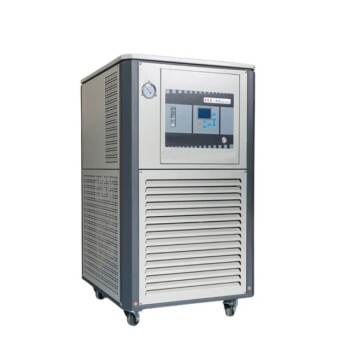
A high-pressure hydrothermal reactor serves as a critical processing vessel that creates a sealed, liquid-phase environment characterized by elevated temperature and pressure. This equipment enables the in-situ precipitation and crystallization of hydroxyapatite at conditions exceeding the atmospheric boiling point. By maintaining this closed system, the reactor ensures high reproducibility and allows for the precise manipulation of the material's physical and chemical properties.
The core value of this reactor lies in its ability to transform a standard chemical reaction into a precision engineering process. By leveraging high pressure and temperature, you gain the ability to strictly control phase composition and pore structure, which is essential for creating effective mesoporous catalysts.
The Mechanics of Hydrothermal Control
Creating a Sealed Reaction Environment
The fundamental role of the reactor is to provide a completely closed system. Unlike open-air synthesis, this sealed environment prevents the loss of solvents and volatile components.
This isolation ensures that the stoichiometry of the reaction remains constant throughout the process. It allows for a high degree of uniformity in the contact between reactants, which is vital for consistent results.
Elevating Reactivity and Solubility
By operating under high pressure, the reactor allows aqueous solutions to reach temperatures well above their boiling points, potentially approaching a near-supercritical state.
This state significantly enhances the solubility of precursors and the reactivity of raw materials. It facilitates chemical interactions that would be kinetically slow or impossible under ambient conditions.
Precision Engineering of Material Properties
Regulating Phase Composition
The reactor provides the stability needed to incorporate specific ions, such as molybdate anions, into the hydroxyapatite structure.
Through precise regulation of temperature and pressure, you can dictate the exact crystalline phase that forms. This ensures the final powder consists of the desired hydroxyapatite composition rather than unwanted byproducts.
Defining the Mesoporous Structure
One of the most critical outcomes of using this reactor is the development of a mesoporous structure. The hydrothermal treatment drives anisotropic crystal growth—growth that is direction-dependent.
This controlled growth leads to the formation of pores within the material. These pores create a high specific surface area, which is the defining characteristic required for high-performance heterogeneous catalysts.
Ensuring Dispersibility and Reproducibility
The controlled environment minimizes the random agglomeration of particles, leading to better particle dispersibility.
Because the temperature and pressure profiles can be automated and replicated exactly, the reactor ensures high reproducibility. This means you can produce the same high-quality powder batch after batch.
Navigating the Trade-offs
The "Black Box" Limitation
Because the reactor is a sealed, high-pressure steel vessel, it functions as a "black box" during synthesis. You generally cannot observe the reaction as it happens or make real-time adjustments to the chemistry once the cycle begins.
Parameter Sensitivity
While the reactor offers precision, the outcome is highly sensitive to the input parameters. Slight deviations in the temperature ramp rate, soak time, or initial pressure can significantly alter the pore size distribution or crystallinity.
Operational Complexity
Compared to simple precipitation methods, hydrothermal synthesis requires more complex equipment and safety protocols. The cycle times are often longer due to the heating and cooling periods required for the pressurized vessel.
Making the Right Choice for Your Goal
To maximize the utility of a high-pressure hydrothermal reactor for your specific application, consider these focused recommendations:
- If your primary focus is Catalytic Activity: Prioritize the optimization of pressure and temperature to maximize specific surface area, as the mesoporous structure directly correlates to ion exchange performance.
- If your primary focus is Industrial Scalability: Focus on the reproducibility aspect of the reactor; establish strict standard operating procedures (SOPs) for temperature ramps to ensure batch-to-batch consistency.
By mastering the pressure and temperature parameters within the reactor, you transition from simple chemical mixing to the precise structural design of advanced catalytic materials.
Summary Table:
| Feature | Role in HA Synthesis | Key Benefit |
|---|---|---|
| Sealed Environment | Prevents solvent loss & maintains stoichiometry | High chemical uniformity and consistency |
| High Pressure/Temp | Enhances precursor solubility & reactivity | Facilitates reactions impossible at ambient conditions |
| Thermal Regulation | Controls anisotropic crystal growth | Defines mesoporous structure and surface area |
| Automated Profiles | Ensures precise replication of conditions | High batch-to-batch reproducibility |
Elevate Your Material Research with KINTEK Precision
Unlock the full potential of your hydrothermal synthesis with KINTEK’s premium laboratory equipment. Whether you are developing mesoporous catalysts or advanced biomaterials, our high-temperature high-pressure reactors and autoclaves provide the stability and control necessary for superior phase composition and pore structure engineering.
Why choose KINTEK?
- Comprehensive Range: From muffle and vacuum furnaces to advanced CVD and PECVD systems.
- Precision Engineering: High-performance crushing, milling, and hydraulic presses for sample preparation.
- Total Solutions: Quality consumables including PTFE products, ceramics, and crucibles to support your entire workflow.
Ready to achieve high-performance results? Contact our technical experts today to find the perfect solution for your lab!
References
- О. І. Aksimentyeva, O. S. Dzendzeliuk. Graphene based nanostructures for ionizing radiation sensing. DOI: 10.21175/rad.abstr.book.2023.32.7
This article is also based on technical information from Kintek Solution Knowledge Base .
Related Products
- Customizable Laboratory High Temperature High Pressure Reactors for Diverse Scientific Applications
- High Pressure Laboratory Autoclave Reactor for Hydrothermal Synthesis
- Customizable High Pressure Reactors for Advanced Scientific and Industrial Applications
- Stainless High Pressure Autoclave Reactor Laboratory Pressure Reactor
- Mini SS High Pressure Autoclave Reactor for Laboratory Use
People Also Ask
- How do high-pressure and high-temperature reactors ensure the effective treatment of lignocellulosic wastewater in WAO?
- What equipment is required for high-pressure high-temperature reactions? Master Extreme Chemistry Safely
- How do you control high pressure in a reactor? A Guide to Safe & Stable Operation
- How does initial oxygen pressure affect the wet oxidation of pharmaceutical sludge? Master Your Oxidation Depth
- Why is argon better than nitrogen for inert atmosphere? Ensure Absolute Reactivity & Stability