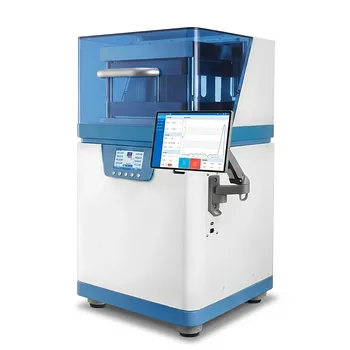
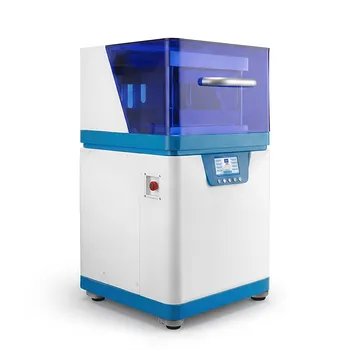
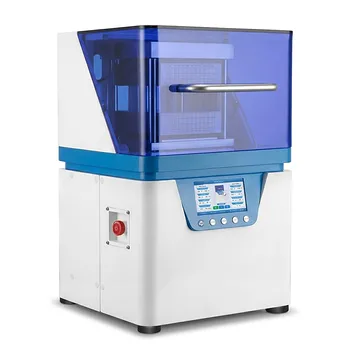
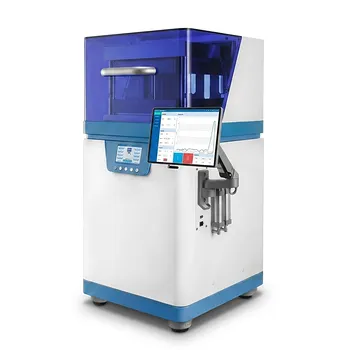
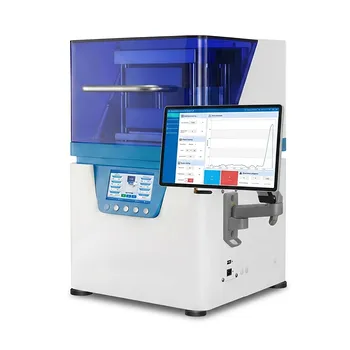
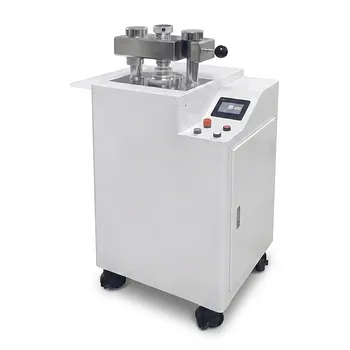
The high-pressure hydrothermal synthesis reactor is the indispensable environment required to drive the crystallization of Mn-Co-MCM-41. It provides a sealed, high-temperature setting—typically around 140°C—where autogenous pressure forces the ordered assembly of silica and metal ions around a template agent. This specialized environment ensures that manganese (Mn) and cobalt (Co) are effectively integrated into the molecular sieve framework rather than remaining as external impurities.
The reactor enables subcritical reaction conditions that accelerate the dissolution of precursors and facilitate the transition from a gel phase to a highly ordered mesoporous crystalline structure. This process is essential for achieving the specific pore geometry and metal distribution required for high-performance catalytic applications.
Creating a High-Energy Reaction Environment
Overcoming Atmospheric Boiling Points
Under standard atmospheric conditions, solvents evaporate at their boiling points, limiting the energy available for chemical reactions. The high-pressure reactor allows the synthesis mixture to reach temperatures like 140°C while remaining in a liquid or subcritical state, providing the thermal energy necessary for framework formation.
Harnessing Autogenous Pressure
As the temperature rises within the sealed vessel, autogenous pressure builds naturally. This internal pressure acts as a catalyst for the transformation from the gel phase to the crystalline structure, ensuring the molecular sieve develops the necessary mechanical strength and structural integrity.
Facilitating Metal Framework Incorporation
Promoting Hydrolysis and Polycondensation
The pressurized environment facilitates the thorough hydrolysis of manganese and cobalt ions. This allows the metal heteroatoms to undergo polycondensation reactions alongside silicate components, ensuring they are chemically bonded into the MCM-41 framework rather than merely deposited on the surface.
Enhancing Catalytic Potential
The effective incorporation of Mn and Co atoms is critical for the final material's utility. A successful hydrothermal crystallization ensures a regular mesoporous structure that maximizes the surface area and accessibility of these active metal sites, which directly impacts the oxidation efficiency of the sieve in industrial applications.
Driving Structural Order and Morphology
Template-Guided Assembly
MCM-41 relies on a template agent to define its hexagonal pore structure. The stable, high-pressure environment within the reactor ensures that the silica and metal precursors self-assemble precisely around these templates, resulting in a highly ordered pore network.
Phase Purity and Uniform Growth
A controlled hydrothermal environment prevents the formation of unwanted secondary phases or irregular crystal growth. By maintaining constant-temperature distribution, the reactor ensures uniform nucleation, which produces a powder with consistent particle morphology and high phase purity.
Understanding the Trade-offs and Risks
Structural Collapse vs. Reaction Speed
While increasing the temperature can accelerate the crystallization process, excessive heat may lead to the thermal degradation of the template agent. If the template breaks down prematurely, the mesoporous structure will collapse, resulting in a dense, non-porous material with limited surface area.
Equipment Corrosion and Safety
Operating at high autogenous pressures requires specialized, corrosion-resistant autoclaves (often lined with Teflon). The combination of high heat, pressure, and potentially alkaline conditions can degrade reactor components over time, which may introduce metallic impurities into the molecular sieve if the equipment is not rigorously maintained.
Applying This to Your Synthesis Goals
How to Optimize Your Process
Choosing the right parameters for your hydrothermal reactor depends on the specific performance requirements of your Mn-Co-MCM-41 molecular sieve.
- If your primary focus is Catalytic Activity: Prioritize the effective incorporation of Mn and Co by maintaining a stable temperature of 140°C to ensure these metals bond deeply within the framework.
- If your primary focus is Structural Purity: Ensure the reactor provides a perfectly sealed environment to maintain constant autogenous pressure, which prevents the formation of amorphous silica impurities.
- If your primary focus is Morphological Control: Consider using a reactor with dynamic stirring or precise cooling ramps to achieve uniform particle size and prevent crystal agglomeration.
Mastering the high-pressure environment within the hydrothermal reactor is the definitive factor in transforming a raw chemical gel into a sophisticated, high-performance Mn-Co-MCM-41 molecular sieve.
Summary Table:
| Key Feature | Role in Crystallization | Impact on Final Material |
|---|---|---|
| High Temperature | Overcomes atmospheric boiling points | Provides energy for framework formation |
| Autogenous Pressure | Forces gel-to-crystal transition | Ensures mechanical strength and structural integrity |
| Subcritical Conditions | Accelerates hydrolysis & polycondensation | Chemically bonds Mn and Co into the framework |
| Sealed Environment | Guides template-based assembly | Creates a highly ordered, hexagonal pore network |
| Thermal Stability | Maintains uniform nucleation | Produces high phase purity and consistent morphology |
Elevate Your Material Research with KINTEK Precision
Unlock the full potential of your molecular sieve synthesis with KINTEK’s high-performance laboratory equipment. We specialize in providing researchers with the robust high-temperature high-pressure reactors and autoclaves necessary to achieve superior catalytic activity and structural purity.
Our extensive portfolio includes everything from muffle and vacuum furnaces to crushing systems, hydraulic presses, and high-quality consumables like PTFE and ceramics. Whether you are optimizing metal framework incorporation or scaling up industrial catalysis, KINTEK delivers the reliability and technical expertise you need.
Ready to optimize your hydrothermal process? Contact our specialists today for a tailored solution!
References
- Wenju Peng, Yaoyao Zhang. Preparation of Mn-Co-MCM-41 Molecular Sieve with Thermosensitive Template and Its Degradation Performance for Rhodamine B. DOI: 10.3390/catal13060991
This article is also based on technical information from Kintek Solution Knowledge Base .
Related Products
- High Pressure Laboratory Autoclave Reactor for Hydrothermal Synthesis
- Customizable Laboratory High Temperature High Pressure Reactors for Diverse Scientific Applications
- Customizable High Pressure Reactors for Advanced Scientific and Industrial Applications
- Mini SS High Pressure Autoclave Reactor for Laboratory Use
- Stainless High Pressure Autoclave Reactor Laboratory Pressure Reactor
People Also Ask
- What role does a high-pressure reactor (autoclave) play in the synthesis of NiCuFe-LDH? Master Hydrothermal Growth
- What Role Does a High-Pressure Reactor or Autoclave Play in HA Catalyst Synthesis? Achieve High Surface Area Materials
- What equipment is required for hydrothermal synthesis of Ga0.25Zn4.67S5.08? Optimize Your Semiconductor Production
- What is the function of a high-pressure reactor in the hydrothermal synthesis of boehmite? Expert Process Insights
- What role does an autoclave play in the synthesis of MnO2 nanofibers? Mastering Hydrothermal Growth