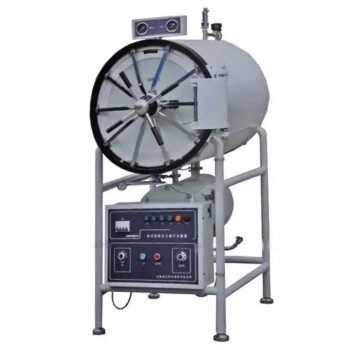
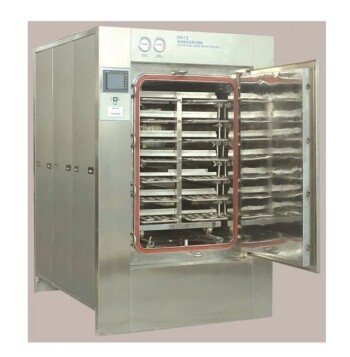
A high-temperature autoclave is the essential vessel for hydrothermal and solvothermal synthesis of metal oxide electrodes. It provides a sealed, high-pressure environment that allows solvents to reach temperatures well above their atmospheric boiling points. This specific condition facilitates the dissolution and recrystallization of precursors, enabling the growth of high-activity nanomaterials—such as nanowires and nanosheets—that are critical for the energy storage capacity of zinc-ion hybrid supercapacitors (ZIHSCs).
Core Takeaway: The autoclave creates a subcritical environment that allows for precise control over the morphology and crystallinity of metal oxides. By manipulating pressure and temperature, researchers can engineer electrodes with high surface areas and optimized ion diffusion pathways.
Engineering the Synthesis Environment
Exceeding Atmospheric Boiling Points
In a standard open-air vessel, the synthesis temperature is limited by the solvent's boiling point. An autoclave seals the reaction, allowing the internal pressure to rise as the temperature increases, keeping water or organic solvents in a liquid state at extreme temperatures.
Facilitating Molecular-Level Contact
The high-energy environment within the autoclave increases the kinetic energy of the reactants. This promotes deep hydrothermal reactions and full molecular-level contact between metal ions and ligands, ensuring high-purity crystalline growth.
Overcoming Activation Energy Barriers
Many chemical reactions required for high-performance metal oxides or metal-organic frameworks (MOFs) have high activation energies. The elevated thermal energy provided by the autoclave allows precursors to overcome these barriers, facilitating self-assembly into complex three-dimensional structures.
Optimizing Electrode Performance for ZIHSCs
Controlling Crystal Morphology
The autoclave environment allows for the regulation of the preferred growth direction of nanoparticles. By adjusting parameters, manufacturers can induce the exposure of specific crystal planes that offer higher catalytic activity and better adsorption for zinc ions.
Enhancing Ion Diffusion Rates
ZIHSCs require rapid ion movement to achieve high power density. The autoclave facilitates the synthesis of specific nanostructures—like core-shell configurations or nanosheets—which provide short diffusion paths and high specific surface areas.
Promoting High Crystallinity
A controlled, high-pressure cooling and heating cycle ensures that the resulting metal oxides have uniform morphology and high crystallinity. This structural integrity is vital for the long-term cycling stability of the electrode during repeated charge and discharge cycles.
Understanding the Trade-offs and Limitations
Safety and Operational Complexity
Operating at high pressures and temperatures requires specialized stainless steel equipment and rigorous safety protocols. The risk of vessel failure or "blowouts" necessitates constant monitoring and limits the speed of experimental iterations.
Scalability and Throughput
Autoclave synthesis is typically a batch process, which can be difficult to scale for mass production compared to continuous flow methods. The long reaction times—often ranging from several hours to days—can create bottlenecks in the manufacturing pipeline.
The "Black Box" Challenge
Because the reaction occurs inside a sealed, opaque pressure vessel, researchers cannot observe the synthesis in real-time. This lack of in-situ monitoring makes it difficult to adjust parameters mid-reaction if conditions deviate from the intended path.
Making the Right Choice for Your Goal
When utilizing high-temperature autoclaves for ZIHSC electrode development, your approach should align with your specific performance targets:
- If your primary focus is High Energy Density: Prioritize longer hydrothermal durations at higher pressures to promote the growth of complex, high-surface-area morphologies like porous MOFs or core-shell structures.
- If your primary focus is Power Density and Rate Capability: Focus on shorter, high-temperature bursts to induce the growth of 1D nanowires or thin nanosheets that minimize ion diffusion distances.
- If your primary focus is Structural Stability: Use moderate temperatures with slow cooling cycles to ensure high crystallinity and minimize structural defects within the metal oxide lattice.
By mastering the high-pressure environment of the autoclave, you can precisely tune the electrochemical properties of metal oxides to meet the demanding requirements of modern zinc-ion energy storage systems.
Summary Table:
| Synthesis Factor | Autoclave Role | Impact on ZIHSC Electrode |
|---|---|---|
| Thermal Energy | Exceeds atmospheric boiling points | Overcomes activation barriers for high-purity crystals |
| Morphology Control | Regulates growth direction | Creates high-surface-area nanowires & nanosheets |
| Internal Pressure | Facilitates molecular-level contact | Promotes uniform 3D structures and MOF assembly |
| Cooling Cycles | Controlled structural stabilization | Enhances crystallinity and long-term cycling stability |
Elevate Your Energy Storage Research with KINTEK Precision
Unlock the full potential of your zinc-ion hybrid supercapacitor (ZIHSC) development with KINTEK’s industry-leading high-temperature high-pressure reactors and autoclaves. Our equipment is engineered to provide the precise subcritical environments necessary for synthesizing high-activity metal oxide electrodes with optimized ion diffusion pathways.
As a specialist in laboratory equipment, KINTEK offers a comprehensive range of tools to support your entire workflow:
- Synthesis & Reaction: Advanced autoclaves, electrolytic cells, and high-temperature furnaces (muffle, tube, vacuum).
- Material Processing: High-performance crushing, milling, and hydraulic presses for pelletizing.
- Laboratory Essentials: Precise cooling solutions, ULT freezers, and essential consumables like PTFE products and crucibles.
Whether you are focusing on high energy density or rapid rate capability, our technical experts are ready to help you select the right tools for superior results. Contact us today to optimize your laboratory efficiency!
References
- Himanshu Gupta, Prashanth W. Menezes. Recent technological advances in designing electrodes and electrolytes for efficient zinc ion hybrid supercapacitors. DOI: 10.1039/d3ya00259d
This article is also based on technical information from Kintek Solution Knowledge Base .
Related Products
- High Pressure Laboratory Autoclave Reactor for Hydrothermal Synthesis
- Customizable Laboratory High Temperature High Pressure Reactors for Diverse Scientific Applications
- Automatic High Temperature Heated Hydraulic Press Machine with Heated Plates for Lab
- Mini SS High Pressure Autoclave Reactor for Laboratory Use
- Stainless High Pressure Autoclave Reactor Laboratory Pressure Reactor
People Also Ask
- What role does a high-pressure reactor (autoclave) play in the synthesis of NiCuFe-LDH? Master Hydrothermal Growth
- What Role Does a High-Pressure Reactor or Autoclave Play in HA Catalyst Synthesis? Achieve High Surface Area Materials
- What equipment is required for hydrothermal synthesis of Ga0.25Zn4.67S5.08? Optimize Your Semiconductor Production
- What is the function of a high-pressure reactor in the hydrothermal synthesis of boehmite? Expert Process Insights
- What role does an autoclave play in the synthesis of MnO2 nanofibers? Mastering Hydrothermal Growth