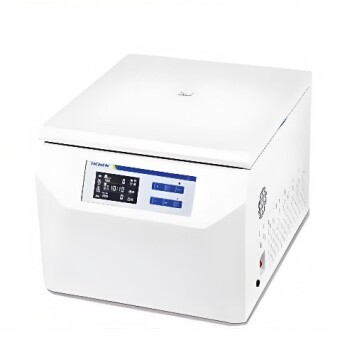
A laboratory high-pressure reactor acts as the essential containment vessel that allows water to transcend its standard physical limitations. By creating a sealed environment capable of sustaining extreme temperatures and pressures, it forces water into a supercritical state where it functions simultaneously as a solvent and a catalyst for biomass breakdown.
Core Takeaway The reactor’s primary function is not just containment, but the fundamental alteration of water’s chemical properties. By maintaining a supercritical environment, the reactor enables water to hydrolyze hemicellulose and cellulose into fermentable sugars while effectively separating lignin, often eliminating the need for harsh external acid catalysts.
The Physics of the Supercritical Environment
Reaching the Critical Point
To achieve supercritical water (SCW) hydrolysis, the reactor must push water beyond its critical point. This requires a sealed system capable of withstanding extreme conditions, typically exceeding 374°C and 22.1 MPa.
Changing Water Chemistry
Inside the reactor, these conditions drastically reduce the dielectric constant of water. This physical change alters water's polarity, effectively making it behave like an organic solvent rather than a polar liquid.
The Dual Role of Water
In this state, the reactor allows water to act as a solvent for organic biomass components and as an acid catalyst. This dual capability drives the chemical breakdown of biomass structures without requiring significant amounts of added mineral acids.
Mechanism of Biomass Conversion
Targeting Cellulose and Hemicellulose
The reactor environment facilitates the rapid depolymerization of carbohydrate polymers. It efficiently converts hemicellulose and specific cellulose components into reducing sugars, which are essential precursors for fermentation.
Lignin Separation
A key advantage of using a high-pressure reactor for SCW is phase separation. While sugars are solubilized, lignin is largely retained in the solid phase. This natural fractionation simplifies downstream processing and recovery of materials.
Critical Reactor Design Features
Continuous Flow and Residence Time
For SCW hydrolysis, continuous tubular reactors are often superior to batch systems. They allow for extremely short residence times, often in the second or sub-second range.
Preventing Product Degradation
Rapid heating and precise timing are vital. The reactor must allow the reaction to be stopped immediately after cellulose converts to monosaccharides.
Yield Selectivity
By controlling residence time, the reactor prevents the further degradation of sugars into by-products like furfural or 5-hydroxymethylfurfural (5-HMF). This selectivity ensures a high yield of fermentable sugars rather than unwanted chemical artifacts.
Understanding the Trade-offs
Material Durability and Corrosion
While SCW reduces the need for added acids, the environment inside the reactor is still harsh. To ensure safety and continuity, reactors must be constructed from industrial-grade, corrosion-resistant materials to prevent metal ion contamination and equipment failure.
The Balance of Speed and Control
The reaction kinetics in SCW are incredibly fast. If the reactor design does not allow for rapid quenching (cooling), the target sugars will decompose almost instantly, ruining the yield.
Making the Right Choice for Your Goal
To optimize your biomass conversion process, consider how the reactor's capabilities align with your specific end-product requirements:
- If your primary focus is maximizing sugar yield: Prioritize a continuous tubular reactor design that offers precise control over residence time (seconds or sub-seconds) to prevent degradation into furfural.
- If your primary focus is lignin recovery: Ensure your reactor system includes efficient filtration or phase separation mechanisms to collect the solid-phase lignin that remains after hydrolysis.
- If your primary focus is operational longevity: Invest in reactors made from high-grade alloys (like Inconel or Hastelloy) to withstand the corrosive nature of high-pressure, high-temperature aqueous environments.
The high-pressure reactor is not merely a vessel; it is the active instrument that redefines the solvent properties of water to unlock biomass potential.
Summary Table:
| Feature | Supercritical Water (SCW) Impact | Reactor Requirement |
|---|---|---|
| Temperature | >374°C (Reaches critical point) | High-precision thermal control |
| Pressure | >22.1 MPa (Changes water polarity) | Certified pressure vessel safety |
| Reaction Time | Sub-second depolymerization | Continuous flow / rapid quenching |
| Solvent State | Water acts as solvent & catalyst | Corrosion-resistant alloys (Inconel) |
| Product Goal | Sugar yield vs. Lignin separation | Residence time & phase control |
Revolutionize Your Biomass Research with KINTEK
Unlock the full potential of supercritical water hydrolysis with KINTEK’s premium laboratory high-pressure reactors and autoclaves. Specifically engineered for extreme conditions, our reactors provide the precise control over residence time and thermal stability required to maximize sugar yields and prevent product degradation.
From high-temperature furnaces and crushing systems to specialized high-pressure reactors and corrosion-resistant consumables, KINTEK is the partner of choice for leading laboratory research.
Ready to scale your biomass conversion process? Contact KINTEK today to consult with our experts on the perfect high-pressure solution for your laboratory.
References
- İrem Deniz. Marin biyokütlenin hidrotermal sıvılaştırılması: Entegre bir proses. DOI: 10.21541/apjes.320484
This article is also based on technical information from Kintek Solution Knowledge Base .
Related Products
- Customizable Laboratory High Temperature High Pressure Reactors for Diverse Scientific Applications
- Stainless High Pressure Autoclave Reactor Laboratory Pressure Reactor
- High Pressure Laboratory Autoclave Reactor for Hydrothermal Synthesis
- Mini SS High Pressure Autoclave Reactor for Laboratory Use
- Customizable High Pressure Reactors for Advanced Scientific and Industrial Applications
People Also Ask
- How do high-pressure and high-temperature reactors ensure the effective treatment of lignocellulosic wastewater in WAO?
- What equipment is required for high-pressure high-temperature reactions? Master Extreme Chemistry Safely
- How do you control high pressure in a reactor? A Guide to Safe & Stable Operation
- How does initial oxygen pressure affect the wet oxidation of pharmaceutical sludge? Master Your Oxidation Depth
- Why is argon better than nitrogen for inert atmosphere? Ensure Absolute Reactivity & Stability