A laboratory magnetic stirrer is fundamental to the synthesis of MoOx/PDA precursors. It provides a continuous and uniform kinetic environment essential for the oxidative coordination polymerization between molybdate ions and dopamine. This high-precision mixing ensures thorough contact between monomers and inorganic salts, enabling molecular-level coordination and the development of a specific flower-like morphology.
The magnetic stirrer serves as the engine for structural precision, ensuring that the chemical interaction between dopamine and molybdate ions results in a uniform, self-assembled heterostructure rather than a chaotic aggregate.
Facilitating Molecular-Level Coordination
Ensuring Monomer-Ion Contact
The primary role of the stirrer is to maximize the interaction between molybdate ions and dopamine monomers. By maintaining a constant motion, the device ensures that these reactants are distributed evenly throughout the solvent.
This eliminates mass transfer limitations, allowing the chemical species to interact at the molecular level. Without this consistent agitation, local concentration gradients could lead to uneven reaction rates.
Kinetic Uniformity in Polymerization
During the oxidative coordination polymerization stage, the stirrer provides a stable kinetic environment. This stability is crucial for the synchronized growth of the polymer chains around the inorganic centers.
Consistent mechanical energy prevents the premature precipitation of reactants. This ensures that the polymerization proceeds at a controlled rate across the entire volume of the solution.
Guiding Structural Self-Assembly
Forming Flower-Like Precursors
The specific "flower-like" morphology of the MoOx/PDA precursor is highly dependent on the mechanical disturbance provided by the stirrer. This motion helps guide the self-assembly process as the coordination complex forms.
By preventing the settling of particles, the stirrer allows the structures to grow in three dimensions. This results in the characteristic high-surface-area morphology required for advanced material applications.
Establishing Heterostructure Foundations
The uniformity achieved during the stirring phase is the direct precursor to successful carbonization. A well-stirred solution creates a precursor that can be converted into a uniform heterostructure.
This structural consistency ensures that the resulting material has a regular particle size distribution. Such precision is vital for the material’s eventual performance in catalysis or energy storage.
Understanding the Trade-offs and Pitfalls
Speed vs. Structural Integrity
While high-speed stirring ensures uniformity, excessive shear forces can disrupt the delicate self-assembly of the flower-like structures. If the rotational speed is too high, the mechanical energy may fragment the growing precursors.
Heat Generation and Evaporation
Magnetic stirrers, especially those with integrated heating elements, can introduce localized hotspots. If the temperature is not strictly monitored, it can alter the polymerization kinetics and lead to secondary phases or impurities.
Sedimentation Risks
If the stirring speed is too low, the density difference between the inorganic salts and the organic solvent may cause sedimentation. This results in "clumpy" precursors that lack the molecular-level coordination needed for high-performance heterostructures.
Applying This to Your Synthesis Process
To achieve the best results in your MoOx/PDA synthesis, you must balance the intensity of the mechanical agitation with the delicate nature of the coordination reaction.
- If your primary focus is Morphology Precision: Use a moderate, constant stirring speed to allow the flower-like structures to self-assemble without being shredded by high shear forces.
- If your primary focus is Chemical Purity: Prioritize the elimination of dead zones in the flask by ensuring the magnetic flea is appropriately sized for the volume of your solution.
- If your primary focus is Scale-up Consistency: Utilize a digital stirrer with precise RPM control to ensure that the kinetic environment can be replicated exactly across different batches.
Precise control over the kinetic environment is the decisive factor in transforming simple chemical precursors into sophisticated, self-assembled MoOx/PDA heterostructures.
Summary Table:
| Key Function | Impact on MoOx/PDA Precursor | Critical Control Parameter |
|---|---|---|
| Molecular Coordination | Ensures uniform contact between molybdate ions & dopamine | Stirring Speed (RPM) |
| Kinetic Stability | Maintains stable environment for oxidative polymerization | Mechanical Energy Input |
| Morphology Guidance | Facilitates self-assembly of 3D "flower-like" structures | Shear Force Management |
| Homogeneity | Prevents sedimentation and localized concentration gradients | Flea/Bar Size & Vessel Shape |
| Thermal Regulation | Prevents hotspots during exothermic polymerization stages | Integrated Temperature Control |
Elevate Your Material Synthesis with KINTEK Precision
Achieving the perfect flower-like morphology in MoOx/PDA precursors requires more than just chemistry—it requires absolute kinetic control. KINTEK specializes in high-performance laboratory equipment designed to meet the rigorous demands of advanced material research.
Whether you are focusing on molecular-level coordination or scaling up for energy storage applications, our portfolio offers the reliability you need:
- Precision Mixing: Advanced magnetic stirrers, shakers, and homogenizers for uniform precursors.
- Thermal Processing: High-temperature muffle, tube, and vacuum furnaces for flawless carbonization.
- Advanced Reactors: High-temperature high-pressure reactors and autoclaves for complex synthesis.
- Sample Prep: Crushing, milling systems, and hydraulic presses for material characterization.
- Specialized Tools: Battery research consumables, electrolytic cells, and high-purity ceramics/crucibles.
Ready to optimize your synthesis results? Contact KINTEK today to discover how our comprehensive laboratory solutions can enhance your research efficiency and ensure structural consistency in every batch.
References
- Mingyue Yuan, Renchao Che. Atomic and Electronic Reconstruction in Defective 0D Molybdenum Carbide Heterostructure for Regulating Lower‐Frequency Microwaves. DOI: 10.1002/adfm.202302003
This article is also based on technical information from Kintek Solution Knowledge Base .
Related Products
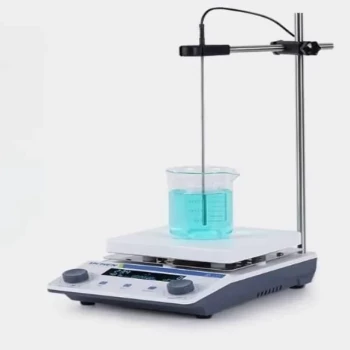
- Laboratory Small Constant Temperature Heated Magnetic Stirrer Heater and Stirrer
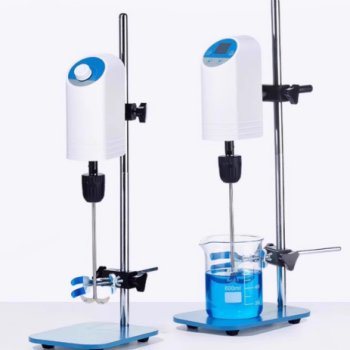
- High Performance Laboratory Stirrers for Diverse Applications
- Custom PTFE Teflon Parts Manufacturer for Magnetic Stirring Bar
- Laboratory Vibratory Sieve Shaker Machine for Dry and Wet Three-Dimensional Sieving
- Laboratory Vortex Mixer Orbital Shaker Multifunctional Rotation Oscillation Mixer
People Also Ask
- What role does a magnetic stirrer with heating play in ZnO nanoparticle synthesis? Precision Control for Quality Results
- What role does a constant temperature heating magnetic stirrer play in MFC-HAp synthesis? Achieve Material Homogeneity
- What is the function of a laboratory magnetic stirrer in Ni–Cr–P electrodeposition? Optimize Ion Transport & Coating
- Why is a laboratory magnetic stirrer required for benzoic acid esters? Boost Reaction Speed & Yield with High RPM
- What role does a laboratory magnetic stirrer play in TiO2 and TiO2-Ag sol preparation? Master Chemical Kinetics