Knowledge high pressure reactor What role does a PTFE-lined high-pressure autoclave play in hydrothermal synthesis? Achieve Pure Pt-doped CuO Materials
Author avatar

Tech Team · Kintek Solution

Updated 5 days ago

What role does a PTFE-lined high-pressure autoclave play in hydrothermal synthesis? Achieve Pure Pt-doped CuO Materials


The PTFE-lined high-pressure autoclave acts as a specialized chemical reactor that enables the hydrothermal synthesis of Pt-doped CuO by maintaining a sealed, high-energy environment. This setup allows the precursor solution to reach temperatures like 160°C, exceeding the solvent’s atmospheric boiling point to facilitate the integration of platinum ions into the monoclinic CuO crystal lattice.

The PTFE-lined autoclave provides the necessary pressure and chemical inertness to force platinum ions into the copper oxide structure. It creates a "subcritical" environment that accelerates reaction kinetics while preventing metallic contamination from the reactor walls.

Thermodynamic Drivers of Synthesis

Achieving Superheated Solvent Conditions

In a sealed autoclave, the internal pressure rises significantly as the temperature increases, preventing the solvent from evaporating. This allows the reaction to occur at 160°C, a temperature where the solvent's properties change to enhance the solubility of precursors.

Enhancing Ion Diffusion and Integration

High-pressure conditions increase the diffusion capacity of the solvent, which is essential for "doping." This pressure forces platinum ions to either penetrate the CuO lattice or distribute themselves with extreme uniformity across the crystal surface.

Accelerating Reaction Kinetics

The combination of high temperature and autogenous pressure accelerates the reaction rate and nucleation process. This energy is required to transform precursors into a stable monoclinic phase CuO crystal structure, which might not form under standard laboratory conditions.

The Role of the PTFE Liner

Preventing Metallic Contamination

The PTFE (polytetrafluoroethylene) liner is chosen for its extreme chemical inertness and resistance to corrosion. It acts as a barrier that prevents the precursor solution from reacting with or corroding the outer stainless steel shell.

Ensuring High Material Purity

By isolating the reaction from the metal reactor body, the liner eliminates the risk of introducing metallic impurities. This is critical when synthesizing Pt-doped materials, as even trace contaminants could alter the catalytic properties of the copper oxide.

Structural Safety and Pressure Containment

While the PTFE liner provides chemical protection, the external stainless steel shell provides the structural integrity. This allows the system to safely contain the high internal pressures generated during the hydrothermal process.

Understanding the Trade-offs

Temperature Limitations of PTFE

While PTFE is chemically resilient, it has a strict thermal ceiling, typically around 250°C. Exceeding these temperatures can lead to the deformation or "creeping" of the liner, which may compromise the seal or cause the liner to fail.

Heating and Cooling Rates

High-pressure autoclaves have significant thermal mass, meaning they heat and cool slowly. This can lead to broader particle size distributions if the nucleation phase is not precisely controlled during the ramp-up period.

Pressure Risks and Maintenance

The integrity of the autoclave depends entirely on the quality of the seal between the liner and the cap. Over time, repeated thermal cycling can degrade the PTFE gasket, leading to pressure leaks that ruin the synthesis batch or create safety hazards.

Applying This Technology to Your Project

Recommendations for Successful Synthesis

The success of your Pt-doped CuO synthesis depends on balancing the chemical environment with the physical limits of your equipment.

  • If your primary focus is crystal purity: Always inspect the PTFE liner for staining or pitting before use to ensure no cross-contamination from previous synthesis batches.
  • If your primary focus is uniform doping: Maintain a constant temperature (e.g., 160°C) for the full duration of the reaction to ensure platinum ions integrate consistently into the CuO lattice.
  • If your primary focus is safety: Never fill the PTFE liner more than 70-80% of its total capacity to allow sufficient "headspace" for gas expansion and pressure stabilization.

By mastering the high-pressure environment of the autoclave, you can achieve the precise molecular integration required for advanced nanomaterial performance.

Summary Table:

Feature Role in Synthesis Key Benefit
PTFE Liner Chemical Barrier Prevents metallic contamination & ensures material purity
Stainless Steel Shell Pressure Containment Provides structural integrity for high-energy reactions
Sealed Design Superheated Solvent Enables temperatures >100°C for Pt-ion lattice integration
High Pressure Enhanced Diffusion Accelerates reaction kinetics and ensures uniform doping

Elevate Your Nanomaterial Synthesis with KINTEK

Precision in hydrothermal synthesis requires equipment that can withstand extreme conditions without compromising purity. KINTEK specializes in high-performance laboratory solutions, offering a robust range of high-temperature high-pressure reactors and autoclaves designed for sensitive applications like Pt-doped CuO production.

Beyond reactors, our comprehensive portfolio includes:

  • High-Temperature Furnaces: Muffle, tube, vacuum, CVD, and PECVD systems.
  • Sample Preparation: Hydraulic pellet presses, crushing/milling systems, and sieving equipment.
  • Laboratory Consumables: High-purity PTFE products, ceramics, and crucibles.
  • Thermal Control: ULT freezers, freeze dryers, and cooling solutions.

Ready to optimize your laboratory’s research capabilities? Contact us today to consult with our experts on the ideal equipment for your specific synthesis needs and ensure reliable, repeatable results every time.

References

  1. Xiangxiang Chen, Yanbai Shen. Influence of Different Pt Functionalization Modes on the Properties of CuO Gas-Sensing Materials. DOI: 10.3390/s24010120

This article is also based on technical information from Kintek Solution Knowledge Base .

Related Products

People Also Ask

Related Products

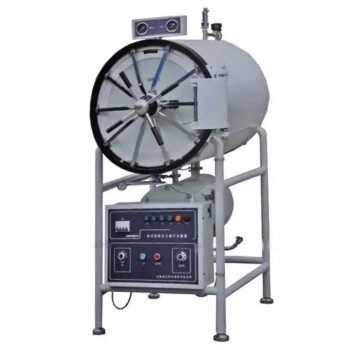
Laboratory High Pressure Horizontal Autoclave Steam Sterilizer for Lab Use

Laboratory High Pressure Horizontal Autoclave Steam Sterilizer for Lab Use

The horizontal autoclave steam sterilizer adopts the gravity displacement method to remove the cold air in the inner chamber, so that the inner steam and cold air content is less, and the sterilization is more reliable.

Stainless High Pressure Autoclave Reactor Laboratory Pressure Reactor

Stainless High Pressure Autoclave Reactor Laboratory Pressure Reactor

Discover the versatility of Stainless High Pressure Reactor - a safe and reliable solution for direct and indirect heating. Built with stainless steel, it can withstand high temperatures and pressures. Learn more now.

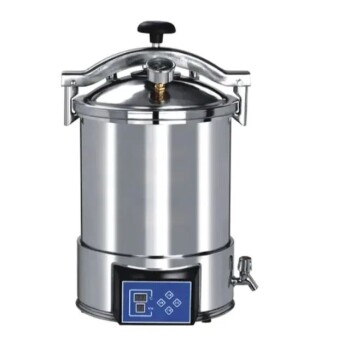
Portable High Pressure Laboratory Autoclave Steam Sterilizer for Lab Use

Portable High Pressure Laboratory Autoclave Steam Sterilizer for Lab Use

Portable autoclave sterilization pressure is a device that uses pressure saturated steam to quickly and effectively sterilize items.

Desktop Fast High Pressure Laboratory Autoclave Sterilizer 16L 24L for Lab Use

Desktop Fast High Pressure Laboratory Autoclave Sterilizer 16L 24L for Lab Use

The desktop fast steam sterilizer is a compact and reliable device used for rapid sterilization of medical, pharmaceutical, and research items.

Laboratory High Pressure Steam Sterilizer Vertical Autoclave for Lab Department

Laboratory High Pressure Steam Sterilizer Vertical Autoclave for Lab Department

Vertical pressure steam sterilizer is a kind of sterilization equipment with automatic control, which is composed of heating system, microcomputer control system and overheating and overpressure protection system.

High Pressure Laboratory Autoclave Reactor for Hydrothermal Synthesis

High Pressure Laboratory Autoclave Reactor for Hydrothermal Synthesis

Discover the applications of Hydrothermal Synthesis Reactor - a small, corrosion-resistant reactor for chemical labs. Achieve rapid digestion of insoluble substances in a safe and reliable way. Learn more now.

Mini SS High Pressure Autoclave Reactor for Laboratory Use

Mini SS High Pressure Autoclave Reactor for Laboratory Use

Mini SS High Pressure Reactor - Ideal for medicine, chemical, and scientific research industries. Programmed heating temp and stirring speed, up to 22Mpa pressure.

Customizable High Pressure Reactors for Advanced Scientific and Industrial Applications

Customizable High Pressure Reactors for Advanced Scientific and Industrial Applications

This laboratory-scale high-pressure reactor is a high-performance autoclave engineered for precision and safety in demanding research and development environments.

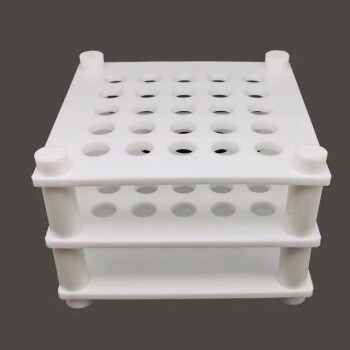
Custom PTFE Teflon Parts Manufacturer for Centrifuge Tube Racks

Custom PTFE Teflon Parts Manufacturer for Centrifuge Tube Racks

The precision-made PTFE test tube racks are completely inert and, due to the high temperature properties of PTFE, these test tube racks can be sterilized (autoclaved) without any problems.

Custom Machined and Molded PTFE Teflon Parts Manufacturer with PTFE Crucible and Lid

Custom Machined and Molded PTFE Teflon Parts Manufacturer with PTFE Crucible and Lid

PTFE crucibles, made from pure Teflon, offer chemical inertness and resistance from -196°C to 280°C, ensuring compatibility with a wide range of temperatures and chemicals. These crucibles feature machine-finished surfaces for easy cleaning and prevention of contamination, making them ideal for precise laboratory applications.

Laboratory Sterilizer Lab Autoclave Vertical Pressure Steam Sterilizer for Liquid Crystal Display Automatic Type

Laboratory Sterilizer Lab Autoclave Vertical Pressure Steam Sterilizer for Liquid Crystal Display Automatic Type

Liquid crystal display automatic vertical sterilizer is a safe, reliable and automatic control sterilization equipment, which is composed of heating system, microcomputer control system and overheating and overvoltage protection system.

Portable Digital Display Automatic Laboratory Sterilizer Lab Autoclave for Sterilization Pressure

Portable Digital Display Automatic Laboratory Sterilizer Lab Autoclave for Sterilization Pressure

Portable autoclave sterilization pressure is a device that uses pressure saturated steam to quickly and effectively sterilize items.

Automatic High Temperature Heated Hydraulic Press Machine with Heated Plates for Lab

Automatic High Temperature Heated Hydraulic Press Machine with Heated Plates for Lab

The High Temperature Hot Press is a machine specifically designed for pressing, sintering and processing materials in a high temperature environment. It is capable of operating in the range of hundreds of degrees Celsius to thousands of degrees Celsius for a variety of high temperature process requirements.

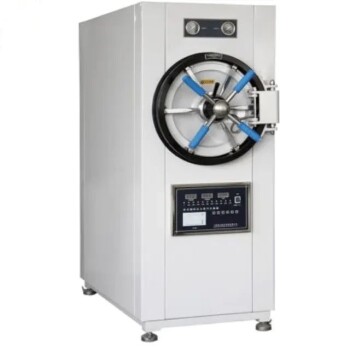
Laboratory Horizontal Autoclave Steam Sterilizer Lab Microcomputer Sterilizer

Laboratory Horizontal Autoclave Steam Sterilizer Lab Microcomputer Sterilizer

The horizontal autoclave steam sterilizer adopts the method of gravity displacement to remove the cold air in the inner chamber, so that the content of steam cold air in the inner chamber is less, and the sterilization is more reliable.

Desktop Fast Laboratory Autoclave Sterilizer 35L 50L 90L for Lab Use

Desktop Fast Laboratory Autoclave Sterilizer 35L 50L 90L for Lab Use

The desktop fast steam sterilizer is a compact and reliable device used for rapid sterilization of medical, pharmaceutical, and research items. It efficiently sterilizes surgical instruments, glassware, medicines, and resistant materials, making it suitable for various applications.

Laboratory Sterilizer Lab Autoclave Pulse Vacuum Lifting Sterilizer

Laboratory Sterilizer Lab Autoclave Pulse Vacuum Lifting Sterilizer

The pulse vacuum lifting sterilizer is a state-of-the-art equipment for efficient and precise sterilization. It uses pulsating vacuum technology, customizable cycles, and a user-friendly design for easy operation and safety.

Laboratory Sterilizer Lab Autoclave Pulsating Vacuum Desktop Steam Sterilizer

Laboratory Sterilizer Lab Autoclave Pulsating Vacuum Desktop Steam Sterilizer

The pulsating vacuum desktop steam sterilizer is a compact and reliable device used for rapid sterilization of medical, pharmaceutical, and research items.

Custom PTFE Teflon Parts Manufacturer for Microwave Digestion Tank

Custom PTFE Teflon Parts Manufacturer for Microwave Digestion Tank

PTFE digestion tanks are renowned for their exceptional chemical resistance, high-temperature stability, and non-stick properties. These tanks are ideal for harsh laboratory environments, Their low coefficient of friction and inert nature prevent chemical interactions, ensuring purity in experimental results.

Desktop Fast Laboratory Autoclave Sterilizer 20L 24L for Lab Use

Desktop Fast Laboratory Autoclave Sterilizer 20L 24L for Lab Use

The desktop fast steam sterilizer is a compact and reliable device used for rapid sterilization of medical, pharmaceutical, and research items.

Manual High Temperature Heated Hydraulic Press Machine with Heated Plates for Lab

Manual High Temperature Heated Hydraulic Press Machine with Heated Plates for Lab

The High Temperature Hot Press is a machine specifically designed for pressing, sintering and processing materials in a high temperature environment. It is capable of operating in the range of hundreds of degrees Celsius to thousands of degrees Celsius for a variety of high temperature process requirements.


Leave Your Message