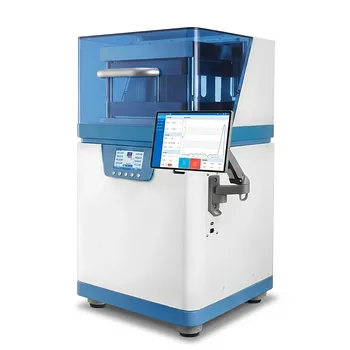
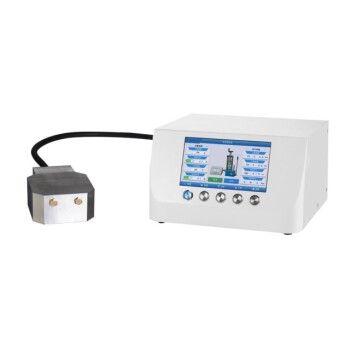
The stainless steel pressure reactor serves as a high-energy synthesis chamber that enables solvents to reach subcritical states, providing the thermal and barometric energy required for MOF formation. By maintaining a sealed environment, the reactor allows the reaction mixture to exceed atmospheric boiling points, which significantly increases the solubility of organic ligands like trimesic acid (BTC) and facilitates their coordination with cobalt and copper ions. This specific environment is essential for the controlled self-assembly of the HKUST-1/Co framework, ensuring a highly crystalline and uniform precursor material.
Core Takeaway: The pressure reactor is not merely a container but a critical process enabler that utilizes autogenous pressure and elevated temperatures to drive the coordination chemistry and crystal nucleation necessary for high-quality MOF precursors.
Facilitating the Coordination Chemistry
Enhancing Solvent Solubility
Under standard conditions, many organic ligands and metal salts exhibit limited solubility, which can hinder the formation of complex frameworks. The stainless steel pressure reactor creates a high-pressure environment that forces the solvent into a subcritical state, dramatically increasing its ability to dissolve precursors. This ensures that the cobalt, copper, and trimesic acid are fully integrated into the solution for a more complete reaction.
Driving Metal-Ligand Self-Assembly
The formation of HKUST-1/Co requires the precise coordination of metal ions with organic "linkers" to create a 3D porous network. The elevated thermal energy within the reactor provides the necessary activation energy for these coordination bonds to form and stabilize. Without the sealed environment of the reactor, the solvent would evaporate before the temperature could reach the levels required for effective self-assembly.
Ensuring Structural Integrity and Crystallinity
Regulating Nucleation and Crystal Growth
The reactor's ability to maintain a constant, controlled temperature (such as 150°C or 160°C) over extended periods is vital for crystal quality. This stability allows for a regulated nucleation process, where crystals grow slowly and uniformly rather than forming amorphous precipitates. This results in the well-defined cubic structures and high specific surface areas characteristic of HKUST-1.
Achieving Uniform Component Distribution
In bimetallic MOFs like HKUST-1/Co, ensuring that both copper and cobalt are uniformly distributed throughout the framework is a significant challenge. The high-pressure environment promotes thorough mixing and reorganization of precursors at the molecular level. This prevents the "clumping" of individual metal species, leading to a precursor with a consistent chemical composition across the entire batch.
Understanding the Trade-offs
Safety and Pressure Management
While high pressure is essential for synthesis, it introduces significant mechanical stress on the reactor vessel. Stainless steel is chosen for its corrosion resistance and tensile strength, but users must strictly adhere to pressure limits to avoid vessel failure. Overloading the reactor with solvent (exceeding the recommended fill ratio) can lead to dangerous pressure spikes as the liquid expands.
Precision vs. Throughput
Hydrothermal synthesis in a pressure reactor is often a slow process, sometimes requiring 16 hours or more for a single batch. While this promotes high crystallinity and purity, it limits the speed at which materials can be produced. Balancing the cooling rate and heating ramp within the reactor is also critical; cooling too quickly can induce structural defects in the MOF crystals.
How to Apply This to Your Project
Recommendations for Targeted Outcomes
- If your primary focus is High Surface Area: Ensure the reactor fill level is optimized to maintain consistent autogenous pressure, as higher pressure often facilitates more complex 3D porous channels.
- If your primary focus is Morphological Uniformity: Use a reactor with high thermal mass (thick stainless steel walls) to ensure a steady heating ramp and minimize temperature fluctuations during the nucleation phase.
- If your primary focus is Bimetallic Integration: Prioritize longer reaction times at slightly lower subcritical temperatures to allow cobalt and copper ions equal opportunity to coordinate with the trimesic acid.
The stainless steel pressure reactor is the indispensable tool that bridges the gap between raw chemical precursors and the highly structured, porous world of metal-organic frameworks.
Summary Table:
| Feature | Impact on MOF Synthesis | Key Mechanism |
|---|---|---|
| Subcritical Solvency | Increases solubility of BTC ligands | High autogenous pressure & heat |
| Thermal Energy | Drives metal-ligand self-assembly | High activation energy provision |
| Controlled Environment | Ensures high crystallinity & cubic structure | Regulated nucleation & steady cooling |
| Pressure Stability | Promotes uniform bimetallic distribution | Molecular-level mixing of Cu and Co |
Elevate Your MOF Research with KINTEK
Precision is paramount when synthesizing advanced porous materials like HKUST-1/Co. KINTEK specializes in high-performance laboratory equipment, offering a robust selection of high-temperature high-pressure reactors and autoclaves designed to withstand the rigors of hydrothermal synthesis.
Our reactors provide the exceptional thermal stability and pressure control needed to achieve superior crystallinity and uniform component distribution. Beyond reactors, KINTEK supports your entire workflow with dental and induction melting furnaces, crushing and milling systems, and cooling solutions like ULT freezers and cold traps.
Ready to optimize your subcritical synthesis results? Contact our experts today to discuss how our specialized equipment can enhance your lab’s efficiency and material quality.
References
- Xinyu Li, Xiaoxian Hu. Enhanced Heterogeneous Peroxymonosulfate Activation by MOF-Derived Magnetic Carbonaceous Nanocomposite for Phenol Degradation. DOI: 10.3390/ma16093325
This article is also based on technical information from Kintek Solution Knowledge Base .
Related Products
- Stainless High Pressure Autoclave Reactor Laboratory Pressure Reactor
- Mini SS High Pressure Autoclave Reactor for Laboratory Use
- Customizable High Pressure Reactors for Advanced Scientific and Industrial Applications
- Customizable Laboratory High Temperature High Pressure Reactors for Diverse Scientific Applications
- High Pressure Laboratory Autoclave Reactor for Hydrothermal Synthesis
People Also Ask
- Why is a laboratory high-pressure reactor used in the hydrothermal synthesis of hydroxyapatite catalysts?
- What role does a laboratory high-pressure reactor play in the leaching process of spent cathode materials? Optimize Recovery
- Why is a laboratory high-pressure reactor necessary for synthesizing fly ash-based zeolite? Achieve Pure Crystallization
- What conditions do laboratory high-pressure reactors provide for HTC? Optimize Your Biochar Production Processes
- What is the function of a high-pressure reactor autoclave? Enhancing Cu/N Co-Doped Carbon Catalyst Synthesis