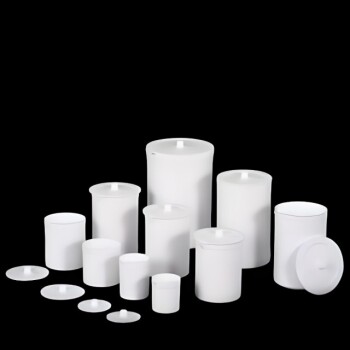
In hydrothermal synthesis, the stainless steel reactor and PTFE liner function as a symbiotic system to manage extreme thermodynamic conditions while maintaining strict chemical purity.
The stainless steel high-pressure reactor provides the structural integrity necessary to create a sealed environment, allowing the reaction to proceed at temperatures and pressures far exceeding the normal boiling point of the precursor solution. Inside this high-pressure shell, the PTFE (polytetrafluoroethylene) liner serves as the primary reaction vessel, utilizing its chemical inertness to protect the steel body from corrosion and effectively preventing metallic impurities from contaminating the final zirconium dioxide nanoparticles.
Core Takeaway The stainless steel shell manages the physics of the reaction (pressure and temperature containment), while the PTFE liner manages the chemistry (corrosion resistance and purity). Together, they enable the synthesis of high-purity zirconium dioxide nanoparticles by maintaining a supercritical-like environment without introducing contaminants from the reactor walls.
The Role of the Stainless Steel Shell
The stainless steel exterior is the structural backbone of the hydrothermal autoclave. Its primary function is mechanical containment.
Creating a Sealed Environment
Hydrothermal synthesis requires a closed system. The stainless steel reactor is designed to seal tightly, preventing the escape of solvents and gases.
This sealing capability is critical for maintaining the specific thermodynamic conditions required for zirconium dioxide formation.
Elevating the Boiling Point
By sealing the reaction mixture, the reactor allows the internal pressure to rise as the temperature increases.
This allows the precursor solution to remain liquid at temperatures significantly higher than its atmospheric boiling point (often >100°C).
Facilitating Kinetic Energy
The high-pressure environment created by the steel shell increases the kinetic energy within the system.
This accelerates the reaction rate between precursors, which is essential for the efficient synthesis of zirconium dioxide.
The Role of the PTFE Liner
While the steel handles the pressure, the PTFE liner is responsible for the integrity of the chemical reaction itself.
Ensuring Chemical Inertness
PTFE is highly resistant to chemical attack. It acts as a barrier between the reactive precursor solution and the reactor walls.
This is particularly important when using acidic solutions often required for zirconium dioxide synthesis, which would otherwise corrode the steel.
Preventing Metallic Contamination
A critical challenge in synthesizing nanoparticles is maintaining purity. Direct contact with stainless steel can leach iron, chromium, or nickel ions into the solution.
The PTFE liner eliminates this risk, ensuring the final zirconium dioxide product remains free of metallic impurities introduced by the equipment.
Acting as the Primary Vessel
The reaction physically takes place inside the liner, not the steel shell.
This allows for easy removal and cleaning of the reaction product, protecting the expensive steel autoclave from wear and residue buildup.
Impact on Crystallization and Morphology
The combined environment provided by the liner and the reactor directly influences the quality of the nanoparticles.
Enhancing Precursor Solubility
The high-temperature, high-pressure environment facilitates increased solubility of the reactants.
This ensures a more homogeneous mixture, which is vital for the uniform nucleation required to grow consistent zirconium dioxide nanoparticles.
Controlling Phase Transformation
Temperature control is the primary lever for determining the crystal structure of the product.
Temperatures exceeding 150°C within the reactor promote the transformation of the crystal phase toward tetragonal or cubic structures, enhancing the overall crystallinity of the product.
Regulating Morphology
The sealed environment helps control the nucleation and growth rates.
By managing these conditions, the system facilitates the formation of uniform nanoparticles rather than irregular aggregates.
Understanding the Trade-offs
While this system is the standard for hydrothermal synthesis, it has specific physical limitations that must be respected.
Temperature Limits of PTFE
While stainless steel can withstand extreme heat, PTFE has a thermal ceiling.
Typically, PTFE liners begin to soften or deform at temperatures approaching 250°C–300°C. If your synthesis requires temperatures beyond this threshold to achieve a specific zirconium dioxide phase, a standard PTFE liner may fail.
Pressure Safety
The sealed nature of the reactor turns it into a pressure vessel.
If the filling factor (the volume of liquid inside the liner) is too high, the thermal expansion of the liquid can generate dangerous pressure spikes that may exceed the safety rating of the stainless steel shell.
Making the Right Choice for Your Goal
To maximize the effectiveness of your synthesis, align your equipment usage with your specific scientific objectives.
- If your primary focus is Phase Purity: Ensure the PTFE liner is thoroughly cleaned or replaced between batches to prevent cross-contamination that could alter the crystal phase.
- If your primary focus is High Crystallinity: Utilize the steel reactor's ability to hold high pressures to run reactions at the upper end of the PTFE's temperature limit (approx. 200°C–240°C).
- If your primary focus is Particle Uniformity: strictly control the heating rate of the stainless steel reactor to ensure even nucleation throughout the solution volume.
Ultimately, the quality of your zirconium dioxide nanoparticles depends on relying on the steel for power and the PTFE for purity.
Summary Table:
| Component | Primary Function | Role in Synthesis |
|---|---|---|
| Stainless Steel Shell | Mechanical Containment | Provides structural integrity for high temperature and pressure environments. |
| PTFE (Teflon) Liner | Chemical Barrier | Protects against corrosion and prevents metallic contamination of nanoparticles. |
| The Sealed System | Thermodynamic Control | Elevates boiling points and increases kinetic energy for uniform crystal growth. |
| Internal Environment | Phase Transformation | Enables temperatures >150°C to achieve tetragonal or cubic crystal structures. |
Elevate Your Nanoparticle Synthesis with KINTEK
Precision and purity are the cornerstones of successful hydrothermal synthesis. KINTEK specializes in high-performance laboratory equipment designed to meet the rigorous demands of material science.
Our comprehensive range of high-temperature high-pressure reactors and autoclaves, paired with premium PTFE liners and ceramics, ensures your zirconium dioxide research achieves maximum crystallinity without metallic contamination. From crushing and milling systems to cooling solutions like ULT freezers, we provide the end-to-end tools necessary for advanced battery research and chemical engineering.
Ready to optimize your lab's efficiency and product quality?
Contact KINTEK today to discuss your specific requirements!
References
- Siti Machmudah, Motonobu Goto. Synthesis of ZrO2 nanoparticles by hydrothermal treatment. DOI: 10.1063/1.4866753
This article is also based on technical information from Kintek Solution Knowledge Base .
Related Products
- Custom PTFE Teflon Parts Manufacturer for Hydrothermal Synthesis Reactor Polytetrafluoroethylene Carbon Paper and Carbon Cloth Nano-growth
- High Pressure Laboratory Autoclave Reactor for Hydrothermal Synthesis
- Customizable Laboratory High Temperature High Pressure Reactors for Diverse Scientific Applications
- Stainless High Pressure Autoclave Reactor Laboratory Pressure Reactor
- Customizable High Pressure Reactors for Advanced Scientific and Industrial Applications
People Also Ask
- What is the function of a PTFE reactor in MXene etching? Ensure Safe, High-Purity MAX Phase Conversion
- Why is a PTFE reactor required for titanium-based nano-ceramic coating solutions? Ensure Chemical Inertness & Purity
- Why must a Polytetrafluoroethylene (PTFE) reactor be used for Ti3C2TX MXene etching? Ensure Safety and Purity
- Why are PTFE reactors preferred for silver phosphate glass testing? Ensure Purity and Kinetic Accuracy
- What are the advantages of using polytetrafluoroethylene (PTFE) liners in hydrothermal synthesis reactors? High Purity