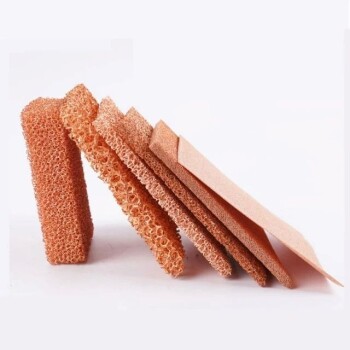
The Porous Transport Layer (PTL) and Gas Diffusion Layer (GDL) serve as the critical interface within an electrolyzer stack. They function as multi-purpose components that manage the simultaneous flow of liquids, gases, and electricity between the macroscopic bipolar plates and the microscopic active catalyst sites.
The PTL and GDL act as the essential bridge in electrochemical cells, ensuring that the physical transport of water and gas never compromises the electrical connection required to drive the reaction.
Optimizing Mass Transport
Uniform Reactant Distribution
The primary challenge in electrolysis is ensuring that the reactant (water) reaches every part of the catalyst layer, not just the areas directly under flow channels.
The PTL/GDL, typically composed of high-porosity materials, distributes water evenly across the entire surface area. This uniformity prevents "starvation" at reaction sites and maximizes the efficiency of the cell.
Efficient Gas Evacuation
As the electrochemical reaction proceeds, product gases like hydrogen and oxygen are generated rapidly.
If these gases are not removed immediately, they can form bubbles that block water from reaching the catalyst. The porous structure of the PTL/GDL facilitates the rapid exit of these gases, keeping the active sites clear for continuous reaction.
Electrical Connectivity
Acting as Current Collectors
Beyond fluid mechanics, these layers play a vital electronic role.
They function as current collectors, conducting electricity from the rigid bipolar plates to the delicate catalyst layers. Because catalysts are often thin or powder-based, the PTL serves as the conductive bridge that energizes the reaction.
Material Composition
To achieve both conductivity and permeability, these layers rely on specific materials.
Common compositions include nickel mesh, nickel felt, or carbon cloth. These materials offer the mechanical strength to support the cell while maintaining the high porosity required for fluid transport.
Understanding the Trade-offs
Balancing Porosity and Conductivity
Designing an effective PTL or GDL involves a distinct engineering trade-off.
High porosity is excellent for fluid flow (water in, gas out) but reduces the amount of solid material available to conduct electricity. Conversely, a denser material conducts electricity better but restricts fluid movement, potentially causing mass transport limitations.
Making the Right Choice for Your Goal
The effectiveness of an electrolyzer often hinges on how well the PTL or GDL balances these competing functions.
- If your primary focus is high current density: Prioritize materials with optimized pore structures to handle the rapid evacuation of large volumes of gas bubbles.
- If your primary focus is electrical efficiency: Prioritize materials with higher solid content or specific weaves that minimize contact resistance with the bipolar plate.
The ideal PTL maximizes the active area of your catalyst without becoming a bottleneck for electron flow.
Summary Table:
| Function | Description | Impact on Performance |
|---|---|---|
| Mass Transport | Distributes water evenly and evacuates gas bubbles (H2/O2). | Prevents site starvation and maximizes cell efficiency. |
| Electrical Connectivity | Conducts electricity from bipolar plates to the catalyst layer. | Serves as the primary current collector for the reaction. |
| Structural Support | Provides mechanical stability to the membrane electrode assembly. | Ensures durable contact and longevity of the cell stack. |
| Material Choice | Typically nickel mesh, nickel felt, or carbon cloth. | Determines the balance between porosity and ohmic resistance. |
Elevate Your Electrolyzer Research with KINTEK Precision
Optimizing your electrochemical cell requires the perfect balance of mass transport and electrical efficiency. KINTEK specializes in advanced laboratory solutions, offering a premium range of electrolytic cells and electrodes specifically designed to meet the rigorous demands of hydrogen production and battery research.
Whether you are refining PTL/GDL performance or scaling your electrolyzer stack, our experts provide the high-quality components and consumables—including high-temperature reactors, PTFE products, and custom electrodes—needed to achieve high current density and superior durability.
Ready to optimize your lab's performance? Contact KINTEK today to discuss your project and find the ideal components for your research goals!
References
- Inês Rolo, F. P. Brito. Hydrogen-Based Energy Systems: Current Technology Development Status, Opportunities and Challenges. DOI: 10.3390/en17010180
This article is also based on technical information from Kintek Solution Knowledge Base .
Related Products
People Also Ask
- How does the design of an electrochemical electrolytic cell influence the coating uniformity? Optimize Your Catalysts
- What is the correct shutdown and disassembly procedure after an experiment? Ensure Safety and Protect Your Equipment
- Why are electrolytic cells essential in titanium production? Powering Circular Efficiency and Cost Savings
- What is galvanic cell or electrolytic cell? Unlock the Secrets of Electrochemical Power
- What are the three essential components that comprise an electrolytic cell? Key Elements of Chemical Synthesis