High-turbidity degradation samples require a two-stage clarification process to ensure analytical accuracy. The 0.25 μm Polytetrafluoroethylene (PTFE) syringe filter is used specifically after centrifugation to remove residual fine particles and cell fragments that gravity separation cannot settle. This combination ensures high sample clarity while the PTFE material protects the chemical integrity of the sample.
Core Takeaway: Centrifugation removes the bulk mass, but the 0.25 μm PTFE filter provides the final, critical polish required for sensitive optical analysis. The PTFE material is selected for its chemical inertness, ensuring no target compounds are lost to adsorption and no false impurities are introduced.
The Mechanics of Sample Clarification
Addressing the Limitations of Centrifugation
While centrifugation effectively settles heavy solids, it often leaves fine particulates suspended in the supernatant.
Reliable analysis requires a cleaner sample than centrifugation alone can provide. The 0.25 μm pore size is specifically chosen to capture these residual sub-micron particles and remaining cell fragments.
Ensuring Optical Clarity
High turbidity interferes with optical analysis instruments, leading to noisy baselines or inaccurate readings.
By forcing the pre-centrifuged sample through the filter, you achieve the high degree of sample clarity necessary for precise optical measurement.
Why Material Selection Matters (PTFE)
Preventing Sample Loss via Adsorption
The most critical feature of PTFE is its excellent chemical inertness.
In degradation studies, it is vital that the filter media does not interact with the sample. PTFE ensures that target xenobiotics are not adsorbed (stuck) to the filter, which would artificially lower your recovery rates.
Maintaining Sample Purity
Some filter materials can degrade or shed chemicals when exposed to certain solvents, contaminating the sample.
PTFE does not introduce leachable impurities during the filtration process. This guarantees that any peaks or data points observed during analysis come from the sample itself, not the filtration hardware.
Understanding the Trade-offs
The Necessity of Pre-Treatment
It is a common error to rely solely on the syringe filter for high-turbidity samples.
Trying to force a highly turbid sample through a 0.25 μm filter without prior centrifugation will result in rapid clogging. The filter is designed as a finishing step, not a bulk separator.
Chemical Compatibility vs. Cost
While PTFE is highly inert and robust, it is generally more expensive than materials like Nylon or PES.
However, for degradation samples where chemical interactions must be ruled out, the cost is justified by the assurance of data integrity.
Making the Right Choice for Your Goal
To maximize the accuracy of your degradation studies, apply the following principles:
- If your primary focus is Data Accuracy: Rely on PTFE filters to prevent the adsorption of target analytes and avoid false negatives.
- If your primary focus is Workflow Efficiency: Ensure you centrifuge thoroughly first; this prevents filter clogging and speeds up the manual filtration step.
By combining the physical separation of centrifugation with the chemical inertness of PTFE filtration, you ensure the sample entering your analyzer is both physically clear and chemically authentic.
Summary Table:
| Feature | Centrifugation (Pre-treatment) | 0.25 μm PTFE Filtration (Polishing) |
|---|---|---|
| Primary Role | Removes bulk mass and heavy solids | Removes fine sub-micron particles/cell fragments |
| Impact on Sample | Initial turbidity reduction | Achieves optical clarity for sensitive analysis |
| Material Advantage | Mechanical separation | Chemical inertness (no adsorption/leachables) |
| Common Pitfall | Leaves suspended fine particulates | Rapid clogging if used without centrifugation |
| Best For | High-volume solid separation | Ensuring data integrity in degradation studies |
Elevate Your Analytical Precision with KINTEK
For critical degradation studies and high-turbidity sample preparation, compromise is not an option. KINTEK specializes in premium laboratory consumables designed for the most demanding research environments.
Our high-performance PTFE syringe filters and ceramics ensure maximum chemical inertness and recovery, while our comprehensive range of crushing, milling, and sieving equipment prepares your samples for perfect downstream analysis. Beyond consumables, we support your entire lab workflow with:
- Advanced High-Temperature Furnaces (Muffle, Vacuum, CVD)
- High-Pressure Reactors & Autoclaves
- Precision Hydraulic Presses (Pellet, Isostatic)
- Battery Research & Cooling Solutions (ULT Freezers)
Protect your data integrity today. Contact KINTEK for a tailored quote or technical consultation and see how our expertise in lab equipment and consumables can optimize your results.
References
- Bastian Herzog, Elisabeth Müller. Screening and monitoring microbial xenobiotics’ biodegradation by rapid, inexpensive and easy to perform microplate UV-absorbance measurements. DOI: 10.1186/1756-0500-7-101
This article is also based on technical information from Kintek Solution Knowledge Base .
Related Products
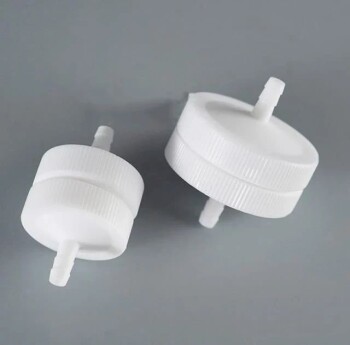
- Custom PTFE Teflon Parts Manufacturer for Sampling Filters
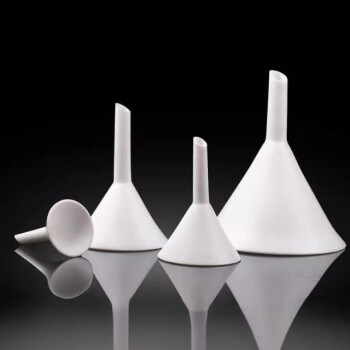
- Custom PTFE Teflon Parts Manufacturer for PTFE Buchner Funnel and Triangular Funnel
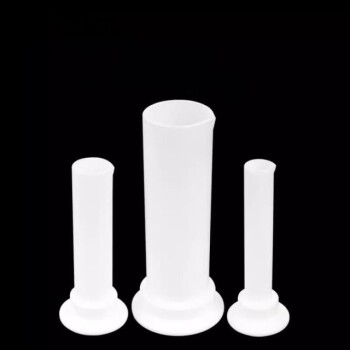
- Custom PTFE Teflon Parts Manufacturer for PTFE Measuring Cylinder 10/50/100ml
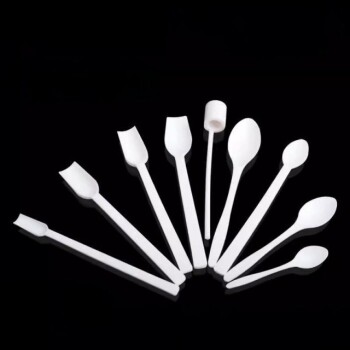
- Custom PTFE Teflon Parts Manufacturer for Sampling Solution Sample and Dry Powder Spoons
- Custom PTFE Teflon Parts Manufacturer for Centrifuge Tubes
People Also Ask
- What are the advantages of using PTFE filters for ionic component analysis? Ensure Accurate Sample Quantification
- Why are PTFE membrane filters selected for rice husk fractionation? Ensuring Purity in Harsh Separation Stages
- Is PTFE corrosion resistant? Discover the Ultimate Chemical Resistance for Your Lab
- What are the specific applications of PTFE in micro-batch slug flow systems? Enhance Your Microfluidic Reaction Purity
- How is PTFE utilized for insulation in Alloy 22 corrosion setups? Ensure Signal Purity & Accuracy