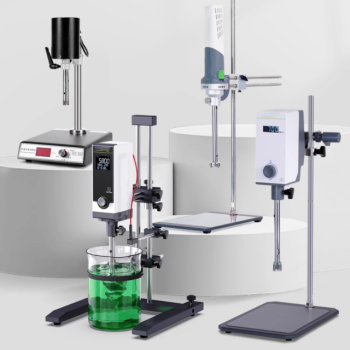
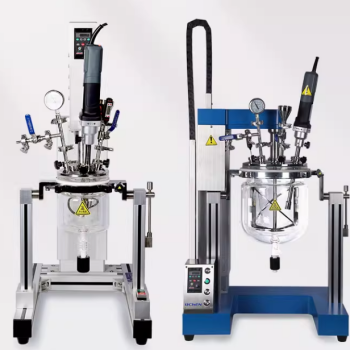
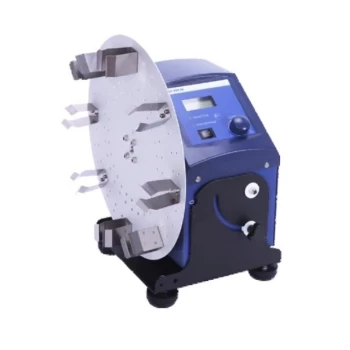
The necessity of high-shear mixing or ultrasonic homogenizers stems from the natural tendency of montmorillonite (MMT) to form tight, layered aggregates. Standard mixing methods lack the energy required to break these cohesive structures. High-shear or ultrasonic equipment is required to generate the intense mechanical force and cavitation needed to physically peel these layers apart (exfoliate) and disperse them uniformly within a polymer matrix.
To unlock the properties of MMT, you must overcome the strong forces holding its layers together. High-intensity processing transforms MMT from a passive clump of clay into a high-surface-area reinforcing agent, which is the key to achieving superior barrier properties and mechanical strength.
The Challenge of the Aggregated State
The Nature of MMT Stacks
In its natural state, Montmorillonite (MMT) exists as layered aggregates. These are stacks of clay platelets held together tightly, much like a deck of cards glued shut.
Why Direct Mixing Fails
Traditional stirring or low-speed mixing is insufficient for nanocomposite preparation. It can move the "deck of cards" around the polymer matrix, but it cannot separate the individual "cards."
The Goal: Exfoliation
The primary objective of processing is exfoliation. This means separating the stacked aggregates into individual platelets to maximize their aspect ratio and interaction with the polymer.
Mechanisms of High-Intensity Processing
Breaking Intermolecular Forces
To separate the layers, you must overcome the strong attractive forces (such as Van der Waals forces) holding the stacks together. High-shear equipment delivers the energy density required to overpower these forces.
The Power of Cavitation
Ultrasonic homogenizers are particularly effective because they generate cavitation effects. This involves the rapid formation and collapse of microscopic bubbles within the liquid.
Micro-Explosions for Dispersion
When these cavitation bubbles collapse, they create intense, localized shockwaves. This energy acts as a wedge, driving between the MMT layers to force them apart and ensuring a uniform distribution throughout the matrix.
Impact on Material Performance
Maximizing Surface Area
By exfoliating the aggregates, you exponentially increase the surface area of the clay exposed to the polymer. This allows the MMT to act as a true "nano" reinforcement rather than a micro-scale filler.
Enhanced Barrier Properties
A fully exfoliated structure creates a "tortuous path" for gases and liquids. Because the platelets are spread out uniformly, permeating molecules must navigate around them, significantly improving the material's barrier capabilities.
Increased Mechanical Strength
The uniform dispersion ensures efficient stress transfer between the polymer and the stiff clay platelets. This directly correlates to the maximized mechanical strength mentioned in your primary objective.
Understanding the Trade-offs
Risk of Polymer Degradation
While high intensity is necessary, excessive shear or ultrasonic energy can be destructive. It is possible to break the polymer chains themselves, potentially lowering the molecular weight and weakening the final composite.
Breaking the Platelets
There is a balance to be struck between separating layers and breaking them. Excessive force can fracture the MMT platelets, reducing their aspect ratio and diminishing their effectiveness as a reinforcing agent.
Thermal Management
Both high-shear mixing and ultrasonication generate significant heat. Without proper temperature control during processing, the polymer matrix may degrade or cure prematurely.
Making the Right Choice for Your Goal
To ensure you are applying these processing methods effectively, consider your specific end-goals:
- If your primary focus is Barrier Properties: Ensure your processing time is sufficient to achieve full exfoliation, as the "tortuous path" effect relies on individual platelets being well-dispersed.
- If your primary focus is Mechanical Strength: Monitor the shear intensity carefully to avoid fracturing the platelets, as maintaining a high aspect ratio is critical for reinforcement.
The use of high-shear or ultrasonic equipment is not merely a mixing step; it is the critical activation step that determines whether you produce a standard plastic filled with clay or a true high-performance nanocomposite.
Summary Table:
| Feature | High-Shear Mixing | Ultrasonic Homogenizers |
|---|---|---|
| Primary Mechanism | Mechanical shear force | Acoustic cavitation and shockwaves |
| Effect on MMT | Peels layered aggregates apart | Micro-explosions drive layers apart |
| Best For | High-viscosity polymer melts | Low-viscosity liquid dispersions |
| Key Outcome | Uniform macro-dispersion | High-degree exfoliation |
| Risk Factor | Potential polymer chain scission | Localized heat and platelet fracture |
Elevate Your Nanocomposite Research with KINTEK
Transform your material performance from standard plastics to high-performance nanocomposites. KINTEK specializes in advanced laboratory equipment designed for precision and power. Our range of high-intensity homogenizers, shakers, and crushing systems provides the exact energy density required to exfoliate MMT and ensure uniform dispersion.
Whether you need robust high-temperature furnaces for material processing or specialized ultrasonic cooling solutions to prevent thermal degradation, KINTEK offers the comprehensive tools and consumables (like PTFE and ceramics) your lab needs.
Ready to optimize your exfoliation process? Contact us today to find the perfect equipment for your specific research goals!
References
- Pallavi Chaudhary, Ankur Kumar. Relevance of Nanomaterials in Food Packaging and its Advanced Future Prospects. DOI: 10.1007/s10904-020-01674-8
This article is also based on technical information from Kintek Solution Knowledge Base .
Related Products
- High Shear Homogenizer for Pharmaceutical and Cosmetic Applications
- High Performance Lab Homogenizer for Pharma Cosmetics and Food R&D
- Lab Sterile Slapping Type Homogenizer for Tissue Mashing and Dispersing
- Laboratory High Throughput Tissue Grinding Mill Grinder
- Laboratory Disc Rotary Mixer for Efficient Sample Mixing and Homogenization
People Also Ask
- Why Use a High Shear Homogenizer for Cathode Slurries? Optimize Double-Layer Solid-State Battery Production
- What is the function of high-shear dispersion equipment in corona-resistant nanocomposites? Elevate Your Insulation
- What is the necessity of using an industrial-grade high-shear homogenizer for biomass washing? Ensure Process Efficiency
- What are the advantages of using a high-shear homogenizer for BED/GMA coatings? Achieve Superior Nano-Dispersion
- What role does a high-shear homogenizer play in ODC catalyst suspensions? Unlock Superior Electrochemical Efficiency