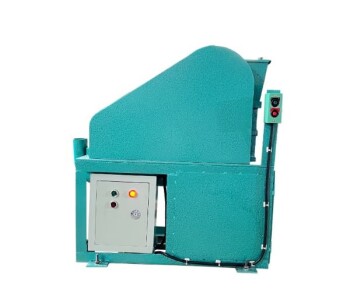
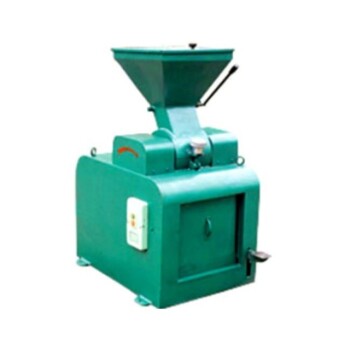
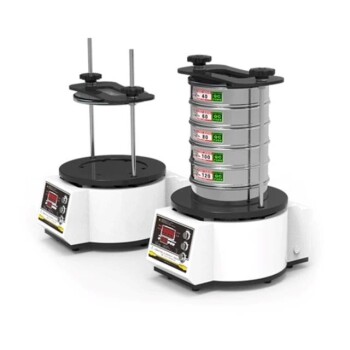
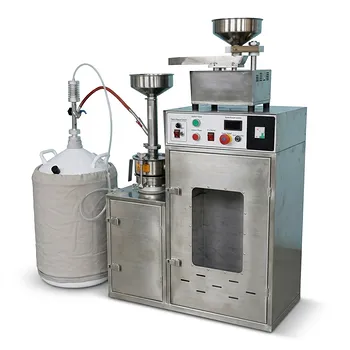
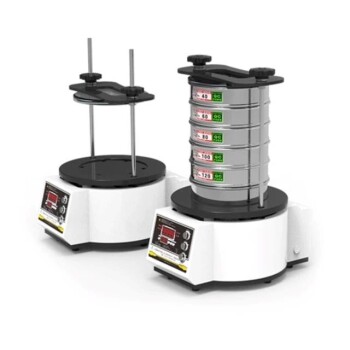
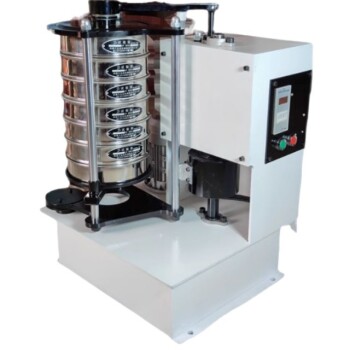
Achieving precise particle size distribution is the primary driver for industrial processing. Industrial-grade systems ensure biochar mimics the behavior of pulverized coal, providing the necessary fluidity for injection and the surface area required for rapid combustion. This prevents mechanical failures like spray gun blockages while maintaining the thermal efficiency of the blast furnace.
High-precision crushing and sieving transform raw biochar from an inconsistent byproduct into a standardized industrial fuel. By strictly controlling morphology, these systems guarantee stable injection flow and optimal reactivity, which are essential for replacing fossil fuels in modern ironmaking.
Optimizing Fluidity and Injection Reliability
Preventing Spray Gun Blockages
Biochar must be processed into a specific particle size distribution to ensure it flows smoothly through injection lances. Industrial-grade sieving removes oversized particles that would otherwise cause catastrophic blockages in the spray guns.
Simulating Pulverized Coal Performance
To maintain furnace stability, biochar must behave like the traditional coal it replaces. Precise size control allows the biochar to match the fluidity and flow characteristics of coal, ensuring a seamless integration into existing injection infrastructures.
Standardizing Feedstock Consistency
Raw biochar is naturally heterogeneous and often possesses low bulk density. Industrial milling creates a uniform powder, which is fundamental for maintaining a steady, predictable feed rate into the high-pressure environment of the blast furnace.
Maximizing Combustion and Thermal Efficiency
Increasing Specific Surface Area
Finer particles, such as those refined to below 0.2 mm, significantly increase the specific surface area of the material. This increased area maximizes contact efficiency between the carbon and the blast air, leading to faster ignition and more complete combustion.
Improving Heat Transfer Homogeneity
Consistent particle size ensures that heat is transferred rapidly and uniformly to the core of every particle. This homogeneity prevents "cold spots" in the furnace tuyeres and ensures that the biochar contributes effectively to the thermal requirements of the ironmaking process.
Enhancing Chemical Reactivity
Industrial crushing facilitates the penetration of modifiers and promotes the formation of stable chemical bonds during processing. This results in a biochar product with stable physicochemical properties, ensuring reproducible performance during the high-heat reduction phase.
Understanding the Trade-offs and Constraints
Energy Consumption vs. Particle Fineness
While ultra-fine particles improve reactivity, the energy required for mechanical milling increases exponentially as particle size decreases. Operators must balance the gain in combustion efficiency against the heightened operational costs of intensive crushing.
Mechanical Strength and Handling
Biochar naturally possesses low mechanical strength, which can lead to excessive dust generation during transport. In some cases, industrial systems must include pelletizing or compression stages to improve the material's ability to withstand gravitational loads and handling without degrading back into fines prematurely.
Dust Explosion Risks
Processing biochar into fine powders increases the risk of dust explosions in the facility. Industrial-grade systems must integrate specialized safety venting and inerting atmosphere controls to manage the hazards associated with high-surface-area carbon dust.
How to Apply This to Your Project
Making the Right Choice for Your Goal
- If your primary focus is maximizing fossil fuel replacement: Invest in high-precision pelletizing and crushing systems to achieve the mechanical strength and density required to replace up to 20% of fossil coke.
- If your primary focus is ensuring equipment longevity: Prioritize advanced industrial sieving with standard 20-mesh or finer screens to eliminate oversized particles that cause spray gun erosion and blockages.
- If your primary focus is thermal process stability: Utilize industrial grinders to maximize specific surface area, ensuring uniform heat transfer and consistent combustion reactivity at the furnace tuyeres.
Properly engineered crushing and sieving systems are the bridge between raw biomass waste and a high-performance metallurgical fuel.
Summary Table:
| Feature | Impact on Blast Furnace Injection | Required Equipment |
|---|---|---|
| Particle Size Control | Prevents spray gun blockages and ensures flow | Precision Sieving Systems |
| Surface Area Maximization | Enhances combustion rate and reactivity | Industrial Milling/Grinding |
| Fluidity Optimization | Mimics pulverized coal for seamless integration | High-speed Crushing |
| Material Uniformity | Ensures stable heat transfer and feed rates | Standardized Crushing Systems |
Optimize Your Metallurgical Fuel Production with KINTEK
Transitioning to sustainable ironmaking requires absolute precision in material processing. KINTEK specializes in high-performance crushing and milling systems, sieving equipment, and hydraulic presses, designed to transform raw biochar into a high-quality metallurgical fuel.
By partnering with us, you gain access to:
- Advanced Crushing & Milling: Achieve the specific surface area needed for rapid combustion.
- Precision Sieving: Eliminate oversized particles that cause costly equipment blockages.
- Pelletizing Solutions: Enhance mechanical strength and density for easier handling.
Ready to enhance your thermal efficiency and equipment longevity? Contact our specialists today to find the perfect equipment for your laboratory or industrial scale-up.
References
- Shijie Wang, Shengli An. Review on the Application and Development of Biochar in Ironmaking Production. DOI: 10.3390/met13111844
This article is also based on technical information from Kintek Solution Knowledge Base .
Related Products
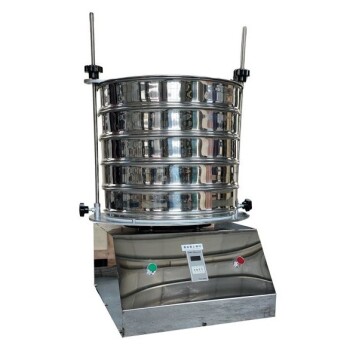
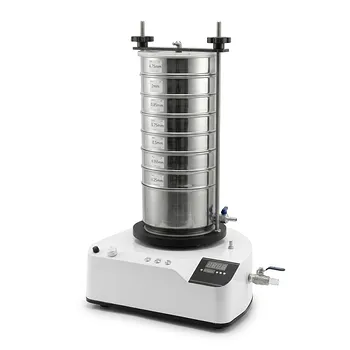
- Laboratory Test Sieves and Sieving Machines
- Laboratory Vibratory Sieve Shaker Machine for Dry and Wet Three-Dimensional Sieving
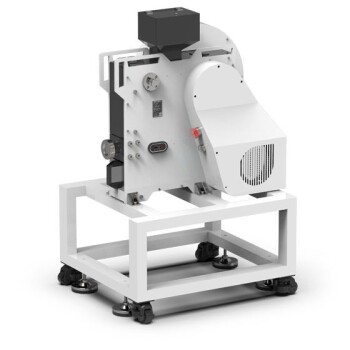
- Laboratory Jaw Crusher
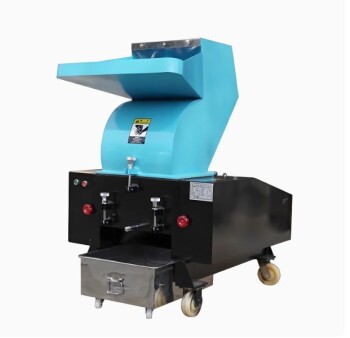
- Powerful Plastic Crusher Machine
- Three-dimensional electromagnetic sieving instrument
People Also Ask
- What are laboratory test sieves used for? A Guide to Particle Size Analysis
- How do you calculate the sieve test? Master Particle Size Distribution for Quality Control
- How does a lab test sieve contribute to biomass charcoal powder preparation? Achieve Uniform Particle Size
- What are the specifications for test sieves? A Guide to ASTM & ISO Standards for Accurate Particle Analysis
- What materials are required for sieving? Achieve Accurate Particle Size Analysis