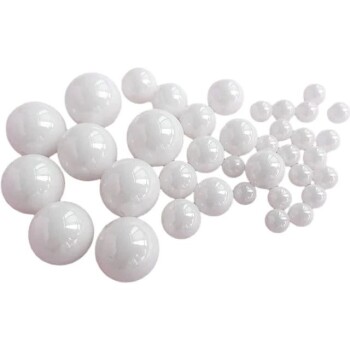
Zirconia grinding balls are the critical industry standard for processing LLZO solid-state electrolytes because they solve the dual challenge of crushing extremely hard ceramics while maintaining absolute chemical purity.
High-energy ball milling requires a medium that is harder than the oxide raw materials (such as Lithium, Lanthanum, and Zirconium oxides) but chemically inert enough to prevent contaminating the mixture. Zirconia provides the necessary density and wear resistance to refine these powders without introducing metallic impurities like iron, which would destroy the electrolyte's electrochemical performance.
Core Takeaway Achieving high ionic conductivity in LLZO electrolytes requires a powder synthesis process free from conductive contaminants. Zirconia media is essential because it withstands the mechanical stress of high-energy milling without degrading, ensuring the final material remains pure, stable, and electrochemically efficient.
The Physical Challenge: Crushing Hard Oxides
Overcoming Material Hardness
The raw materials used to synthesize LLZO (Lithium Lanthanum Zirconium Oxide) include hard oxides that resist mechanical breakdown.
The Necessity of High-Energy Impact
To effectively fracture these "garnet-type" ceramic particles, the milling media must possess extreme hardness. Zirconia balls deliver the high-impact force required to pulverize these materials into fine powders during the milling process.
Increasing Surface Area
The goal of this high-energy impact is to refine the powder to a specific surface area. This refinement is critical for promoting the solid-phase reactions that occur during subsequent heating or sintering steps.
The Chemical Challenge: Absolute Purity
Chemical Inertness
Unlike stainless steel or other common milling media, zirconia is chemically inert. This property prevents the media from reacting with the precursor powders, even under the heat and pressure generated during milling.
Preventing Metallic Contamination
The most significant risk in milling solid electrolytes is the introduction of metallic impurities, such as iron or chromium. Zirconia balls eliminate this risk, ensuring that no conductive metals are introduced into the insulating electrolyte structure.
Preserving Ionic Conductivity
The presence of foreign impurities creates barriers to lithium-ion movement or causes unwanted side reactions. By using zirconia, you preserve the chemical composition uniformity required for high ionic conductivity.
Durability and Process Efficiency
Superior Wear Resistance
High-energy ball milling for LLZO often lasts for extended periods, typically ranging from 5 to 12 hours. Zirconia balls possess superior wear resistance, meaning they do not degrade or lose significant mass during these long, high-speed impact sessions.
Optimizing Energy Transfer
High-density zirconia media is recommended to maximize the efficiency of mechanical energy transfer. This ensures the mechanochemical reactions proceed efficiently without extending milling times unnecessarily.
Understanding the Trade-offs
The Cost of Purity
Zirconia grinding media is generally more expensive than standard steel or alumina alternatives. However, this cost is a mandatory investment for solid-state electrolytes, as the "savings" from cheaper media result in a contaminated, non-functional product.
Specificity of Media Size
While zirconia is the correct material, the size of the media also matters for efficiency. For example, 2mm diameter balls are often selected to balance impact force with the number of contact points, optimizing the grinding efficiency for specific wet milling processes.
Making the Right Choice for Your Goal
To ensure the success of your LLZO production, align your milling media strictly with your electrochemical targets:
- If your primary focus is Ionic Conductivity: You must use high-purity zirconia to prevent metallic contamination that acts as electron pathways or ion blockers.
- If your primary focus is Process Consistency: Rely on the wear resistance of zirconia to ensure that long milling durations (5+ hours) do not alter the stoichiometry of your powder batch.
Zirconia grinding media is not just a tool for size reduction; it is a contamination control strategy essential for viable solid-state batteries.
Summary Table:
| Property | Benefit for LLZO Production |
|---|---|
| High Hardness | Effectively crushes hard oxide precursors (Li, La, Zr) into fine powders. |
| Chemical Inertness | Prevents metallic contamination (like iron) that ruins electrochemical performance. |
| Wear Resistance | Maintains mass and purity during long 5-12 hour high-energy milling sessions. |
| High Density | Maximizes mechanical energy transfer for efficient particle size reduction. |
Elevate Your Solid-State Battery Research with KINTEK
Precision in LLZO synthesis starts with the right equipment and media. KINTEK specializes in providing the high-performance tools necessary for advanced material science, including high-purity zirconia grinding media, crushing and milling systems, and high-temperature furnaces for sintering.
Whether you are refining electrolyte powders or developing next-generation cells, our comprehensive portfolio—from planetary ball mills and hydraulic pellet presses to vacuum furnaces and battery research consumables—ensures your process remains uncontaminated and efficient.
Ready to optimize your powder processing? Contact KINTEK today to discover how our expert laboratory solutions can enhance your material's ionic conductivity and consistency.
Related Products
- Laboratory Jar Ball Mill with Alumina Zirconia Grinding Jar and Balls
- Precision Machined Zirconia Ceramic Ball for Engineering Advanced Fine Ceramics
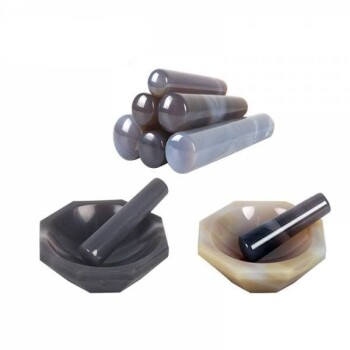
- Laboratory Jar Mill with Agate Grinding Jar and Balls
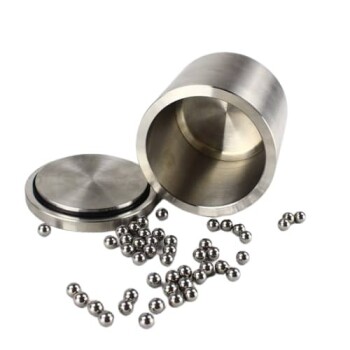
- Laboratory Ball Mill Jar Mill with Metal Alloy Grinding Jar and Balls
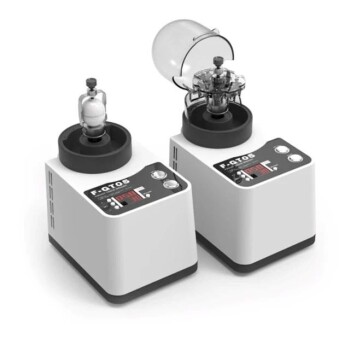
- Laboratory Micro Tissue Grinding Mill Grinder
People Also Ask
- What are the primary functions of using a ball mill for BZCY72 powder? Achieve High Purity and Enhanced Sintering
- In what way does a laboratory ball mill affect material properties when modifying PHBV/pulp fiber composites?
- Why is a laboratory ball mill required for ultra-fine fly ash? Unlock Nano-Scale Adsorption Power
- What is the function of a laboratory ball mill in the preparation of AMMCs? Optimize Dispersion & Grain Refinement
- What is the function of a laboratory ball mill in the pretreatment of waste tire char (WTC)? Optimize Material Reactivity