Zirconia (ZrO2) grinding media are the preferred standard for the preparation of Li3PS4-LiI glass electrolytes due to a critical balance of high density and chemical inertness. These material properties allow for the generation of the intense impact energy required for mechanochemical synthesis while strictly maintaining the purity of the highly sensitive sulfide material.
The Core Takeaway The synthesis of Li3PS4-LiI requires high-energy ball milling to induce a chemical reaction between precursors. Zirconia is essential because its high density delivers the necessary kinetic force to drive this reaction, while its extreme hardness prevents the shedding of impurities that would otherwise ruin the electrochemical performance of the electrolyte.
The Role of Kinetic Energy in Synthesis
Providing Sufficient Impact Force
The preparation of Li3PS4-LiI is a mechanochemical process. This means the chemical reaction is driven by mechanical force rather than heat alone.
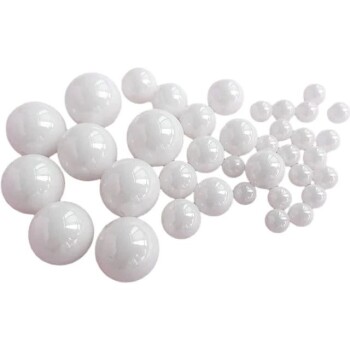
Zirconia is a high-density ceramic. When used as grinding balls, this mass translates into significant kinetic energy during the milling process. This energy is required to shatter the precursor structures and facilitate the formation of the new glass phase.
Enabling Amorphization
To create a "glass" electrolyte, the crystalline structure of the starting materials must be broken down into an amorphous state.
The high impact energy provided by zirconia media promotes this amorphization effectively. Lighter grinding media might not generate enough force to fully refine the powder or achieve the necessary homogeneous mixture.
Ensuring Electrochemical Purity
Eliminating Metallic Contamination
One of the greatest risks in synthesizing sulfide electrolytes is contamination from the grinding gear itself.
During the long-duration milling required for these materials, softer media (like steel) will degrade. This introduces metallic impurities (such as iron or chromium) into the electrolyte. These impurities are disastrous, causing side reactions and degrading the electrochemical stability of the final product.
Superior Wear Resistance
Zirconia possesses exceptional hardness and wear resistance.
Even under high-speed impact for extended periods, zirconia maintains its integrity. This ensures that the powder remains free of foreign particles, which is vital for preventing performance degradation during battery cycling.
Chemical Inertness
Sulfide precursors can be highly reactive, but zirconia is chemically inert.
This inertness prevents the grinding jars and balls from reacting with the sulfide or iodine components during synthesis. It ensures that the chemical stoichiometric ratio of the final product remains accurate, exactly as calculated.
Common Pitfalls and Considerations
The Necessity of Environmental Sealing
While the material of the jar (zirconia) prevents chemical contamination, the environment inside the jar is equally critical.
Sulfide electrolytes are extremely sensitive to moisture (hydrolysis) and oxidation. High-quality zirconia jars are often designed to be hermetically sealed to maintain an inert argon gas environment. Failing to use sealed zirconia jars can lead to the degradation of the electrolyte before the synthesis is even complete.
Hardness vs. Brittleness
While zirconia is harder than metal, it is a ceramic.
It is highly resistant to wear (abrasion), but users should be aware that it can be brittle if subjected to thermal shock or mishandling outside of the milling process. However, inside the mill, its hardness is the primary asset that prevents cross-contamination.
Making the Right Choice for Your Goal
To ensure the success of your Li3PS4-LiI synthesis, align your equipment choices with your specific objectives:
- If your primary focus is Electrochemical Stability: Prioritize Zirconia media to eliminate metallic impurities (Fe, Cr) that act as conductive pathways and cause short circuits or side reactions.
- If your primary focus is Synthesis Efficiency: Rely on Zirconia's high density to provide the kinetic energy needed to reduce milling time and achieve complete amorphization.
- If your primary focus is Material Consistency: Use Zirconia to prevent wear-induced stoichiometry shifts, ensuring your final product matches your theoretical calculations.
Zirconia offers the only viable path to generating the high mechanical energy required for sulfide synthesis without compromising the material's purity.
Summary Table:
| Feature | Zirconia (ZrO2) Benefit | Impact on Li3PS4-LiI Synthesis |
|---|---|---|
| High Density | Delivers intense kinetic energy | Drives mechanochemical reaction & amorphization |
| Extreme Hardness | Superior wear resistance | Prevents metallic contamination (Fe, Cr) |
| Chemical Inertness | Non-reactive with sulfides/iodine | Maintains precise chemical stoichiometry |
| Material Integrity | Resists shedding during milling | Ensures high electrochemical stability and safety |
Elevate Your Battery Research with KINTEK Precision
Achieving the perfect amorphous phase for Li3PS4-LiI glass electrolytes requires more than just a process—it requires the right tools. KINTEK specializes in high-performance laboratory equipment designed for the most sensitive synthesis tasks.
Our premium zirconia grinding jars and balls provide the density and purity necessary to prevent contamination while our crushing and milling systems ensure consistent results. Beyond milling, KINTEK offers a full suite of solutions for battery research, including:
- High-temperature furnaces (Vacuum, Atmosphere, and Tube) for precursor treatment.
- Hydraulic presses (Pellet and Isostatic) for electrolyte densification.
- Glovebox-compatible equipment and PTFE consumables to maintain inert environments.
Don't let impurities compromise your electrochemical performance. Contact KINTEK today to discover how our high-purity grinding solutions and comprehensive lab equipment can streamline your solid-state battery development.
Related Products
- Laboratory Jar Ball Mill with Alumina Zirconia Grinding Jar and Balls
- Precision Machined Zirconia Ceramic Ball for Engineering Advanced Fine Ceramics
- Laboratory Jar Mill with Agate Grinding Jar and Balls
- Laboratory Ball Mill Jar Mill with Metal Alloy Grinding Jar and Balls
- Laboratory Micro Tissue Grinding Mill Grinder
People Also Ask
- What are the primary functions of using a ball mill for BZCY72 powder? Achieve High Purity and Enhanced Sintering
- In what way does a laboratory ball mill affect material properties when modifying PHBV/pulp fiber composites?
- Why is a laboratory ball mill required for ultra-fine fly ash? Unlock Nano-Scale Adsorption Power
- What is the function of a laboratory ball mill in the preparation of AMMCs? Optimize Dispersion & Grain Refinement
- What is the function of a laboratory ball mill in the pretreatment of waste tire char (WTC)? Optimize Material Reactivity