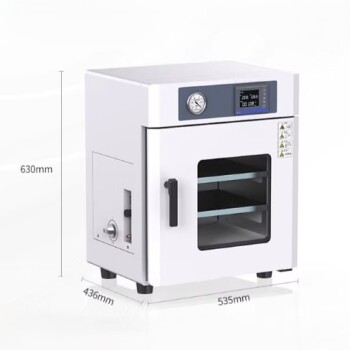
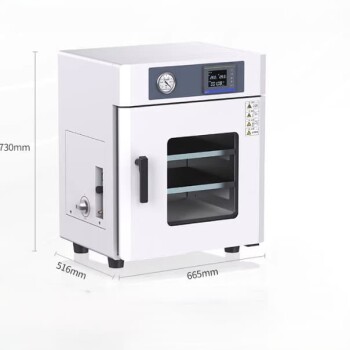
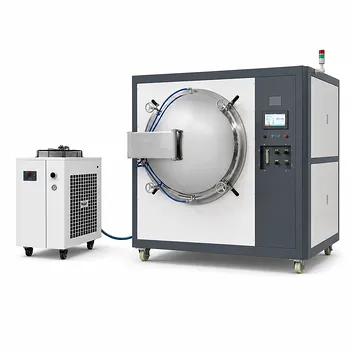
Vacuum drying is the critical final step in electrode fabrication because it removes high-boiling-point solvents and trapped moisture that atmospheric drying cannot reach. By utilizing a low-pressure environment, these ovens extract contaminants from the deep micro-pores of the electrode material, preventing parasitic chemical reactions that would otherwise degrade the supercapacitor's lifespan and compromise the accuracy of its performance data.
A constant temperature vacuum drying oven ensures the electrochemical purity of supercapacitor electrodes by eliminating residual solvents and moisture. This process is essential for stabilizing the interface between the electrode and electrolyte, ensuring that measurements of capacitance and cycling stability are both reproducible and representative of the material's true potential.
The Dual Mechanism of Vacuum and Heat
Extraction from Micro-porous Structures
Supercapacitor electrodes often utilize high-surface-area materials, such as activated carbon, which feature complex networks of micro-pores.
Standard atmospheric drying is frequently insufficient because surface tension and air pressure trap solvents like N-Methyl-2-pyrrolidone (NMP) deep within these pores.
A vacuum creates a negative pressure environment that significantly lowers the boiling point of these solvents, allowing them to evaporate and be extracted from the internal structure at relatively low temperatures.
Maintaining Constant Thermal Energy
Precise temperature control, such as maintaining a steady 70 °C or 80 °C, provides the kinetic energy necessary to break the bonds of physically adsorbed water and residual solvents.
Fluctuations in temperature during the drying process can lead to uneven solvent evaporation, which may cause the binder to migrate or the electrode film to crack.
By keeping the temperature constant, the oven ensures a uniform drying rate, which preserves the mechanical integrity of the electrode layer on the current collector.
Preserving Electrochemical Integrity
Prevention of Parasitic Reactions
Even trace amounts of moisture can react with electrolytes to form harmful by-products, such as hydrofluoric acid (HF) in some systems.
These contaminants trigger parasitic side reactions that cause electrode corrosion, gas evolution, and accelerated self-discharge.
Thorough vacuum drying prevents these reactions, ensuring that the observed electrochemical behavior is a result of ion adsorption rather than chemical degradation.
Optimization of Electrolyte Wetting
Residual solvents left in the pores can act as barriers, preventing the electrolyte from fully "wetting" the active material.
If the electrolyte cannot access the entire surface area of the electrode, the measured specific capacitance will be significantly lower than the material's actual capability.
Removing these residues ensures that the ion transport channels remain unobstructed, allowing for high power density and rapid charge-discharge cycles.
Protecting Material Properties
Avoiding Oxidative Degradation
Many advanced electrode materials and conductive agents are sensitive to oxygen, especially when heated.
A vacuum oven provides an oxygen-free environment, which prevents the oxidation of active materials that would otherwise diminish their electrochemical activity.
This is particularly vital for maintaining the structural integrity of carbon-based materials and ensuring that the final mass of the active material is accurate for density calculations.
Ensuring Accurate Mass Measurement
To calculate precise specific capacitance (F/g), the exact mass of the active material must be known.
Residual moisture or solvents add "dead weight" to the electrode, leading to inflated mass readings and inaccurately low capacitance data.
Consistent vacuum drying to a constant weight is the only way to ensure the reproducibility of scientific results across different batches.
Common Pitfalls and Trade-offs
Temperature Sensitivity of Binders
While higher temperatures (e.g., 120 °C to 180 °C) accelerate drying, they can also cause certain polymer binders to soften or decompose.
If the temperature exceeds the binder's stability limit, the electrode may peel away from the current collector, destroying the mechanical contact required for electron transport.
The Risk of Re-adsorption
Electrode materials are often highly hygroscopic, meaning they quickly re-absorb moisture from the air once removed from the oven.
If the electrodes are not transferred immediately to an inert environment (like a glovebox) after drying, the benefits of the vacuum process can be neutralized within minutes.
Effective preparation requires a seamless transition from the vacuum oven to the final assembly stage to maintain the deep-dried state.
How to Apply This to Your Project
To achieve the highest quality results in supercapacitor fabrication, your drying protocol should be tailored to your specific material chemistry and binder type.
- If your primary focus is research accuracy: Prioritize long-duration vacuum drying (e.g., 48 hours) at moderate temperatures to ensure every trace of solvent is removed without damaging the material structure.
- If your primary focus is industrial throughput: Utilize higher temperatures (up to 120 °C) combined with high-vacuum pumps to accelerate solvent evaporation, provided your binder can withstand the heat.
- If your primary focus is sensitive carbon materials: Ensure the vacuum is established before the heating cycle begins to prevent any potential oxidation during the ramp-up phase.
Implementing a rigorous vacuum drying protocol is the foundation of building high-performance energy storage devices with predictable and stable lifespans.
Summary Table:
| Feature | Impact on Supercapacitor Electrode Preparation |
|---|---|
| Vacuum Environment | Extracts high-boiling-point solvents (e.g., NMP) from deep micro-pores. |
| Constant Temperature | Prevents binder migration and cracking; ensures uniform electrode film integrity. |
| Oxygen-Free Drying | Protects sensitive carbon materials and conductive agents from oxidative degradation. |
| Moisture Removal | Eliminates trace water to prevent parasitic reactions and electrolyte contamination. |
| Mass Consistency | Ensures precise active material weight for accurate specific capacitance (F/g) data. |
Elevate Your Energy Storage Research with KINTEK
Achieving electrochemical purity and reproducible results starts with the right thermal processing environment. KINTEK specializes in high-precision laboratory equipment designed for the rigorous demands of supercapacitor and battery fabrication.
From our advanced vacuum drying ovens and high-temperature furnaces (muffle, tube, and atmosphere) to precision hydraulic pellet presses for electrode forming, we provide the tools necessary to eliminate contaminants and stabilize your material interfaces. Our portfolio also includes essential high-temperature high-pressure reactors, electrolytic cells, and PTFE consumables to support your entire workflow from synthesis to final testing.
Ready to optimize your electrode drying protocol? Contact our technical experts today to find the perfect equipment solution for your lab’s specific material requirements and ensure your data reflects the true potential of your innovations.
References
- Shiva Bhardwaj, Ram K. Gupta. Bimetallic Co–Fe sulfide and phosphide as efficient electrode materials for overall water splitting and supercapacitor. DOI: 10.1186/s11671-023-03837-1
This article is also based on technical information from Kintek Solution Knowledge Base .
Related Products
- 23L Laboratory Vacuum Drying Oven
- 56L Vertical Laboratory Vacuum Drying Oven
- Laboratory Scientific Electric Heating Blast Drying Oven
- 2200 ℃ Graphite Vacuum Heat Treat Furnace
- High Temperature Muffle Oven Furnace for Laboratory Debinding and Pre Sintering
People Also Ask
- Why is a laboratory vacuum drying oven recommended for rice straw residues? Protect Your Biomass Integrity
- What role does a laboratory vacuum drying oven play in the preparation of modified multi-walled carbon nanotubes?
- What is the importance of using a laboratory vacuum drying oven? Preserving Slow-Release Microcapsule Integrity
- Why is a Laboratory Vacuum Drying Oven recommended for PBAT microspheres? Protect Sensitive Polymer Integrity
- What role does a laboratory vacuum drying oven play in processing nanoparticle powder samples? Protect Sample Integrity