The primary function of a laboratory vacuum drying oven in this context is to decouple evaporation from high heat. By operating in a low-pressure environment, the oven significantly lowers the boiling point of residual solvents like water and ethanol. This allows these solvents to evaporate rapidly at safe temperatures, such as 60 °C, preventing the thermal damage typically associated with standard drying methods.
By removing solvents without high thermal stress, vacuum drying preserves the physical architecture of the microcapsule. It ensures the shell remains rigid and intact, preventing the premature release of the acid payload and maintaining chemical stability during storage.
The Mechanism of Preservation
To understand why this equipment is non-negotiable for slow-release microcapsules, you must look beyond simple drying and consider the physics of phase change.
Lowering the Boiling Point
Standard drying relies on heat to force evaporation. A vacuum oven relies on pressure reduction.
By reducing the internal pressure, the oven lowers the temperature at which solvents boil. This allows for the efficient removal of stubborn residuals like water and ethanol without subjecting the material to extreme heat.
Rapid Solvent Removal
Speed is critical during the washing and drying stages. Prolonged exposure to solvents can compromise the microcapsule shell.
The vacuum environment accelerates the evaporation rate. This ensures that potentially damaging solvents are evacuated from the microcapsule surface quickly and thoroughly.
Protecting the Core-Shell Structure
The integrity of a slow-release product depends entirely on the quality of its shell. High-temperature drying poses several specific risks that vacuum drying mitigates.
Preventing Thermal Degradation
Many shell materials and acid cores are sensitive to heat. Traditional drying methods often require temperatures that exceed the thermal stability limit of these materials.
Vacuum drying allows you to operate at relatively low temperatures (e.g., 60 °C). This stays well below the threshold where chemical breakdown or active ingredient degradation typically occurs.
Avoiding Shell Softening and Deformation
Heat causes many polymeric shell materials to soften. If the shell softens while solvent is still evaporating, the structure can collapse or deform.
By drying at cooler temperatures, the shell material maintains its rigidity. This prevents deformation and framework collapse, ensuring the microcapsules retain their intended shape and porosity.
Ensuring Chemical Stability
A compromised shell leads to reduced shelf life. If the drying process damages the shell, moisture can ingress or the acid core can leak prematurely.
The gentle nature of vacuum drying ensures the chemical stability of the final product, allowing it to perform predictably after long periods of storage.
Understanding the Trade-offs
While vacuum drying is the superior technical choice for this application, it introduces specific operational considerations.
Complexity of Operation
Vacuum drying is not as passive as convection drying. It requires precise control over both temperature and vacuum levels to optimize the process.
Risk of "Bumping"
If the pressure is lowered too aggressively, solvents can boil violently (flash evaporation). This physical agitation can rupture delicate microcapsule shells, defeating the purpose of the gentle thermal profile.
Making the Right Choice for Your Process
The decision to use a vacuum drying oven should be driven by the physical properties of your specific microcapsule formulation.
- If your primary focus is Structural Integrity: Prioritize a gradual reduction in pressure to prevent mechanical stress on the shell while maintaining a low temperature (approx. 60 °C).
- If your primary focus is Solvent Removal Efficiency: optimize the vacuum level to target the specific vapor pressure of your solvent (ethanol or water) to maximize evaporation speed without raising the temperature.
Vacuum drying is the only reliable method to ensure that the delicate architecture of a slow-release microcapsule survives the manufacturing process intact.
Summary Table:
| Feature | Vacuum Drying (60°C) | Standard Convection Drying |
|---|---|---|
| Boiling Point | Significantly lowered via pressure | High (standard atmospheric) |
| Shell Integrity | Preserved; prevents softening | Risk of deformation & collapse |
| Solvent Removal | Rapid & efficient under vacuum | Slower; requires higher heat |
| Core Stability | High (prevents thermal degradation) | Low (potential chemical breakdown) |
| Mechanical Stress | Low (if pressure is controlled) | Variable |
Elevate Your Material Stability with KINTEK Precision
Don't let high heat compromise the delicate architecture of your slow-release formulations. KINTEK specializes in advanced laboratory solutions, offering a premium range of vacuum drying ovens and cooling systems designed to protect your sensitive payloads. From high-temperature furnaces and hydraulic presses to specialized reactors and autoclaves, we provide the tools essential for rigorous research and production.
Ready to optimize your drying process? Contact us today to discover how our high-performance equipment can ensure the chemical stability and structural integrity of your microcapsules and advanced materials.
References
- Xiaoming Sun, Jun Xu. Preparation of Novel Slow-Release Acid Materials for Oilfield Development via Encapsulation. DOI: 10.3390/ma18010083
This article is also based on technical information from Kintek Solution Knowledge Base .
Related Products
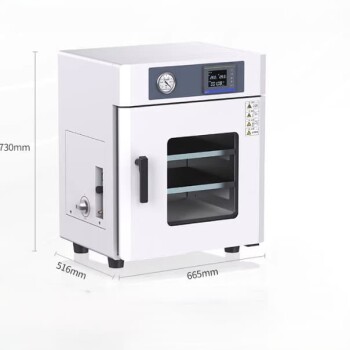
- 56L Vertical Laboratory Vacuum Drying Oven
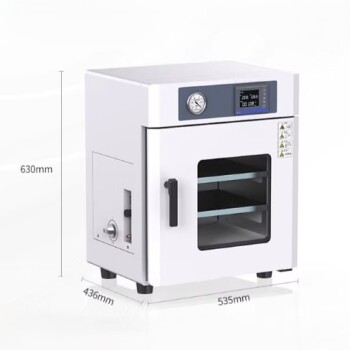
- 23L Laboratory Vacuum Drying Oven
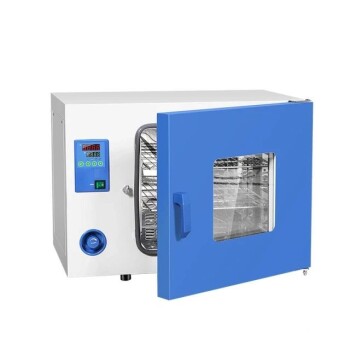
- Laboratory Scientific Electric Heating Blast Drying Oven
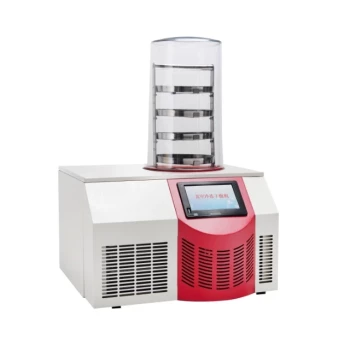
- Benchtop Laboratory Vacuum Freeze Dryer
- High Performance Laboratory Freeze Dryer
People Also Ask
- Why is a laboratory vacuum drying oven recommended for rice straw residues? Protect Your Biomass Integrity
- What role does a laboratory vacuum drying oven play in the preparation of modified multi-walled carbon nanotubes?
- Why is a Laboratory Vacuum Drying Oven recommended for PBAT microspheres? Protect Sensitive Polymer Integrity
- What role does a laboratory vacuum drying oven play in processing nanoparticle powder samples? Protect Sample Integrity
- Why is a vacuum drying oven necessary for Li2MnSiO4/C battery electrodes? Ensure Stability and Performance.