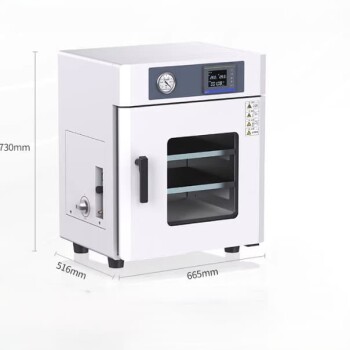
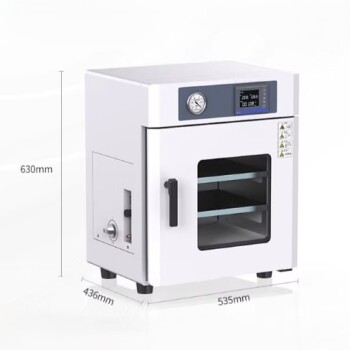
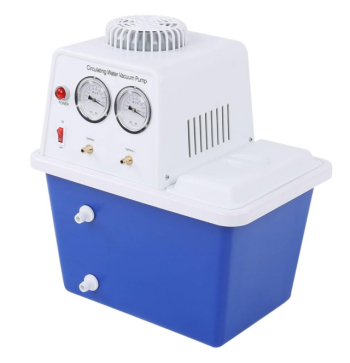
A laboratory vacuum drying oven is the critical preservation stage in the synthesis of modified multi-walled carbon nanotubes (MWCNTs). It functions primarily to remove residual moisture and solvents from washed nanotubes at reduced temperatures, often around 100 °C or lower. By lowering the boiling point of these liquids, the oven ensures rapid drying without subjecting the material to the high thermal stresses that typically cause degradation in standard atmospheric ovens.
The core value of this process is the protection of delicate surface chemistries; the vacuum environment prevents oxidation and stabilizes functional groups that would otherwise be destroyed by high-temperature air drying.
Mechanisms of Preservation
Lowering the Solvent Boiling Point
The fundamental advantage of a vacuum drying oven is its ability to manipulate pressure to affect temperature. By creating a vacuum, the system significantly lowers the boiling point of residual solvents, such as deionized water or ethanol.
Reducing Thermal Stress
Because the solvents boil off at lower temperatures (e.g., 60 °C to 100 °C), the nanotubes do not need to be exposed to extreme heat. This gentle drying process is essential for materials that are sensitive to thermal degradation.
Preventing Oxidation
Standard ovens expose materials to heated air, which accelerates oxidation. A vacuum oven removes the air from the chamber, effectively eliminating the risk of oxidizing the multi-walled carbon nanotubes or their chemical modifications.
Protecting the Modified Structure
Stabilizing Surface Functional Groups
"Modified" nanotubes often possess specific chemical groups attached to their surface, such as those introduced by silane coupling agents. These organic functional groups are thermally sensitive.
Vacuum drying ensures these groups remain intact and stable, which is crucial for the nanotubes' performance in subsequent applications, such as interfacial bonding within a polymer matrix.
Maintaining Fine Structural Integrity
Rapid evaporation at high temperatures in standard ovens can cause capillary forces that collapse fine nanostructures or lead to severe agglomeration.
The controlled environment of a vacuum oven maintains the integrity of the fine structures and prevents the collapse of the nanotube morphology. This results in a dry powder that retains good dispersibility and a high specific surface area.
Understanding the Trade-offs
Processing Time vs. Material Quality
While vacuum drying yields superior material quality, it is generally a slower, batch-oriented process compared to some industrial continuous drying methods. It prioritizes purity and structural fidelity over sheer throughput speed.
Equipment Maintenance
Unlike simple convection ovens, vacuum drying ovens require the maintenance of vacuum pumps and seals. A failure in the vacuum seal can lead to pressure fluctuations that may disrupt the controlled drying profile or reintroduce moisture.
Making the Right Choice for Your Goal
To determine if vacuum drying is the correct step for your specific nanomaterial workflow, consider your downstream requirements:
- If your primary focus is Surface Chemistry: You must use vacuum drying to preserve the delicate organic functional groups attached to the nanotube walls.
- If your primary focus is Dispersion: You should utilize this method to prevent the formation of hard agglomerates that occur during high-temperature atmospheric drying.
By controlling both temperature and atmosphere, the vacuum drying oven transforms a standard drying step into a precision tool for structural and chemical preservation.
Summary Table:
| Feature | Vacuum Drying Oven Impact on MWCNTs | Benefit |
|---|---|---|
| Boiling Point | Lowers solvent boiling points under reduced pressure | Faster drying at lower temperatures |
| Atmosphere | Removes oxygen from the drying chamber | Prevents oxidation of sensitive nanostructures |
| Surface Chemistry | Stabilizes delicate organic functional groups | Ensures high performance in downstream applications |
| Structural Integrity | Reduces capillary forces during evaporation | Prevents hard agglomeration and maintains dispersibility |
Precision Drying Solutions for Your Advanced Materials
At KINTEK, we understand that the quality of your nanomaterials depends on the precision of your equipment. Our high-performance laboratory vacuum drying ovens are engineered to protect delicate surface chemistries and maintain the fine structural integrity of modified multi-walled carbon nanotubes.
Beyond drying solutions, KINTEK specializes in a comprehensive range of laboratory equipment including high-temperature furnaces, crushing and milling systems, and hydraulic presses. Whether you are working on battery research, material synthesis, or chemical modifications, our specialized tools—from high-pressure reactors to PTFE consumables—are designed to meet the rigorous demands of modern research.
Elevate your research outcomes today. Contact our experts to find the perfect drying solution for your lab and ensure your materials reach their full potential.
References
- Hsuan-Ming KUNG, Chung‐Kwei Lin. Anode Catalyst of Hybrid AuPd and Rare Earth Doped Cerium Oxide/Multi-Walled Carbon Nanotubes for Direct Formic Acid Fuel Cells. DOI: 10.2497/jjspm.63.706
This article is also based on technical information from Kintek Solution Knowledge Base .
Related Products
- 56L Vertical Laboratory Vacuum Drying Oven
- 23L Laboratory Vacuum Drying Oven
- Laboratory Scientific Electric Heating Blast Drying Oven
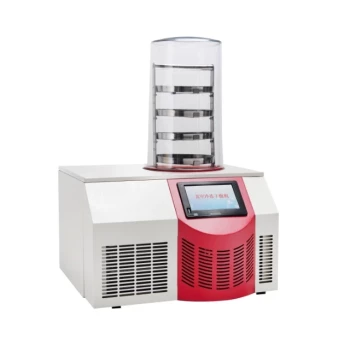
- Benchtop Laboratory Vacuum Freeze Dryer
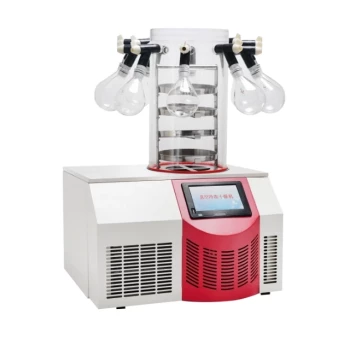
- High Performance Laboratory Freeze Dryer
People Also Ask
- Why is a laboratory vacuum drying oven recommended for rice straw residues? Protect Your Biomass Integrity
- What is the importance of using a laboratory vacuum drying oven? Preserving Slow-Release Microcapsule Integrity
- Why is a Laboratory Vacuum Drying Oven recommended for PBAT microspheres? Protect Sensitive Polymer Integrity
- What role does a laboratory vacuum drying oven play in processing nanoparticle powder samples? Protect Sample Integrity
- Why is a vacuum drying oven necessary for Li2MnSiO4/C battery electrodes? Ensure Stability and Performance.