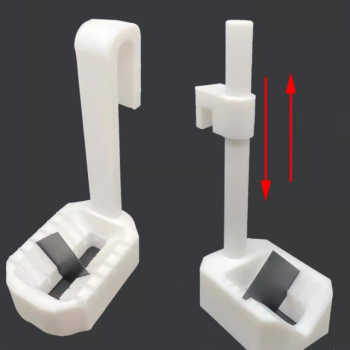
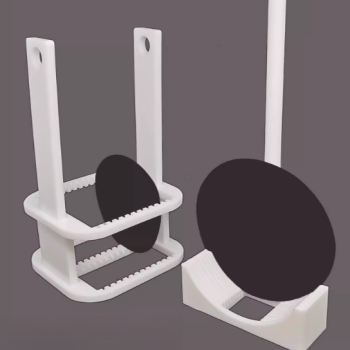
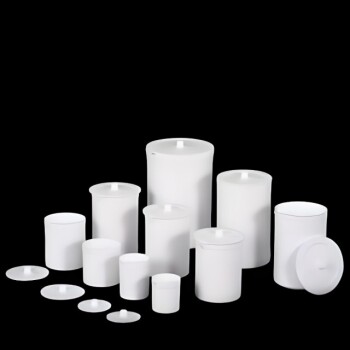
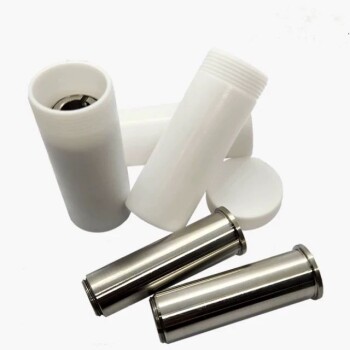
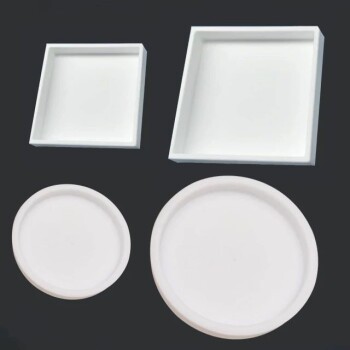
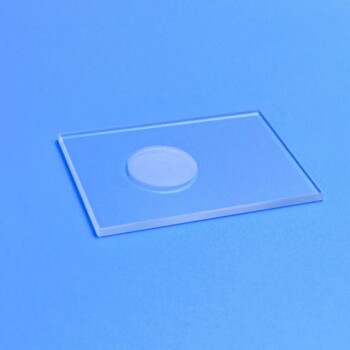
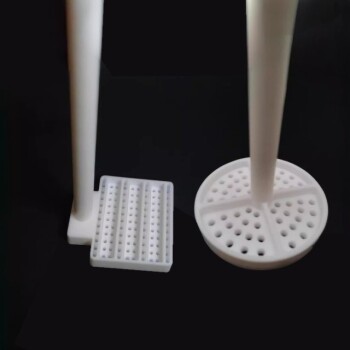
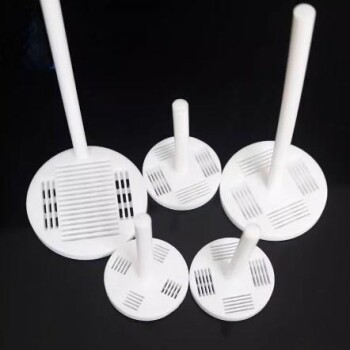
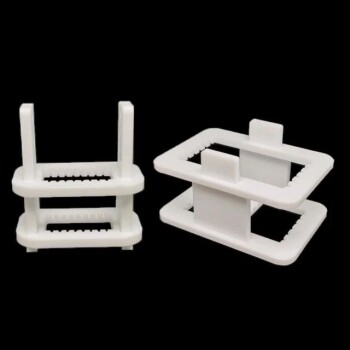
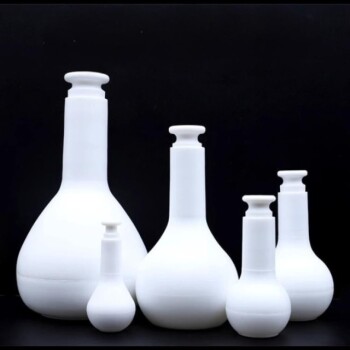
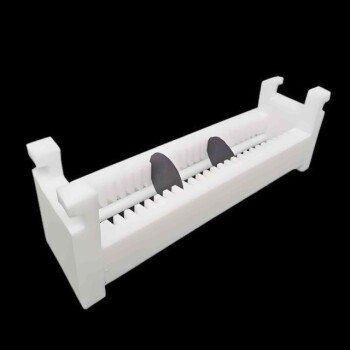
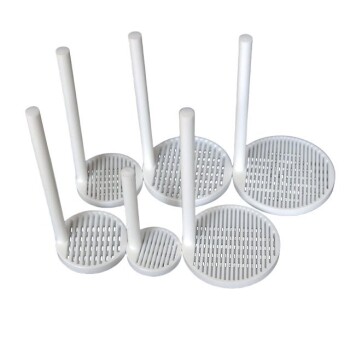
The necessity of a custom PTFE sample holder in CBD processes stems from the dual requirement of chemical inertness and precise geometric positioning. For the deposition of Cd(1-x)ZnxS thin films, the holder maintains conductive glass substrates at a fixed 45-degree angle while submerged in an 80°C alkaline bath. This specific setup ensures mechanical stability during constant stirring and prevents the introduction of contaminants that would otherwise degrade the semiconductor's electronic properties.
Core Takeaway: A custom PTFE holder is essential because it provides the chemical resistance needed to withstand harsh alkaline environments and the structural precision required to grow uniform, high-purity thin films through optimized substrate orientation.
The Role of Material Integrity in Harsh Environments
Chemical Corrosion Resistance
The Chemical Bath Deposition (CBD) of Cd(1-x)ZnxS typically occurs in alkaline reaction environments at elevated temperatures (80°C). Polytetrafluoroethylene (PTFE) is used because it is nearly inert, ensuring that the holder does not react with the precursors or leach impurities into the bath.
Non-Adhesive Properties
PTFE’s non-adhesive nature prevents the film from growing on the holder itself rather than the substrate. This ensures that the chemical precursors are consumed efficiently for the large-area growth of the intended thin film on the conductive glass.
Geometric Precision and Film Uniformity
The Critical 45-Degree Angle
The custom design fixes the substrates at a specific 45-degree angle, which is vital for fluid dynamics within the reaction vessel. This orientation allows for an even flow of ions across the substrate surface, which is necessary for achieving uniform thin film thickness.
Stability Under Mechanical Stress
During the CBD process, constant temperature water baths and vigorous stirring are required to maintain a homogenous reaction. A custom holder provides the mechanical stability needed to keep the substrates from shifting, which would otherwise lead to uneven growth or physical damage to the film.
Impact on Semiconductor Purity
Eliminating Cross-Contamination
In semiconductor fabrication, even trace amounts of foreign ions can significantly alter the bandgap and conductivity of Cd(1-x)ZnxS films. By using a dedicated PTFE holder, researchers eliminate the risk of metallic or organic contamination that standard laboratory clamps might introduce.
Ensuring Large-Area Homogeneity
To produce high-quality thin films suitable for solar cells or optoelectronics, the growth must be consistent across the entire surface. The holder's design ensures that the conductive glass substrates are fully and evenly exposed to the reaction solution, resulting in a high-quality, large-area finish.
Understanding the Trade-offs
Thermal Lag Considerations
While PTFE is chemically excellent, it has low thermal conductivity compared to metals. This can create a slight delay in the substrate reaching the target 80°C, requiring precise timing and temperature monitoring of the water bath.
Custom Fabrication Costs
Unlike off-the-shelf laboratory equipment, a custom-machined PTFE holder requires initial design and manufacturing resources. However, the long-term benefit of reproducible, high-quality film growth outweighs the initial investment in specialized hardware.
How to Apply This to Your Research
When designing or selecting a sample holder for thin-film deposition, prioritize the material and geometry based on your specific chemical environment.
- If your primary focus is high purity: Always opt for PTFE or PFA materials to ensure no metallic ions contaminate your alkaline or acidic reaction baths.
- If your primary focus is film uniformity: Ensure your holder is custom-machined to hold substrates at a fixed angle (e.g., 45 degrees) to optimize ion transport and prevent sediment accumulation.
- If your primary focus is scalability: Design the holder to accommodate multiple substrates simultaneously while maintaining identical orientations for each to ensure batch consistency.
The right sample holder transforms a volatile chemical reaction into a controlled, reproducible manufacturing process for high-performance semiconductor films.
Summary Table:
| Feature | Key Benefit | Impact on Thin Film Growth |
|---|---|---|
| PTFE Material | Chemical Inertness | Prevents bath contamination and leaching at 80°C. |
| 45-Degree Angle | Fluid Dynamics | Optimizes ion flow for uniform film thickness. |
| Non-Adhesive Surface | Material Efficiency | Prevents unwanted film growth on the holder itself. |
| Custom Geometry | Mechanical Stability | Keeps substrates fixed during vigorous stirring. |
| Contamination Control | High Purity | Eliminates trace metallic/organic ion interference. |
Elevate Your Thin Film Research with KINTEK’s Precision PTFE Solutions
Achieving high-purity Cd(1-x)ZnxS thin films requires laboratory equipment that can withstand harsh alkaline environments without compromising results. KINTEK specializes in high-performance PTFE products and ceramics, offering custom-machined sample holders designed for precise geometric positioning and total chemical inertness.
Beyond specialized consumables, our portfolio features a comprehensive range of high-temperature furnaces (CVD, PECVD, vacuum), high-pressure reactors, and electrolytic cells to support every stage of your semiconductor fabrication and material research.
Ready to improve your CBD batch consistency and film uniformity?
Contact KINTEK today for custom lab solutions!
References
- W. G. C. Kumarage, B.S. Dassanayake. Enhancing the Photovoltaic Performance of Cd(1−x)ZnxS Thin Films Using Seed Assistance and EDTA Treatment. DOI: 10.3390/micro3040059
This article is also based on technical information from Kintek Solution Knowledge Base .
Related Products
- Custom PTFE Wafer Holders for Lab and Semiconductor Processing
- Custom PTFE Teflon Parts Manufacturer for Sampling Solution Sample and Dry Powder Spoons
- Custom PTFE Teflon Parts Manufacturer for Centrifuge Tube Racks
- Customizable PTFE Wafer Carriers for Semiconductor and Lab Applications
- Custom PTFE Teflon Parts Manufacturer PTFE Beaker and Lids
People Also Ask
- Why is PTFE selected for L-proline plasma degradation? Ensure Chemical Purity & Field Stability
- Why is it necessary to utilize PTFE sample holders in electroless nickel plating? Ensure Process Integrity
- How does a custom PTFE electrode holder contribute to the accuracy of immersion tests? Ensure Precise Steel Analysis
- Why are PTFE containers required for PCT leaching tests? Ensure Chemical Inertness and Analytical Precision
- How do PTFE holders or laboratory presses contribute to electrode prep? Ensure Precision in Corrosion Testing