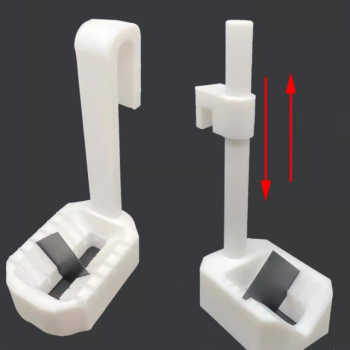
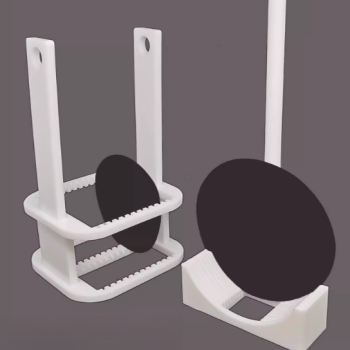
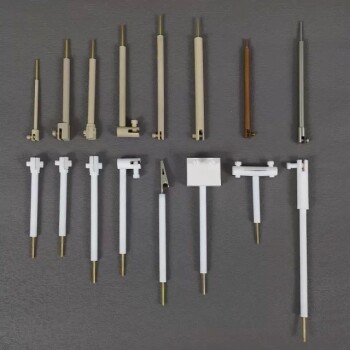
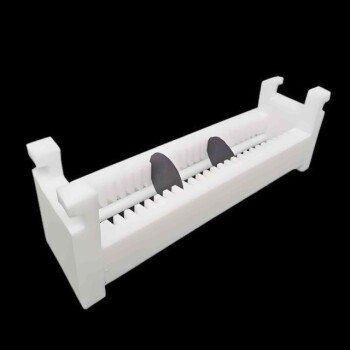
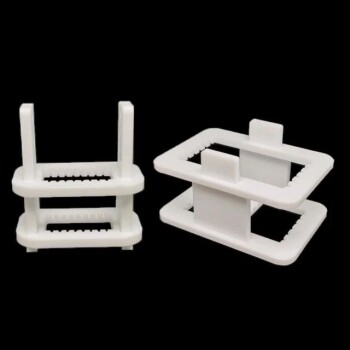
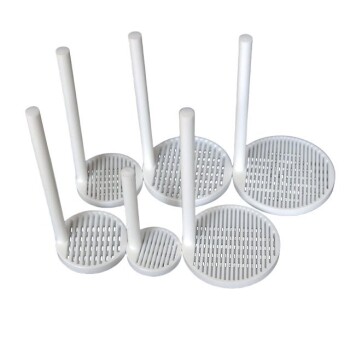
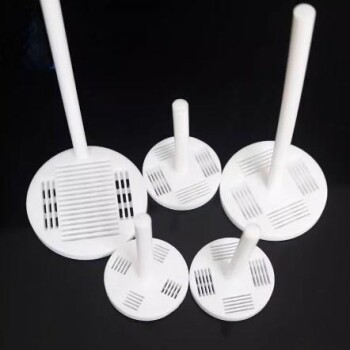
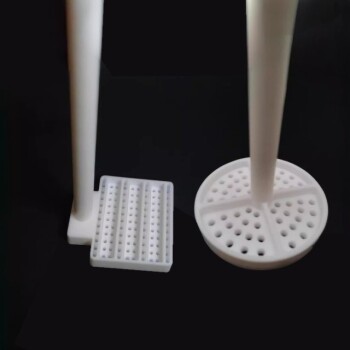
Standardizing the sample interface is the most critical step in electrochemical corrosion testing. PTFE holders and laboratory presses function together to define a precise, reproducible surface area on carbon steel samples, commonly 0.5 cm². This mechanical setup ensures that the corrosive medium interacts only with the intended face of the metal, isolating the rest of the sample from chemical or electrical interference.
The use of PTFE holders is not merely about mounting a sample; it is a method of strict error control. By leveraging PTFE’s insulation and acid resistance, researchers eliminate "edge effects" to guarantee that current density calculations are based on valid, defined geometric areas.
The Role of Mechanical Precision
Defining the Exposed Area
The laboratory press performs a vital function by forcing the carbon steel sample into the PTFE holder. This mechanical action creates a tight physical seal around the sample's perimeter. By strictly limiting the exposed metal to a specific dimension, such as 0.5 cm², researchers establish a constant variable for their calculations.
Ensuring a Liquid-Tight Seal
The pressure applied during preparation is necessary to prevent the corrosive liquid from seeping down the sides of the sample. If the interface between the metal and the holder is loose, the electrolyte will contact undefined areas. This leakage would render the geometric surface area measurements invalid.
The Critical Properties of PTFE
Chemical Resistance
PTFE (Polytetrafluoroethylene) is utilized primarily for its excellent acid resistance. In aggressive corrosion testing, the holder itself must remain inert. PTFE does not degrade or react with the corrosive medium, ensuring that the holder does not introduce contaminants or structural failures during the experiment.
Electrical Insulation
Corrosion is an electrochemical process involving the flow of current. PTFE serves as a robust electrical insulator. By insulating the sides and back of the carbon steel, PTFE forces all electrochemical activity to occur solely on the exposed working face.
Ensuring Data Integrity
Eliminating Edge Effects
"Edge effects" refer to the tendency of corrosion to occur more rapidly at sharp corners or edges of a sample due to higher current distribution. PTFE holders effectively mask these edges. By burying the edges within the holder, the test measures the corrosion rate of the flat surface, not the artifacts of the sample cutting process.
Accurate Current Density Calculation
To calculate the corrosion rate, researchers must know the current density (Current / Area). If the intended metal surface is the only area reacting, this calculation is straightforward. If the area is undefined due to leakage or edge exposure, the resulting current density data will be distorted and unreliable.
Understanding the Trade-offs
The Importance of Proper Fit
While PTFE is excellent, the effectiveness of this method relies entirely on the quality of the press fit. If the sample is not pressed with sufficient force or precision, a gap may remain between the metal and the plastic.
Risk of Crevice Corrosion
A poor seal does not just alter the surface area; it can create a micro-environment known as a "crevice." This can lead to localized crevice corrosion, which behaves differently than general corrosion. This artifact can skew results, making the material appear less resistant than it actually is.
Ensuring Validity in Your Setup
To maximize the reliability of your electrochemical testing, align your preparation method with your specific analytical goals:
- If your primary focus is precise corrosion rate calculation: Verify that your pressing technique consistently yields the exact target surface area (e.g., 0.5 cm²) to validate your current density math.
- If your primary focus is testing in highly aggressive acids: Rely on the chemical inertness of PTFE to prevent holder degradation from contaminating your electrolyte solution.
A controlled interface between the sample and the medium is the foundation of reproducible corrosion science.
Summary Table:
| Feature | Role in Electrode Preparation | Benefit for Electrochemical Testing |
|---|---|---|
| PTFE Material | Chemical resistance & electrical insulation | Prevents contamination and eliminates electrical interference. |
| Laboratory Press | Mechanical compression into holder | Creates a liquid-tight seal to prevent electrolyte leakage. |
| Defined Surface Area | Standardizes interface (e.g., 0.5 cm²) | Ensures accurate current density and corrosion rate calculations. |
| Edge Masking | Buries sharp sample corners | Eliminates 'edge effects' for uniform electrochemical activity. |
Elevate Your Electrochemical Research with KINTEK Precision
Don't let inconsistent sample preparation compromise your data integrity. KINTEK specializes in high-performance laboratory equipment designed for the most demanding research environments. Whether you need robust hydraulic presses for perfect sample mounting, high-quality PTFE consumables, or specialized electrolytic cells and electrodes, we provide the tools necessary to ensure reproducible results.
From advanced battery research tools to high-temperature furnaces and crushing systems, KINTEK is your partner in material science excellence. Contact us today to discuss your specific testing requirements and discover how our laboratory solutions can enhance your lab's efficiency and precision.
References
- Magdy A. M. Ibrahim, B. Hammouti. Corrosion Inhibition of Carbon Steel by Imidazolium and Pyridinium Cations Ionic Liquids in Acidic Environment. DOI: 10.4152/pea.201106375
This article is also based on technical information from Kintek Solution Knowledge Base .
Related Products
- Custom PTFE Wafer Holders for Lab and Semiconductor Processing
- Customizable PTFE Wafer Carriers for Semiconductor and Lab Applications
- Platinum Sheet Electrode for Laboratory and Industrial Applications
- Electrode Fixture for Electrochemical Experiments
- PTFE Electrolytic Cell Electrochemical Cell Corrosion-Resistant Sealed and Non-Sealed
People Also Ask
- Why is PTFE selected for L-proline plasma degradation? Ensure Chemical Purity & Field Stability
- Why is a custom PTFE sample holder necessary for CBD of Cd(1-x)ZnxS thin films? Ensure High Purity and Uniformity
- Why is it necessary to utilize PTFE sample holders in electroless nickel plating? Ensure Process Integrity
- How does a custom PTFE electrode holder contribute to the accuracy of immersion tests? Ensure Precise Steel Analysis
- Why are PTFE containers required for PCT leaching tests? Ensure Chemical Inertness and Analytical Precision