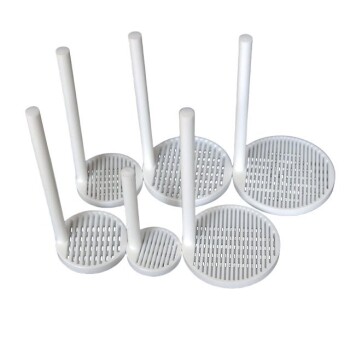
Knowledge Why is it necessary to utilize PTFE sample holders in electroless nickel plating? Ensure Process Integrity
Author avatar

Tech Team · Kintek Solution

Updated 1 day ago

Why is it necessary to utilize PTFE sample holders in electroless nickel plating? Ensure Process Integrity


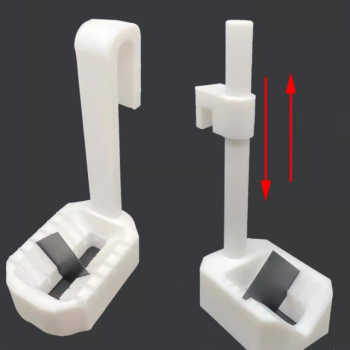
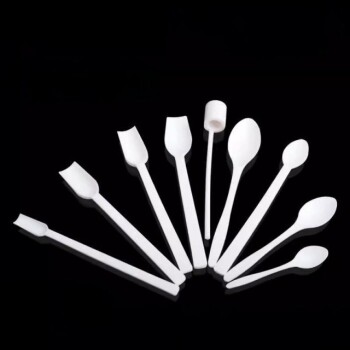
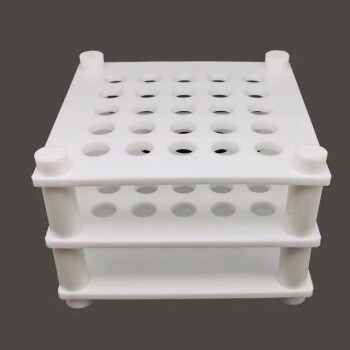
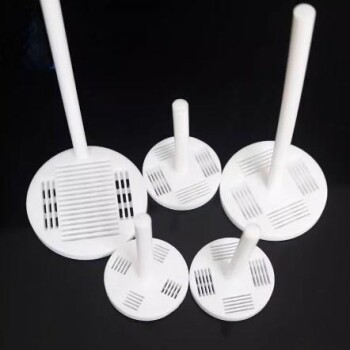
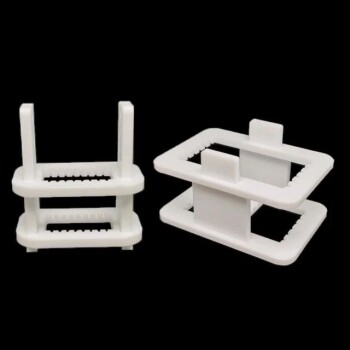
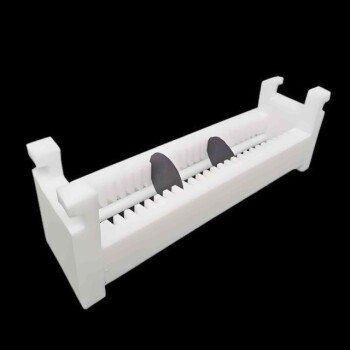
The necessity of Polytetrafluoroethylene (PTFE) sample holders stems from the aggressive environmental conditions required for effective electroless nickel-phosphorus plating. Because the process typically operates at high temperatures around 84°C and utilizes chemically reactive acidic or alkaline solutions, standard materials would quickly degrade or contaminate the bath. PTFE is the industry standard because it remains thermally stable and chemically inert, preventing reaction with the plating solution.

Material selection is critical for process integrity. PTFE provides a dual benefit: it withstands the harsh thermal and corrosive environment of the plating bath, and it ensures precision by restricting coating growth strictly to the target substrate.

Navigating Harsh Process Conditions

Thermal Requirements

Electroless nickel plating is not a room-temperature process. It typically requires sustained heating, often operating at specific temperatures such as 84°C. Standard polymers often warp, soften, or lose structural integrity when exposed to this heat for extended periods.

Chemical Aggression

The plating solutions rely on specific levels of acidity or alkalinity to drive the deposition reaction. These solutions are inherently corrosive to many metals and plastics. Introducing a non-resistant material into this bath would result in immediate chemical attack and degradation of the holder.

The Role of Chemical Inertness

Preventing Reaction

PTFE is utilized primarily for its exceptional chemical inertness. It does not react with the complex chemical components found in the plating solution. This neutrality is vital for maintaining the stability of the bath chemistry.

Avoiding Contamination

When sample holders corrode, they leach contaminants into the plating solution. PTFE prevents this degradation. By remaining intact, it ensures that the nickel-phosphorus reaction is not compromised by foreign materials.

Ensuring Process Precision

Isolating the Sample

The primary goal is to coat the substrate, not the fixturing equipment. PTFE sample holders effectively isolate the samples from non-target areas within the tank. This isolation is crucial for batch consistency.

Targeted Coating Growth

Because PTFE is non-reactive and has a low surface energy, the plating solution does not adhere to it easily. This ensures that the nickel-phosphorus coating grows only on the intended substrate surfaces. This eliminates waste and ensures the geometric accuracy of the final plated part.

Risks of Improper Material Selection

Compromised Bath Chemistry

Using a holder that is not acid-corrosion resistant creates a variable in the chemical equation. As the holder degrades, it alters the precise acidity or alkalinity of the solution. This can lead to poor adhesion or incorrect phosphorus content in the final coating.

Structural Failure

At 84°C, the combination of heat and chemical attack can cause catastrophic failure in weaker materials. A holder that deforms or breaks can result in the loss of the sample. It may also alter the sample's orientation, leading to uneven plating thickness.

Making the Right Choice for Your Goal

To ensure a successful plating run, align your equipment choices with your specific processing needs:

  • If your primary focus is Process Stability: Prioritize PTFE to prevent chemical leaching and maintain the precise acidity or alkalinity of your plating bath.
  • If your primary focus is Coating Precision: Use PTFE holders to effectively isolate the sample, ensuring deposition occurs only on the target substrate and not the fixture.

Selecting the right holder material is not merely a structural decision; it is a fundamental requirement for preserving the chemical integrity of the plating process.

Summary Table:

Feature PTFE Advantage Impact on Plating
Thermal Stability Resists warping at 84°C+ Maintains sample orientation and structural integrity
Chemical Inertness Acid & alkaline corrosion resistance Prevents bath contamination and chemical leaching
Surface Energy Low adhesion properties Restricts coating growth strictly to the target substrate
Durability Long-term material stability Reduces waste and prevents catastrophic holder failure

Elevate Your Plating Precision with KINTEK

Don't let inferior labware compromise your chemical processes. KINTEK specializes in premium laboratory equipment and consumables designed for the most demanding environments. Whether you require high-temperature acid-resistant PTFE products, ceramics, or crucibles, our solutions ensure your electroless plating and material research remain contamination-free.

From high-temperature furnaces and hydraulic presses to specialized PTFE consumables and electrolytic cells, we provide the tools necessary for precision-driven results in both industrial and research settings.

Ready to optimize your lab's performance? Contact our experts today to find the perfect fit for your specific application!

Related Products

People Also Ask

Related Products

Custom PTFE Teflon Parts Manufacturer for PTFE Tweezers

Custom PTFE Teflon Parts Manufacturer for PTFE Tweezers

PTFE tweezers inherit the excellent physical and chemical properties of PTFE, such as high temperature resistance, cold resistance, acid and alkali resistance, and corrosion resistance to most organic solvents.

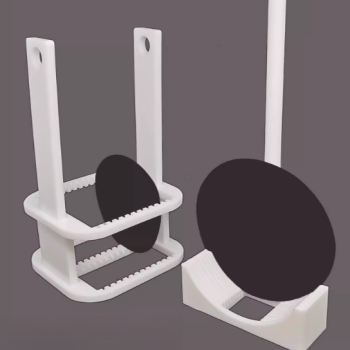
Custom PTFE Wafer Holders for Lab and Semiconductor Processing

Custom PTFE Wafer Holders for Lab and Semiconductor Processing

This is a high-purity, custom-machined PTFE (Teflon) holder, expertly designed for the secure handling and processing of delicate substrates like conductive glass, wafers, and optical components.

Customizable XRD Sample Holders for Diverse Research Applications

Customizable XRD Sample Holders for Diverse Research Applications

High-transparency XRD sample holders with zero impurity peaks. Available in square and round designs, and customizable to fit Bruker, Shimadzu, PANalytical, and Rigaku diffractometers.

Assemble Lab Cylindrical Press Mold

Assemble Lab Cylindrical Press Mold

Get reliable and precise molding with Assemble Lab Cylindrical Press Mold. Perfect for ultra-fine powder or delicate samples, widely used in material research and development.

Laboratory Disc Rotary Mixer for Efficient Sample Mixing and Homogenization

Laboratory Disc Rotary Mixer for Efficient Sample Mixing and Homogenization

Efficient Laboratory Disc Rotary Mixer for Precise Sample Mixing, Versatile for Various Applications, DC Motor and Microcomputer Control, Adjustable Speed and Angle.

Benchtop Laboratory Freeze Dryer for Lab Use

Benchtop Laboratory Freeze Dryer for Lab Use

Premium benchtop laboratory freeze dryer for lyophilization, preserving samples with ≤ -60°C cooling. Ideal for pharmaceuticals & research.

Molybdenum Vacuum Heat Treat Furnace

Molybdenum Vacuum Heat Treat Furnace

Discover the benefits of a high-configuration molybdenum vacuum furnace with heat shield insulation. Ideal for high-purity, vacuum environments like sapphire crystal growth and heat treatment.

1200℃ Split Tube Furnace with Quartz Tube Laboratory Tubular Furnace

1200℃ Split Tube Furnace with Quartz Tube Laboratory Tubular Furnace

KT-TF12 split tube furnace: high-purity insulation, embedded heating wire coils, and max. 1200C. Widely used for new materials and chemical vapour deposition.

Laboratory Manual Hydraulic Pellet Press for Lab Use

Laboratory Manual Hydraulic Pellet Press for Lab Use

Efficient Manure Lab Hydraulic Press with Safety Cover for sample preparation in material research, pharmacy, and electronic industries. Available in 15T to 60T.

High Quality Alumina Ceramic Screw for Engineering Advanced Fine Ceramics with High Temperature Resistance and Insulation

High Quality Alumina Ceramic Screw for Engineering Advanced Fine Ceramics with High Temperature Resistance and Insulation

Alumina ceramic screws are fastening components made of 99.5% alumina, ideal for extreme applications requiring excellent thermal resistance, electrical insulation and chemical resistance.

Vertical High Temperature Graphite Vacuum Graphitization Furnace

Vertical High Temperature Graphite Vacuum Graphitization Furnace

Vertical high temperature graphitization furnace for carbonization and graphitization of carbon materials up to 3100℃.Suitable for shaped graphitization of carbon fiber filaments and other materials sintered in a carbon environment.Applications in metallurgy, electronics, and aerospace for producing high-quality graphite products like electrodes and crucibles.

Ultra-High Temperature Graphite Vacuum Graphitization Furnace

Ultra-High Temperature Graphite Vacuum Graphitization Furnace

The ultra-high temperature graphitization furnace utilizes medium frequency induction heating in a vacuum or inert gas environment. The induction coil generates an alternating magnetic field, inducing eddy currents in the graphite crucible, which heats up and radiates heat to the workpiece, bringing it to the desired temperature. This furnace is primarily used for graphitization and sintering of carbon materials, carbon fiber materials, and other composite materials.

Horizontal High Temperature Graphite Vacuum Graphitization Furnace

Horizontal High Temperature Graphite Vacuum Graphitization Furnace

Horizontal Graphitization Furnace: This type of furnace is designed with the heating elements placed horizontally, allowing for uniform heating of the sample. It's well-suited for graphitizing large or bulky samples that require precise temperature control and uniformity.

2200 ℃ Graphite Vacuum Heat Treat Furnace

2200 ℃ Graphite Vacuum Heat Treat Furnace

Discover the power of the KT-VG Graphite Vacuum Furnace - with a maximum working temperature of 2200℃, it's perfect for vacuum sintering of various materials. Learn more now.

1400℃ Laboratory High Temperature Tube Furnace with Alumina Tube

1400℃ Laboratory High Temperature Tube Furnace with Alumina Tube

Looking for a tube furnace for high-temperature applications? Our 1400℃ Tube Furnace with Alumina Tube is perfect for research and industrial use.

High Pressure Laboratory Vacuum Tube Furnace Quartz Tubular Furnace

High Pressure Laboratory Vacuum Tube Furnace Quartz Tubular Furnace

KT-PTF High Pressure Tube Furnace: Compact split tube furnace with strong positive pressure resistance. Working temp up to 1100°C and pressure up to 15Mpa. Also works under controller atmosphere or high vacuum.

Button Battery Case for Battery Lab Applications

Button Battery Case for Battery Lab Applications

Button batteries are also known as micro batteries. It looks like a small button-shaped battery. Usually larger in diameter and thinner in thickness.

Vacuum Heat Treat and Sintering Furnace with 9MPa Air Pressure

Vacuum Heat Treat and Sintering Furnace with 9MPa Air Pressure

The air pressure sintering furnace is a high-tech equipment commonly used for the sintering of advanced ceramic materials. It combines vacuum sintering and pressure sintering techniques to achieve high-density and high-strength ceramics.

Graphite Vacuum Furnace Bottom Discharge Graphitization Furnace for Carbon Materials

Graphite Vacuum Furnace Bottom Discharge Graphitization Furnace for Carbon Materials

Bottom-out graphitization furnace for carbon materials, ultra-high temperature furnace up to 3100°C, suitable for graphitization and sintering of carbon rods and carbon blocks. Vertical design, bottom discharging, convenient feeding and discharging, high temperature uniformity, low energy consumption, good stability, hydraulic lifting system, convenient loading and unloading.

Graphite Vacuum Continuous Graphitization Furnace

Graphite Vacuum Continuous Graphitization Furnace

High-temperature graphitization furnace is a professional equipment for graphitization treatment of carbon materials. It is a key equipment for the production of high-quality graphite products. It has high temperature, high efficiency and uniform heating. It is suitable for various high-temperature treatments and graphitization treatments. It is widely used in metallurgy, electronics, aerospace, etc. industry.


Leave Your Message