Knowledge What are the advantages of using PTFE jars for RuTi alloy mixing? Ensure Chemical Purity and High Yield
Author avatar

Tech Team · Kintek Solution

Updated 2 days ago

What are the advantages of using PTFE jars for RuTi alloy mixing? Ensure Chemical Purity and High Yield


The primary advantage of using polytetrafluoroethylene (PTFE) jars for mixing RuTi (Ruthenium-Titanium) alloy raw materials is the preservation of absolute chemical purity. These containers leverage distinct material properties—specifically chemical inertness and low friction—to prevent the metal powders from reacting with or sticking to the jar walls during the mixing process.

Core Takeaway The synthesis of high-quality RuTi alloys relies on maintaining exact stoichiometric ratios without foreign contaminants. PTFE jars solve the two most common processing failures: chemical contamination from the container material and physical loss of powder due to wall adhesion.

Preserving Chemical Integrity

Unmatched Chemical Inertness

The mixing of metal powders creates an environment where chemical reactivity can occur unexpectedly. PTFE is inherently chemically inert, meaning it acts as a neutral boundary that refuses to bond with the metal powders inside. This ensures that the RuTi alloy composition is defined solely by your raw materials, not by the container.

Preventing Cross-Contamination

Standard milling jars made of metal or lower-grade ceramics can introduce trace elements into the mixture through abrasion or chemical leaching. PTFE eliminates this risk entirely by preventing reactions between the metal powder and the container material. This is critical for applications where even microscopic impurities can compromise the alloy's final performance.

High Corrosion Resistance

Powder mixing environments can become chemically aggressive depending on the additives or conditions used. PTFE offers high corrosion resistance, ensuring the jar maintains its structural integrity over repeated uses. This durability further guarantees that no degraded jar material enters the RuTi powder supply.

Optimizing Process Efficiency

The Benefit of a Low Friction Coefficient

PTFE is renowned for having one of the lowest coefficients of friction of any solid material. In a mixing context, this "slippery" characteristic fundamentally changes how the powder behaves inside the jar. Instead of dragging against the walls, the material slides and tumbles efficiently.

Eliminating Powder Adhesion

A common challenge in metallurgy is the loss of raw material as it cakes onto the sides of the mixing vessel. The non-stick nature of PTFE effectively reduces powder adhesion to the container walls. This ensures a higher yield of usable RuTi powder and facilitates easier cleaning between batches.

Understanding the Trade-offs

Softness Relative to Metals

While PTFE is superior for purity and non-stick properties, it is a polymer and therefore softer than hardened steel or tungsten carbide jars.

Energy Transfer Limitations

Because PTFE is softer and absorbs some impact energy, it may not be suitable for extremely high-energy mechanical alloying where maximum kinetic force is required to fracture powder particles. It is ideal for mixing and blending, but less effective for aggressive particle size reduction compared to denser, harder materials.

Making the Right Choice for Your Goal

To determine if PTFE jars are the correct equipment for your specific RuTi processing needs, consider your primary objectives:

  • If your primary focus is Compositional Purity: PTFE is the superior choice, as it guarantees no chemical interaction or metallic contamination from the jar walls.
  • If your primary focus is Yield Efficiency: The low friction coefficient of PTFE is essential for preventing material loss due to wall adhesion.
  • If your primary focus is Aggressive Milling: Be aware that PTFE absorbs impact energy and is better suited for mixing than for high-impact mechanical alloying.

By prioritizing the chemical stability of the container, you ensure the reliability of the final RuTi alloy.

Summary Table:

Feature Benefit for RuTi Alloy Mixing
Chemical Inertness Prevents reactions between powder and container, ensuring absolute purity.
Low Friction Coefficient Minimizes powder adhesion to walls, maximizing material yield.
Corrosion Resistance Maintains jar integrity even in chemically aggressive mixing environments.
Non-Stick Surface Simplifies cleaning processes and prevents cross-batch contamination.
Material Softness Absorbs impact energy, making it ideal for gentle mixing and blending.

Elevate Your Material Purity with KINTEK's Specialized Lab Solutions

Don't let container contamination compromise your high-performance RuTi alloys. KINTEK specializes in premium laboratory equipment and consumables designed for the most demanding research environments. Our high-grade PTFE products and crucibles are engineered to provide the chemical inertness and non-stick performance your process requires.

Beyond mixing jars, KINTEK offers a comprehensive range of solutions for advanced metallurgy and material science, including:

  • High-Temperature Furnaces: Muffle, vacuum, and CVD systems for precise alloy synthesis.
  • Sample Preparation: Advanced crushing, milling systems, and hydraulic presses for consistent results.
  • Specialized Labware: High-purity ceramics, electrolytic cells, and battery research tools.

Ready to optimize your yield and protect your chemical integrity? Contact our technical experts today to find the perfect equipment for your laboratory needs.

Related Products

People Also Ask

Related Products

Custom PTFE Teflon Parts Manufacturer for Hydrothermal Synthesis Reactor Polytetrafluoroethylene Carbon Paper and Carbon Cloth Nano-growth

Custom PTFE Teflon Parts Manufacturer for Hydrothermal Synthesis Reactor Polytetrafluoroethylene Carbon Paper and Carbon Cloth Nano-growth

Acid and alkali resistant polytetrafluoroethylene experimental fixtures meet different requirements. The material is made of brand new polytetrafluoroethylene material, which has excellent chemical stability, corrosion resistance, airtightness, high lubricity and non-stickiness, electrical corrosion and good anti-aging ability, and can work for a long time at temperatures from -180℃ to +250℃.

Custom PTFE Teflon Parts Manufacturer F4 Conical Flask Triangular Flask 50 100 250ml

Custom PTFE Teflon Parts Manufacturer F4 Conical Flask Triangular Flask 50 100 250ml

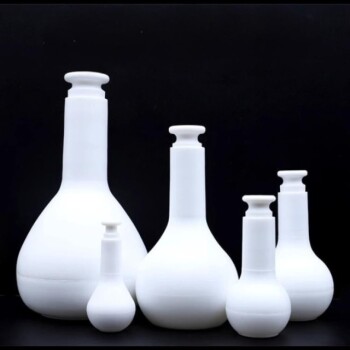
The PTFE triangular flask, also known as a Teflon reagent bottle, is a robust, chemical-resistant alternative to traditional glass bottles, suitable for handling both acids and alkalis. These bottles are unbreakable, lightweight, and feature a leak-proof screw cap, making them ideal for laboratory use.

Custom PTFE Teflon Parts Manufacturer for PTFE Tweezers

Custom PTFE Teflon Parts Manufacturer for PTFE Tweezers

PTFE tweezers inherit the excellent physical and chemical properties of PTFE, such as high temperature resistance, cold resistance, acid and alkali resistance, and corrosion resistance to most organic solvents.

Custom PTFE Teflon Parts Manufacturer for PTFE Measuring Cylinder 10/50/100ml

Custom PTFE Teflon Parts Manufacturer for PTFE Measuring Cylinder 10/50/100ml

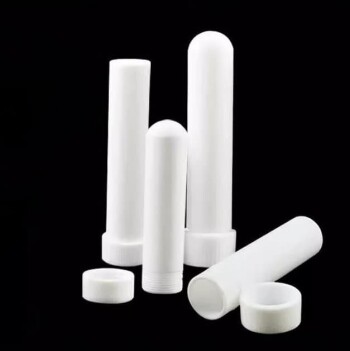
PTFE measuring cylinder are a rugged alternative to traditional glass cylinders. They are chemically inert over a wide temperature range (up to 260º C), have excellent corrosion resistance and maintain a low coefficient of friction, ensuring ease of use and cleaning.

Custom PTFE Teflon Parts Manufacturer for Non-Standard Insulator Customization

Custom PTFE Teflon Parts Manufacturer for Non-Standard Insulator Customization

PTFE insulator PTFE has excellent electrical insulation properties in a wide temperature and frequency range.

Custom PTFE Teflon Parts Manufacturer for Acid and Alkali Resistant Chemical Powder Material Scoops

Custom PTFE Teflon Parts Manufacturer for Acid and Alkali Resistant Chemical Powder Material Scoops

Known for its excellent thermal stability, chemical resistance and electrical insulating properties, PTFE is a versatile thermoplastic material.

Custom PTFE Teflon Parts Manufacturer for PTFE Mesh F4 Sieve

Custom PTFE Teflon Parts Manufacturer for PTFE Mesh F4 Sieve

PTFE mesh sieve is a specialized test sieve designed for particle analysis in various industries, featuring a non-metallic mesh woven from PTFE filament. This synthetic mesh is ideal for applications where metal contamination is a concern . PTFE sieves are crucial for maintaining the integrity of samples in sensitive environments, ensuring accurate and reliable results in particle size distribution analysis.

Custom PTFE Teflon Parts Manufacturer for Magnetic Stirring Bar

Custom PTFE Teflon Parts Manufacturer for Magnetic Stirring Bar

The PTFE magnetic stirring bar, made from high-quality PTFE, offers exceptional resistance to acids, alkalis, and organic solvents, coupled with high-temperature stability and low friction. Ideal for laboratory use, these stirring bars are compatible with standard flask ports, ensuring stability and safety during operations.

PTFE Electrolytic Cell Electrochemical Cell Corrosion-Resistant Sealed and Non-Sealed

PTFE Electrolytic Cell Electrochemical Cell Corrosion-Resistant Sealed and Non-Sealed

Choose our PTFE Electrolytic Cell for reliable, corrosion-resistant performance. Customize specifications with optional sealing. Explore now.

Platinum Sheet Electrode for Laboratory and Industrial Applications

Platinum Sheet Electrode for Laboratory and Industrial Applications

Elevate your experiments with our Platinum Sheet Electrode. Crafted with quality materials, our safe and durable models can be tailored to fit your needs.

Platinum Auxiliary Electrode for Laboratory Use

Platinum Auxiliary Electrode for Laboratory Use

Optimize your electrochemical experiments with our Platinum Auxiliary Electrode. Our high-quality, customizable models are safe and durable. Upgrade today!

Platinum Sheet Electrode for Battery Lab Applications

Platinum Sheet Electrode for Battery Lab Applications

Platinum sheet is composed of platinum, which is also one of the refractory metals. It is soft and can be forged, rolled and drawn into rod, wire, plate, tube and wire.

Assemble Lab Cylindrical Press Mold

Assemble Lab Cylindrical Press Mold

Get reliable and precise molding with Assemble Lab Cylindrical Press Mold. Perfect for ultra-fine powder or delicate samples, widely used in material research and development.

Twin Screw Extruder Plastic Granulation Machine

Twin Screw Extruder Plastic Granulation Machine

Twin screw extruder plastic granulation machine is designed for the mixing and processing experiments of engineering plastics, modified plastics, waste plastics and masterbatches.

Desktop Fast Laboratory Autoclave Sterilizer 35L 50L 90L for Lab Use

Desktop Fast Laboratory Autoclave Sterilizer 35L 50L 90L for Lab Use

The desktop fast steam sterilizer is a compact and reliable device used for rapid sterilization of medical, pharmaceutical, and research items. It efficiently sterilizes surgical instruments, glassware, medicines, and resistant materials, making it suitable for various applications.

Customizable PEM Electrolysis Cells for Diverse Research Applications

Customizable PEM Electrolysis Cells for Diverse Research Applications

Custom PEM test cell for electrochemical research. Durable, versatile, for fuel cells & CO2 reduction. Fully customizable. Get a quote!

Multifunctional Electrolytic Electrochemical Cell Water Bath Single Layer Double Layer

Multifunctional Electrolytic Electrochemical Cell Water Bath Single Layer Double Layer

Discover our high-quality Multifunctional Electrolytic Cell Water Baths. Choose from single or double-layer options with superior corrosion resistance. Available in 30ml to 1000ml sizes.

Laboratory Jaw Crusher

Laboratory Jaw Crusher

Discover the small jaw crusher for efficient, flexible, and affordable crushing in labs and small mines. Ideal for coal, ores, and rocks. Learn more now!

Small Vacuum Heat Treat and Tungsten Wire Sintering Furnace

Small Vacuum Heat Treat and Tungsten Wire Sintering Furnace

The small vacuum tungsten wire sintering furnace is a compact experimental vacuum furnace specially designed for universities and scientific research institutes. The furnace features a CNC welded shell and vacuum piping to ensure leak-free operation. Quick-connect electrical connections facilitate relocation and debugging, and the standard electrical control cabinet is safe and convenient to operate.

Automatic Lab Cold Isostatic Press CIP Machine Cold Isostatic Pressing

Automatic Lab Cold Isostatic Press CIP Machine Cold Isostatic Pressing

Efficiently prepare samples with our Automatic Lab Cold Isostatic Press. Widely used in material research, pharmacy, and electronic industries. Provides greater flexibility and control compared to electric CIPs.


Leave Your Message