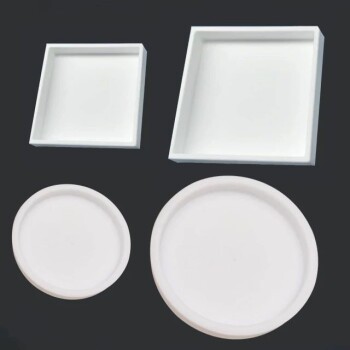
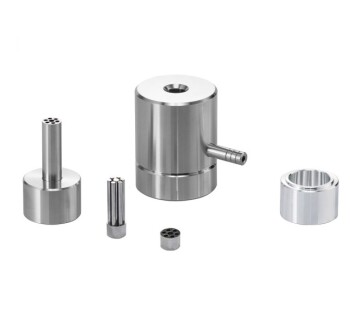
Polytetrafluoroethylene (PTFE) molds are the standard choice for solution blending because they solve the two biggest challenges in film preparation: chemical attack and adhesion. They allow you to process composite films using aggressive organic solvents without degrading the mold, while ensuring the final dried film peels away cleanly without tearing.
The Core Takeaway PTFE molds serve as a chemically neutral vessel that fundamentally decouples the mold surface from the sample. By combining extreme chemical inertness with low surface energy, PTFE ensures that the final film retains its intended morphology and purity, free from mold-induced defects or contaminants.
The Critical Role of Surface Energy
The solution blending method relies on the evaporation of solvents to form a solid film. This transition from liquid to solid makes the material highly susceptible to adhesion.
Facilitating Damage-Free Demolding
The primary advantage of PTFE is its extremely low surface energy (approximately 18.5 mN/m). This characteristic creates a natural "non-stick" interface between the mold and the composite solution.
Once the solvent evaporates, the solid film does not bond to the container walls. This allows you to peel the film off effortlessly, preventing surface tearing, deformation, or physical damage that often occurs with glass or metal molds.
Preserving Surface Morphology
Because the film does not adhere to the substrate, the surface morphology of the sample remains pristine.
This is vital for solution blending, where the goal is often to study the specific distribution of fillers within a matrix. A mold that sticks would mechanically disrupt the surface during removal, invalidating microscopy or roughness data.
Chemical Stability in Solution Processing
Solution blending requires dissolving polymers in organic solvents, many of which are aggressive and can dissolve or swell standard plastics.
Resisting Solvent Aggression
PTFE is chemically inert. It can withstand prolonged exposure to the harsh organic solvents required to dissolve the polymer matrix during the mixing and evaporation phases.
Unlike other plastic molds, PTFE will not swell, deform, or dissolve when exposed to these chemicals. This ensures the dimensional accuracy of the film is maintained throughout the drying process.
Ensuring Sample Purity
Because PTFE does not react with the solution, there is no leaching of impurities from the mold into the composite film.
Furthermore, the self-lubricating nature of PTFE eliminates the need for external mold release agents (such as sprays or oils). This is critical for analytical accuracy, as release agents can contaminate the sample surface and skew results for combustion performance, wettability, or chemical analysis.
Understanding the Trade-offs
While PTFE is excellent for film preparation, it is not without limitations. Understanding these constraints is essential for experimental design.
Fabrication Limitations
Creating PTFE molds with complex geometries or specific micro-patterns can be inefficient.
Molding PTFE itself is difficult; therefore, custom shapes often require machining rather than molding, which can be time-consuming and costly compared to other materials.
Mechanical Softness
While chemically robust, PTFE is mechanically softer than metals or glass.
Care must be taken when cleaning or handling the molds. Scratches or gouges on the mold surface will transfer to your composite film, creating surface defects that could be mistaken for material characteristics.
Making the Right Choice for Your Goal
When designing your experiment, consider how the properties of PTFE align with your specific objectives.
- If your primary focus is surface analysis: Select PTFE to ensure the film removes cleanly without micro-tearing or requiring release agents that alter surface chemistry.
- If your primary focus is solvent compatibility: Select PTFE if you are using aggressive organic solvents (like DMF or Chloroform) that would dissolve standard plastic petri dishes.
- If your primary focus is complex geometry: Be aware that PTFE is difficult to mold into intricate shapes; simple flat molds are best for this material.
By leveraging the inert and non-stick properties of PTFE, you ensure that the data you collect reflects the properties of your composite, not the artifacts of your processing equipment.
Summary Table:
| Property | Benefit for Solution Blending | Result for Composite Films |
|---|---|---|
| Low Surface Energy | Prevents adhesion during solvent evaporation | Clean demolding without surface tearing |
| Chemical Inertness | Resists aggressive organic solvents | No mold degradation or dimensional changes |
| High Purity | Eliminates need for mold release agents | Contamination-free samples for accurate analysis |
| Thermal Stability | Maintains integrity during heated drying | Consistent film thickness and morphology |
Elevate Your Material Research with KINTEK
Precision in composite film preparation starts with the right equipment. KINTEK specializes in high-performance laboratory solutions, providing the essential tools researchers need for flawless results. From our specialized PTFE products and crucibles that ensure contamination-free demolding to our advanced high-temperature furnaces, hydraulic presses, and crushing systems, we support every stage of your material synthesis.
Why partner with KINTEK?
- Unmatched Material Purity: Our PTFE consumables and ceramics eliminate sample contamination.
- Comprehensive Range: We offer everything from battery research tools to high-pressure reactors.
- Technical Expertise: We understand the nuances of chemical stability and surface morphology required for high-stakes research.
Ready to optimize your lab’s efficiency and accuracy? Contact our specialists today to find the perfect equipment for your specific application!
References
- Shin Yiing Kee, Koon Chun Lai. Effect of Preparation Methods on the Tensile, Morphology and Solar Energy Conversion Efficiency of RGO/PMMA Nanocomposites. DOI: 10.3390/polym9060230
This article is also based on technical information from Kintek Solution Knowledge Base .
Related Products
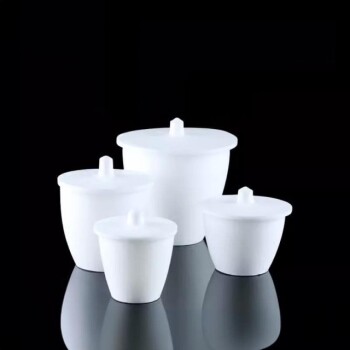
- Custom Machined and Molded PTFE Teflon Parts Manufacturer with PTFE Crucible and Lid
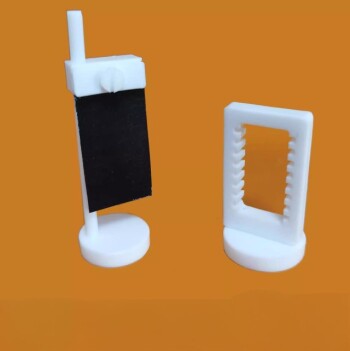
- Custom PTFE Teflon Parts Manufacturer for Hydrothermal Synthesis Reactor Polytetrafluoroethylene Carbon Paper and Carbon Cloth Nano-growth
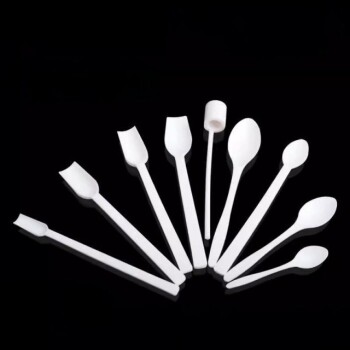
- Custom PTFE Teflon Parts Manufacturer for Sampling Solution Sample and Dry Powder Spoons
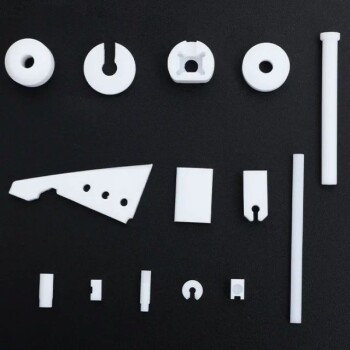
- Custom PTFE Teflon Parts Manufacturer for Non-Standard Insulator Customization
- Custom PTFE Teflon Parts Manufacturer for PTFE Mesh F4 Sieve
People Also Ask
- Why is a PTFE crucible preferred for plasma etching? Ensure Chemical Integrity and Targeted Action
- What essential consumables are required for laboratory processes? Expert Guide to PTFE, Ceramics, and Crucibles
- Why are PTFE molds used for dental resin specimens? Ensure Pure Samples and Accurate Testing
- What are the advantages of using PTFE molds for preparing PUA hybrid films? Ensure High Purity and Easy Demolding
- What advantages do PTFE molds offer for composite polymer electrolyte casting? Ensure Defect-Free Membrane Fabrication