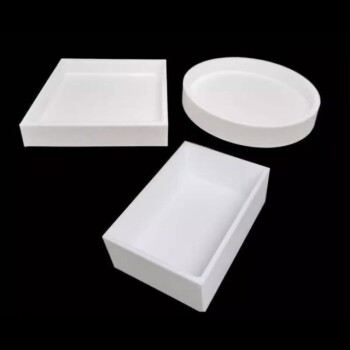
The distinct technical advantage of using Polytetrafluoroethylene (PTFE) molds lies in their ability to preserve sample purity through inherent non-stick properties. By completely eliminating the need for chemical release agents, these molds ensure that the surface of the epoxy resin remains uncontaminated, which is a critical requirement for accurate flame retardant testing.
Core Takeaway: PTFE molds safeguard the reliability of experimental data by preventing chemical interference and withstanding the exothermic heat of curing. This ensures that observed combustion behaviors are intrinsic to the composite material, not artifacts of the molding process.
Ensuring Data Integrity Through Material Purity
Eliminating Surface Contamination
The most significant risk in molding composite samples is the interaction between the mold wall and the resin.
PTFE is defined by its superior chemical inertness and self-lubricating properties. Because the material is naturally non-stick, researchers do not need to apply external mold release agents (waxes or sprays).
Preserving Combustion Accuracy
In flame retardant studies, the surface chemistry of the sample dictates the initial ignition and flame spread.
Standard release agents can introduce foreign chemicals onto the sample surface. These contaminants can act as accelerants or inhibitors, skewing combustion performance results. PTFE molds remove this variable entirely.
Mechanical and Thermal Stability During Cure
Handling Exothermic Reactions
The curing process of epoxy resin is an exothermic reaction, meaning it generates significant heat as the chemical bonds form.
PTFE molds are thermally stable and capable of withstanding these temperature spikes without degrading or warping. This ensures the mold remains chemically passive even when the resin is at its peak curing temperature.
Achieving Geometric Precision
Reliable experimental data depends on testing samples with consistent dimensions and surface textures.
PTFE molds produce cured samples with smooth surfaces and precise dimensions. A consistent surface finish is vital because surface roughness can increase the surface area available for oxidation, potentially altering flame test outcomes.
Understanding the Trade-offs
Material Softness vs. Durability
While PTFE is excellent for chemical resistance, it is a relatively soft polymer compared to metal molds (like steel or aluminum).
Care must be taken during handling and cleaning to avoid scratching the mold surface. Deep scratches can transfer to the sample or create mechanical interlocking that makes demolding difficult.
Thermal Expansion
PTFE has a higher coefficient of thermal expansion than metals.
In extremely high-precision applications requiring tight tolerances over large temperature ranges, users must account for the slight expansion of the mold during the exothermic cure cycle.
Making the Right Choice for Your Research
To ensure your experimental setup aligns with your specific testing goals, consider the following recommendations:
- If your primary focus is Chemical Analysis: Choose PTFE to guarantee a pristine sample surface free from release agent contamination.
- If your primary focus is Geometric Consistency: Rely on PTFE to provide smooth, reproducible dimensions that minimize physical variables in flame testing.
Ultimately, PTFE is the superior choice when the purity of the sample surface is the critical factor in the validity of your data.
Summary Table:
| Feature | Technical Advantage | Impact on Research |
|---|---|---|
| Non-Stick Property | Eliminates chemical release agents | Prevents surface contamination and preserves data integrity |
| Chemical Inertness | Passive interaction with resins | Ensures combustion behavior is intrinsic to the composite |
| Thermal Stability | Withstands exothermic curing heat | Maintains mold shape and passivity during high-temp cycles |
| Surface Finish | Produces smooth, precise dimensions | Reduces variables caused by surface roughness and oxidation |
Elevate Your Lab's Precision with KINTEK Solutions
Ensure the integrity of your research with high-performance laboratory equipment and consumables. KINTEK specializes in providing researchers with the tools needed for success—from PTFE products, ceramics, and crucibles for sample preparation to advanced high-temperature furnaces (muffle, tube, vacuum) and hydraulic presses for material synthesis. Whether you are conducting flame retardant studies or complex battery research, our comprehensive portfolio of cooling solutions, homogenizers, and precision molds is designed to meet the most rigorous standards.
Ready to eliminate variables and achieve superior experimental results? Contact KINTEK today to discuss your specific laboratory needs and discover how our expertise can streamline your workflow.
References
- Yanan Li, Qi Wang. Study on Preparation and Flame-Retardant Mechanism of Cerium-Doped Mg-Al Hydrotalcite. DOI: 10.3390/coatings15010068
This article is also based on technical information from Kintek Solution Knowledge Base .
Related Products
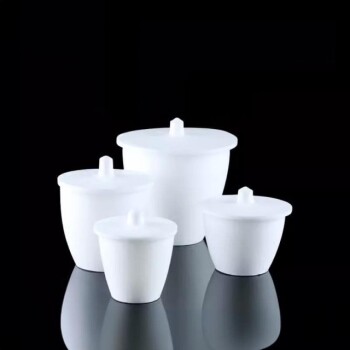
- Custom Machined and Molded PTFE Teflon Parts Manufacturer with PTFE Crucible and Lid
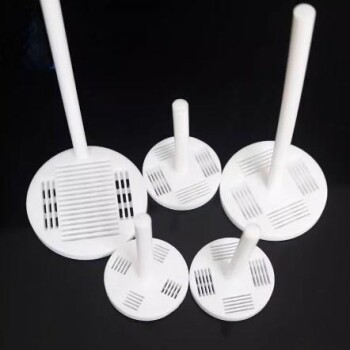
- Custom Machined and Molded PTFE Teflon Parts Manufacturer for Laboratory ITO FTO Conductive Glass Cleaning Flower Basket
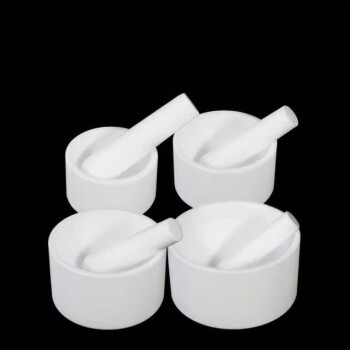
- Custom PTFE Teflon Parts Manufacturer Grinding Bowl
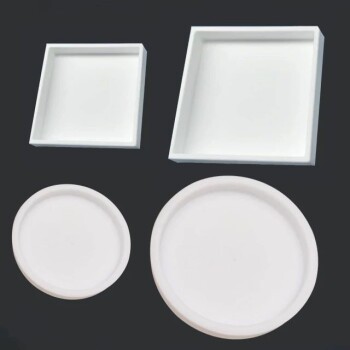
- Custom PTFE Teflon Parts Manufacturer for Hydrothermal Synthesis Reactor Polytetrafluoroethylene Carbon Paper and Carbon Cloth Nano-growth
- Custom PTFE Teflon Parts Manufacturer Adjustable Height Flower Basket
People Also Ask
- Why is a PTFE crucible preferred for plasma etching? Ensure Chemical Integrity and Targeted Action
- What essential consumables are required for laboratory processes? Expert Guide to PTFE, Ceramics, and Crucibles
- Why are PTFE molds used for dental resin specimens? Ensure Pure Samples and Accurate Testing
- What are the advantages of using PTFE molds for preparing PUA hybrid films? Ensure High Purity and Easy Demolding
- What advantages do PTFE molds offer for composite polymer electrolyte casting? Ensure Defect-Free Membrane Fabrication