The primary reason for selecting Polytetrafluoroethylene (PTFE) molds is their exceptional ability to facilitate the damage-free release of cured films. Because UV-cured siloxane resins—specifically acryloyloxy-functionalized variants—develop strong adhesion during the curing process, standard molds often lead to tearing or distortion upon removal; PTFE’s inherent non-stick properties prevent this completely.
The core value of PTFE lies in its extremely low surface energy, which allows for the extraction of intact, uncontaminated samples essential for accurate performance metrics.
Critical Properties for Sample Integrity
Overcoming High Adhesion
Acryloyloxy-functionalized siloxanes exhibit strong adhesion once cured.
If you utilize molds made from materials with higher surface energy (such as glass or certain metals), the film will likely bond to the substrate.
PTFE molds possess extremely low surface energy, ensuring that the cured film separates cleanly from the mold surface without sustaining physical damage.
Preventing Chemical Interaction
To ensure the validity of performance testing, the mold must be chemically inert.
PTFE demonstrates superior solvent resistance and does not react with acrylate monomers or other resin components.
This prevents the mold from leaching impurities into the sample, which could skew chemical analysis or degrade the film's properties.
Stability During UV Curing
The curing process involves exposure to UV light and potentially exothermic reactions.
PTFE remains stable under UV light and resists deformation caused by the heat generated during polymerization.
This stability ensures that the mold maintains its shape over multiple cycles, preventing the sample from warping during formation.
The Impact on Experimental Data
Eliminating Contamination Variables
A critical advantage of PTFE is its self-lubricating nature.
Using PTFE eliminates the need for external mold release agents, such as sprays or coatings.
Release agents are a major variable in testing; they can contaminate the sample surface and alter combustion or surface property test results.
Ensuring Dimensional Accuracy
Performance testing requires samples with uniform thickness and smooth surfaces.
Because the mold resists swelling or degrading when exposed to the liquid resin emulsion, the final dimensions of the cured film remain precise.
This reliability is crucial when comparing data across different experimental batches.
Common Pitfalls to Avoid
The Risk of Alternative Molds
Using non-PTFE molds often necessitates the use of release agents to prevent sticking.
This introduces a foreign substance to the sample surface, which effectively invalidates surface-sensitive performance tests.
Physical Damage During Demolding
Attempting to peel high-adhesion siloxanes from sticky molds frequently causes micro-tears or stretching.
Even if the damage is not immediately visible, the mechanical integrity of the film may be compromised, leading to premature failure during tensile or stress testing.
Making the Right Choice for Your Goal
To ensure your UV-cured siloxane films yield valid data, align your mold choice with your specific testing objectives:
- If your primary focus is Mechanical Testing: Prioritize PTFE to prevent micro-fractures and stretching during the demolding process, ensuring the physical strength data reflects the material, not the preparation method.
- If your primary focus is Surface Chemistry or Combustion: Rely on PTFE to eliminate the need for mold release agents, guaranteeing that the surface composition remains pure and uncontaminated.
By utilizing PTFE molds, you isolate the material properties of the siloxane, ensuring your data reflects the chemistry of the film rather than the limitations of the tooling.
Summary Table:
| Feature | Benefit for UV-Cured Siloxanes | Impact on Performance Testing |
|---|---|---|
| Low Surface Energy | Prevents bonding/tearing during release | Preserves mechanical integrity and film shape |
| Chemical Inertness | No reaction with monomers or solvents | Eliminates chemical contamination of samples |
| Self-Lubricating | No mold release agents required | Ensures pure surface chemistry for valid data |
| UV & Thermal Stability | Resists deformation during curing | Maintains dimensional accuracy across batches |
Precision Lab Solutions for Your Material Research
At KINTEK, we understand that the integrity of your experimental data starts with the quality of your consumables. Whether you are preparing UV-cured films or conducting complex chemical synthesis, our high-performance PTFE products, ceramics, and crucibles provide the inert environment necessary for accurate results.
Beyond consumables, KINTEK specializes in a comprehensive range of laboratory equipment designed for the most demanding applications:
- Advanced Thermal Processing: High-temperature furnaces (muffle, tube, vacuum, CVD) and induction melting systems.
- Sample Preparation: Crushing and milling systems, sieving equipment, and specialized hydraulic presses.
- Reaction & Synthesis: High-pressure reactors, autoclaves, and electrolytic cells.
- Sample Preservation: ULT freezers and freeze dryers.
Eliminate variables and elevate your research accuracy today. Contact KINTEK for a tailored quote or technical consultation to see how our laboratory expertise can optimize your workflow.
References
- Dan Du, Hong Dong. The Preparation of Acryloxyl Group Functionalized Siloxane Polymers and the Study of Their Ultra Violet Curing Properties. DOI: 10.3390/polym16040465
This article is also based on technical information from Kintek Solution Knowledge Base .
Related Products
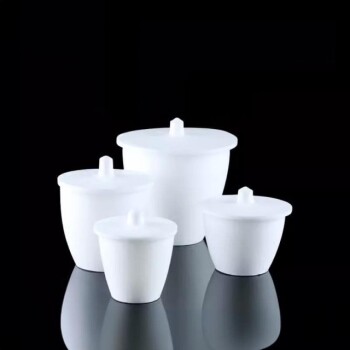
- Custom Machined and Molded PTFE Teflon Parts Manufacturer with PTFE Crucible and Lid
- Custom PTFE Teflon Parts Manufacturer for Hydrothermal Synthesis Reactor Polytetrafluoroethylene Carbon Paper and Carbon Cloth Nano-growth
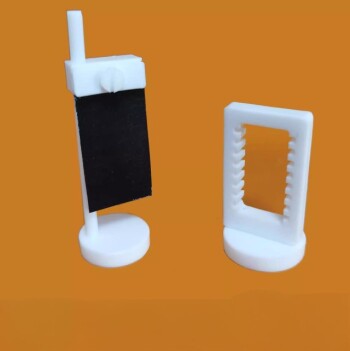
- Custom PTFE Teflon Parts Manufacturer Adjustable Height Flower Basket
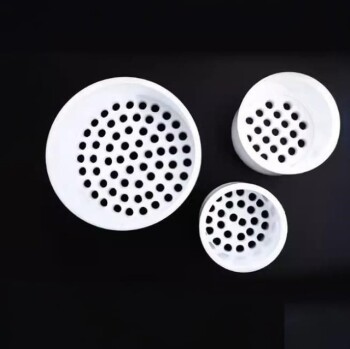
- Custom PTFE Teflon Parts Manufacturer for PTFE Mesh F4 Sieve
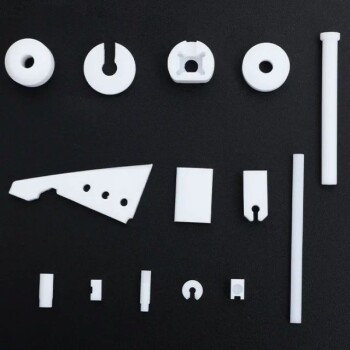
- Custom PTFE Teflon Parts Manufacturer for Non-Standard Insulator Customization
People Also Ask
- Why is a PTFE crucible preferred for plasma etching? Ensure Chemical Integrity and Targeted Action
- What essential consumables are required for laboratory processes? Expert Guide to PTFE, Ceramics, and Crucibles
- Why are PTFE molds used for dental resin specimens? Ensure Pure Samples and Accurate Testing
- What are the advantages of using PTFE molds for preparing PUA hybrid films? Ensure High Purity and Easy Demolding
- What advantages do PTFE molds offer for composite polymer electrolyte casting? Ensure Defect-Free Membrane Fabrication