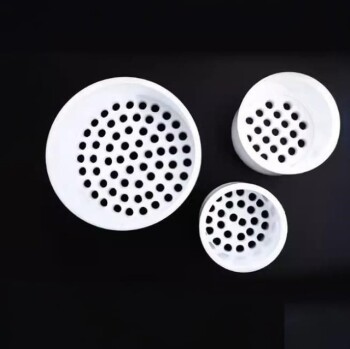
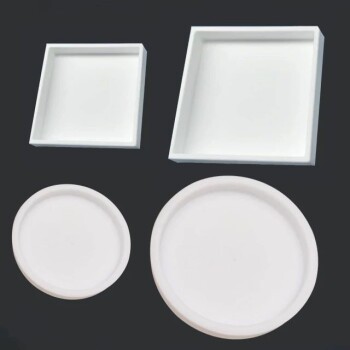
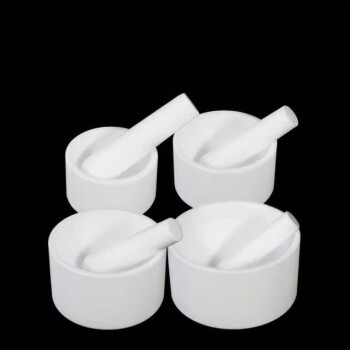
The primary advantage of using Polytetrafluoroethylene (PTFE) molds for Waterborne Polyurethane Urea (WBPUU) films lies in their specific surface chemistry, which combines low surface energy with high chemical inertness. This allows for the uniform spreading of the WBPUU dispersion during solvent casting and ensures the film can be peeled off intact after drying.
By eliminating the need for external release agents, PTFE molds preserve the chemical purity and physical integrity of WBPUU films. This ensures that the resulting samples are free from induced defects or surface contaminants, which is critical for obtaining accurate mechanical and morphological data.
Mechanisms of Action in Film Preparation
Facilitating Non-Destructive Demolding
The most critical challenge in preparing WBPUU films is removing the dried film without tearing or stretching it. PTFE molds possess extremely low surface energy, which prevents the polymer emulsion from adhering strongly to the mold surface.
This "non-stick" property allows researchers to peel the completed film effortlessly. This is essential for preventing mechanical damage, ensuring the sample remains representative of the material's true properties.
Ensuring Uniform Dispersion and Flatness
Despite its hydrophobic nature, a flat PTFE mold allows the WBPUU dispersion to spread uniformly across the surface when prepared via solvent casting.
Because the mold surface is chemically uniform and smooth, the resulting film dries with a flat, consistent topography. This flatness is a prerequisite for accurate subsequent characterization, particularly when measuring tensile strength or observing surface morphology.
Eliminating Chemical Contamination
Standard molds often require silicones or oils (mold release agents) to prevent sticking. These agents can transfer onto the film surface, altering its surface chemistry and affecting combustion or adhesion tests.
PTFE is self-lubricating and chemically inert. It requires no additional release agents, ensuring the film surface remains pristine and the experimental data reflects only the WBPUU composite itself.
Durability and Stability Factors
Resistance to Solvent Leaching
During the drying process, the mold is exposed to water and potentially other co-solvents or monomers. PTFE offers superior solvent resistance compared to many plastics.
It does not leach impurities into the WBPUU mixture, nor does it deform upon exposure to various acrylate monomers. This ensures that the mold retains its dimensional stability over long-term use.
Thermal Stability During Curing
While WBPUU is often dried at moderate temperatures, composite preparation can sometimes involve exothermic reactions or elevated curing temperatures.
PTFE is heat resistant and maintains its inert properties under these conditions. It does not degrade or react with the curing film, ensuring that the sample's dimensions and surface finish are strictly controlled by the casting parameters, not mold degradation.
Understanding the Trade-offs
While PTFE is excellent for release properties, it is a relatively soft material compared to metal or glass.
Susceptibility to Surface Damage
Because PTFE is soft, the mold surface can be easily scratched by metal spatulas or abrasive cleaning tools.
Any scratch on the mold surface will be transferred to the cast film, creating physical defects. Therefore, care must be taken to clean these molds with soft materials to maintain the smoothness required for high-quality film preparation.
Making the Right Choice for Your Goal
When designing your experimental protocol for WBPUU films, consider your specific analytical needs:
- If your primary focus is mechanical testing: Use PTFE to ensure the film edges are free from micro-tears and stress concentrations caused by difficult demolding.
- If your primary focus is surface chemistry or adhesion: Use PTFE to guarantee a surface free of contamination from mold release agents or leached plasticizers.
Using PTFE molds transforms the film preparation process from a variable source of error into a controlled, reliable step in your material characterization workflow.
Summary Table:
| Feature | Advantage for WBPUU Preparation | Benefit to Researcher |
|---|---|---|
| Surface Energy | Extremely low / Non-stick | Effortless, damage-free film removal |
| Chemical Inertness | No reaction with monomers or solvents | Pure samples without contamination |
| Thermal Stability | Resists deformation during curing | Consistent film thickness and dimensions |
| Self-Lubrication | Eliminates need for release agents | Preserves surface chemistry for accurate testing |
| Topography | Uniformly smooth surface | Flat films for precise tensile and morphologic data |
Elevate Your Polymer Research with KINTEK Precision
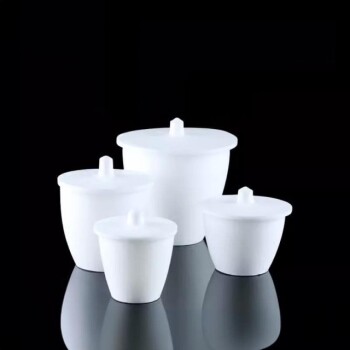
Achieve flawless material characterization with KINTEK’s high-quality laboratory essentials. From premium PTFE molds and crucibles that ensure non-destructive demolding to our advanced crushing and milling systems and high-temperature furnaces, we provide the tools necessary for precise WBPUU and composite research.
Why choose KINTEK?
- Unmatched Purity: Our PTFE products eliminate contamination risks in your chemical workflows.
- Comprehensive Range: We specialize in everything from hydraulic presses and battery research tools to specialized electrolytic cells.
- Expert Support: Our team understands the rigorous demands of material science and lab efficiency.
Ready to eliminate defects and ensure experimental accuracy? Contact our experts today to find the perfect equipment for your laboratory.
References
- Arantzazu Santamaria‐Echart, Arantxa Eceiza. Development of waterborne polyurethane-ureas added with plant extracts: Study of different incorporation routes and their influence on particle size, thermal, mechanical and antibacterial properties. DOI: 10.1016/j.porgcoat.2018.01.006
This article is also based on technical information from Kintek Solution Knowledge Base .
Related Products
- Custom Machined and Molded PTFE Teflon Parts Manufacturer with PTFE Crucible and Lid
- Custom PTFE Teflon Parts Manufacturer for Hydrothermal Synthesis Reactor Polytetrafluoroethylene Carbon Paper and Carbon Cloth Nano-growth
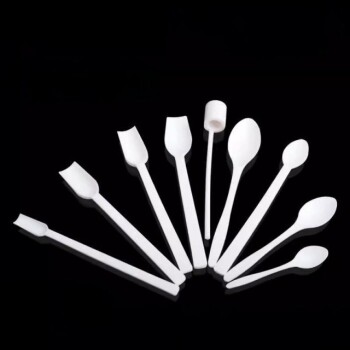
- Custom PTFE Teflon Parts Manufacturer for Sampling Solution Sample and Dry Powder Spoons
- Custom PTFE Teflon Parts Manufacturer for Non-Standard Insulator Customization
- Custom PTFE Teflon Parts Manufacturer for PTFE Mesh F4 Sieve
People Also Ask
- Why is a PTFE crucible preferred for plasma etching? Ensure Chemical Integrity and Targeted Action
- What essential consumables are required for laboratory processes? Expert Guide to PTFE, Ceramics, and Crucibles
- Why are PTFE molds used for dental resin specimens? Ensure Pure Samples and Accurate Testing
- What are the advantages of using PTFE molds for preparing PUA hybrid films? Ensure High Purity and Easy Demolding
- What advantages do PTFE molds offer for composite polymer electrolyte casting? Ensure Defect-Free Membrane Fabrication