The primary function of PTFE O-rings in this context is to maintain the structural and chemical integrity of the reactor during the breakdown of cellulose. Specifically, these O-rings are deployed to withstand temperatures exceeding 250 °C and resist erosion from strong acids, preventing leaks under high pressure and ensuring the acid concentration remains constant for accurate data collection.
Core Takeaway PTFE O-rings are not just passive seals; they are active safeguards for experimental validity. By preventing the escape of volatile components and resisting chemical degradation, they ensure the reaction environment remains stable, which is the absolute prerequisite for calculating accurate cellulose degradation kinetics.
Withstanding the Hydrolysis Environment
To understand the function of the O-ring, one must understand the hostility of the environment inside a batch acid hydrolysis reactor. Standard sealing materials will not suffice.
Resistance to Chemical Erosion
The hydrolysis process utilizes strong acids to break down cellulose. Most standard elastomeric seals would degrade, swell, or dissolve upon contact with these aggressive chemicals.
PTFE (polytetrafluoroethylene) is chemically inert. Its function is to provide an impermeable barrier that resists acidic chemical erosion, ensuring the seal does not become a point of failure or a source of contamination.
Handling Extreme Thermal Stress
Cellulose hydrolysis often requires significant thermal energy to proceed efficiently.
The reactor environment frequently reaches temperatures above 250 °C. PTFE O-rings function as a thermal barrier, maintaining their physical integrity and sealing properties even when subjected to these extreme heat levels.
Ensuring Experimental Integrity
Beyond physical safety, the PTFE O-ring plays a direct role in the quality of the scientific data produced.
Preventing Volatile Escape
Under the high heat and pressure of hydrolysis, the reaction mixture can generate volatile components.
The O-ring functions to create a hermetic seal that stops these volatiles from escaping. If volatiles escape, the reaction volume changes unpredictable, skewing calculations regarding yield and conversion rates.
Maintaining Constant Acid Concentration
For kinetic data to be valid, the concentration of the acid catalyst must be known and stable throughout the "batch" process.
By preventing leakage—even under high pressure—the PTFE O-ring ensures that the ratio of acid to cellulose remains constant. This stability is essential for deriving accurate degradation kinetic data, which allows researchers to model the reaction rate correctly.
Understanding the Trade-offs
While PTFE is superior for chemical and thermal resistance, it presents specific mechanical challenges that must be managed.
Mechanical Elasticity and "Creep"
Unlike rubber or silicone, PTFE is a relatively hard plastic with lower elasticity. It functions excellently as a static seal but may suffer from "creep" (deformation under continuous load) or "cold flow" over time.
Sealing Force Requirements
Because PTFE is less compliant than elastomers, it often requires higher clamping force to achieve a perfect seal. If the reactor design does not account for this, or if the mating surfaces are imperfect, even a PTFE O-ring may fail to prevent leakage under high pressure.
Making the Right Choice for Your Project
Selecting the correct sealing material is a decision that impacts both safety and data validity.
- If your primary focus is Safety and Containment: Prioritize PTFE for its ability to prevent high-pressure leaks and withstand temperatures >250 °C without catastrophic failure.
- If your primary focus is Data Accuracy: Rely on PTFE to maintain constant acid concentration, ensuring your kinetic models are not corrupted by volatile loss or dilution.
Ultimately, the PTFE O-ring functions as the critical variable that transforms a volatile chemical reaction into a controlled, measurable scientific process.
Summary Table:
| Feature | PTFE O-Ring Performance in Acid Hydrolysis |
|---|---|
| Temperature Resistance | Stable at extremes exceeding 250 °C |
| Chemical Compatibility | Chemically inert; resists strong mineral acids |
| Pressure Handling | Maintains hermetic seal under high-pressure conditions |
| Data Integrity | Prevents volatile escape to ensure constant acid concentration |
| Primary Challenge | Requires high clamping force due to low elasticity (creep) |
Secure Your High-Pressure Experiments with KINTEK Precision
Don't let seal failure compromise your research data or laboratory safety. KINTEK specializes in high-performance laboratory equipment, offering a robust range of high-temperature high-pressure reactors and autoclaves specifically designed for demanding applications like cellulose hydrolysis.
Our team provides the expertise you need to select the right materials—from PTFE-lined components and crucibles to specialized crushing and milling systems—ensuring your batch processes remain stable and your kinetic data stays accurate.
Ready to upgrade your reactor's reliability? Contact KINTEK today to consult with our experts on the perfect sealing and reactor solutions for your target applications.
References
- Leandro Vinícius Alves Gurgel, Antônio Aprígio da Silva Curvelo. Characterization of depolymerized residues from extremely low acid hydrolysis (ELA) of sugarcane bagasse cellulose: Effects of degree of polymerization, crystallinity and crystallite size on thermal decomposition. DOI: 10.1016/j.indcrop.2011.11.009
This article is also based on technical information from Kintek Solution Knowledge Base .
Related Products
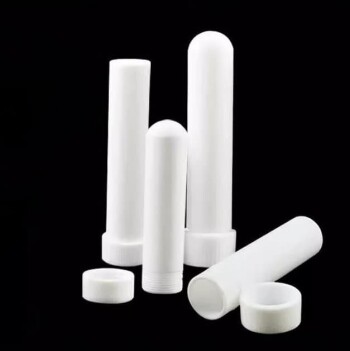
- Custom PTFE Teflon Parts Manufacturer for Centrifuge Tubes
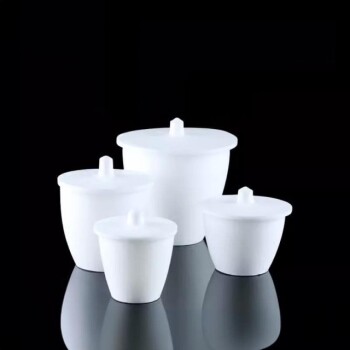
- Custom Machined and Molded PTFE Teflon Parts Manufacturer with PTFE Crucible and Lid
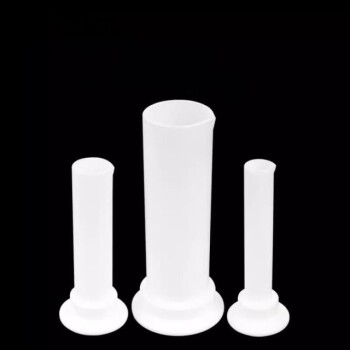
- Custom PTFE Teflon Parts Manufacturer for PTFE Measuring Cylinder 10/50/100ml
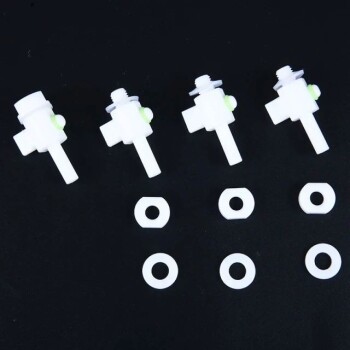
- Custom PTFE Teflon Parts Manufacturer for Air Valve Applications
- Custom PTFE Teflon Parts Manufacturer for Gaskets and More
People Also Ask
- Why is slender PTFE tubing necessary for flow control in multi-channel catalyst aging? Ensure Equal Gas Distribution
- Is PTFE corrosion resistant? Discover the Ultimate Chemical Resistance for Your Lab
- What are the specific applications of PTFE in micro-batch slug flow systems? Enhance Your Microfluidic Reaction Purity
- How is PTFE utilized for insulation in Alloy 22 corrosion setups? Ensure Signal Purity & Accuracy
- What is the significance of using PTFE gas tubing for HCl? Ensure Pure, Corrosion-Free Salt Formation