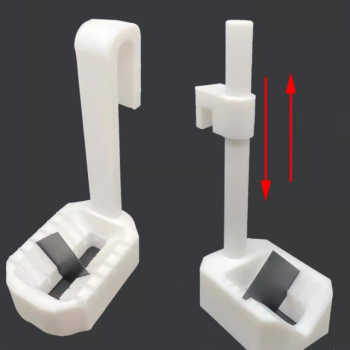
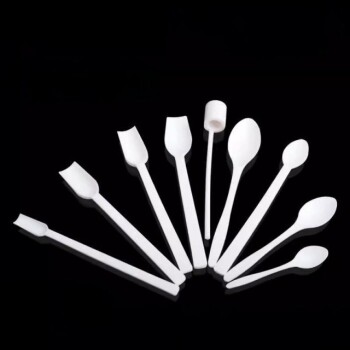
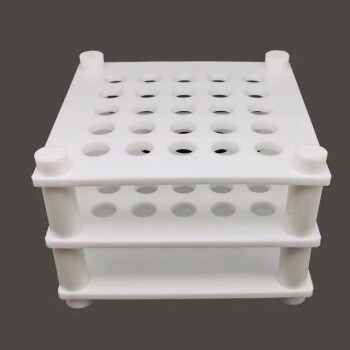
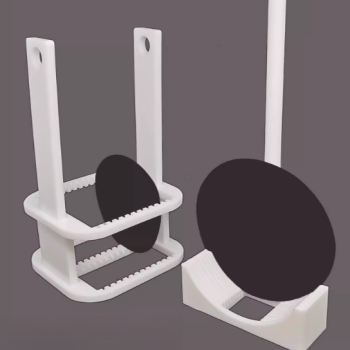
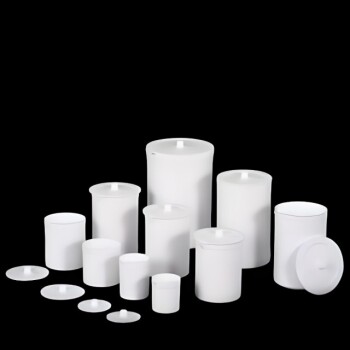
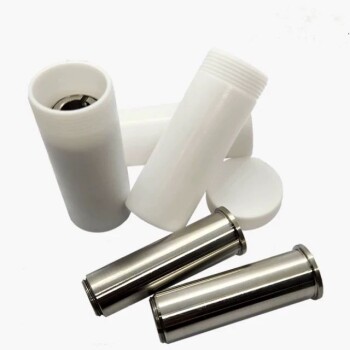
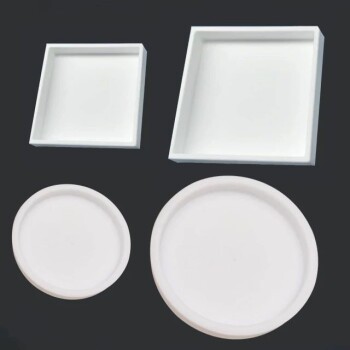
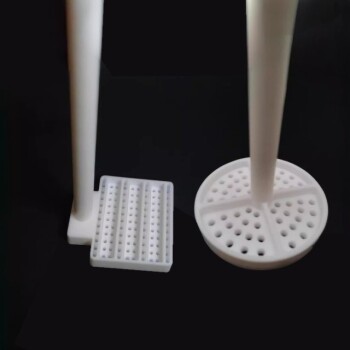
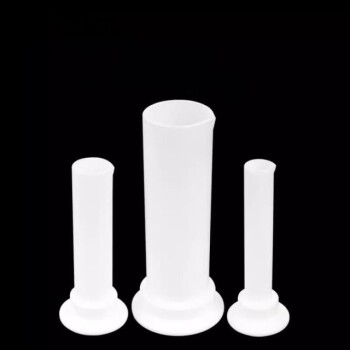
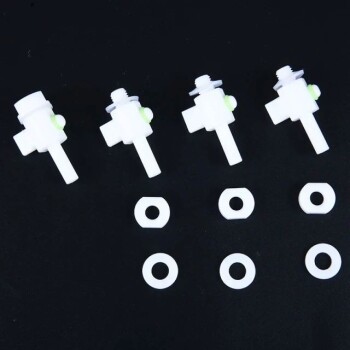
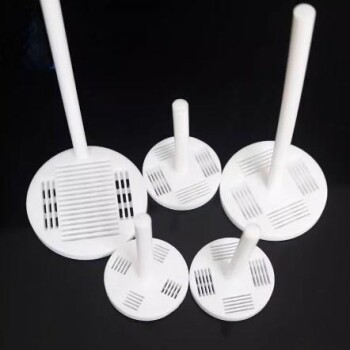
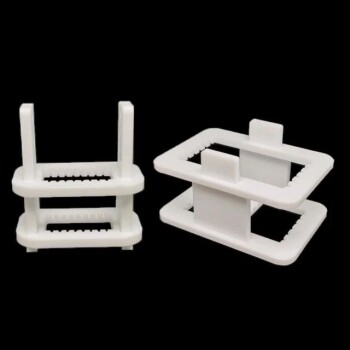
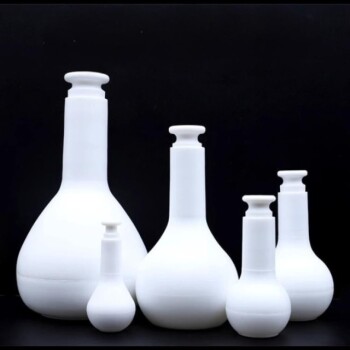
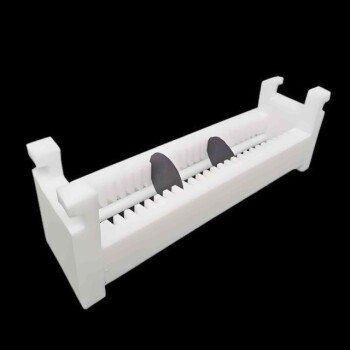
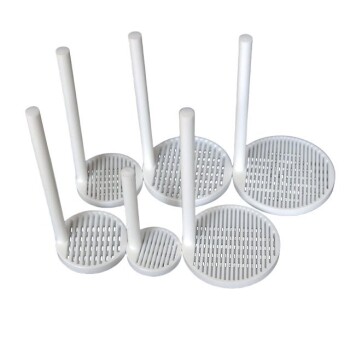
PTFE (polytetrafluoroethylene) is the material of choice for sample holders in L-proline plasma degradation experiments primarily due to its ability to remain neutral in harsh environments. It withstands the aggressive nature of oxidative plasma without degrading, ensuring that experimental results reflect only the changes in the sample, not the holder. Additionally, its electrical properties prevent interference with the electromagnetic fields used to generate the plasma.
Core Takeaway Reliable plasma degradation data requires a sample holder that is chemically and electrically invisible to the reaction. PTFE provides this neutrality by resisting oxidative erosion and insulating the sample, ensuring the plasma energy is directed solely at the L-proline target.
Ensuring Chemical Integrity
To accurately measure how L-proline degrades, you must eliminate environmental variables. PTFE is selected because it acts as a passive vessel rather than an active participant.
Resisting Oxidative Erosion
Plasma environments generate highly reactive oxygen species designed to break down organic matter. Most standard plastics would rapidly erode under these conditions, contaminating the experiment. PTFE possesses exceptional stability, allowing it to remain intact despite constant exposure to these aggressive oxidative agents.
Minimizing Surface Interactions
The accuracy of the experiment depends on the reaction happening within the sample, not at the boundary of the holder. PTFE is known for its low surface energy. This non-stick characteristic minimizes side reactions between the L-proline and the holder surface, ensuring the degradation observed is caused strictly by the plasma.
Controlling the Electromagnetic Environment
Beyond chemical factors, the physical interaction between the sample holder and the plasma generator is critical. PTFE is used to maintain a stable and focused electromagnetic field.
Preventing Electrical Discharge
PTFE is an excellent electrical insulator. If a conductive material were used, it could alter the electromagnetic field or cause arcing. By using PTFE, researchers ensure the field acts primarily on the sample and the plasma above it, rather than discharging through the holder.
Focusing Plasma Energy
Because the holder does not absorb or divert electromagnetic energy, the system remains efficient. The thermal stability of PTFE further ensures that any heat generated during the process does not deform the holder or alter its insulating properties.
Common Pitfalls to Avoid
While PTFE is the ideal choice, understanding why other materials fail highlights the importance of this selection.
The Risk of Sample Contamination
Using materials with lower chemical resistance often leads to material erosion. This introduces foreign particles or chemical byproducts into the L-proline sample, rendering degradation data scientifically useless.
Inconsistent Plasma Fields
Materials that are not sufficient insulators can act as a "sink" for the electromagnetic field. This results in additional discharge effects outside the target area, causing uneven plasma treatment and inconsistent degradation rates across the sample.
Making the Right Choice for Your Goal
When designing plasma experiments, your material selection defines the validity of your data.
- If your primary focus is Chemical Purity: Rely on PTFE’s inertness to prevent oxidative erosion from contaminating your biological samples.
- If your primary focus is Process Consistency: Leverage the insulating properties of PTFE to ensure the electromagnetic field remains focused solely on the plasma and the sample.
By selecting PTFE, you eliminate environmental interference and isolate the variable that matters: the degradation of the L-proline sample.
Summary Table:
| Feature | Benefit for Plasma Experiments | Impact on L-proline Data |
|---|---|---|
| Chemical Inertness | Resists oxidative erosion from reactive species | Prevents sample contamination |
| Low Surface Energy | Minimizes surface-level side reactions | Ensures pure degradation results |
| Electrical Insulation | Prevents arcing and field interference | Maintains stable plasma focus |
| Thermal Stability | Resists deformation during energy discharge | Guarantees consistent geometry |
Elevate Your Research Precision with KINTEK
For critical plasma degradation and material science experiments, choosing the right material is the difference between valid data and failed trials. KINTEK specializes in providing high-performance laboratory equipment and precision-engineered consumables designed for the most demanding environments.
Our extensive portfolio includes top-tier PTFE products, ceramics, and crucibles, alongside advanced high-temperature furnaces (CVD, PECVD, vacuum, and atmosphere) and electrolytic cells to support your sophisticated research needs. Whether you are conducting L-proline degradation or developing next-generation materials, our team ensures you have the chemical purity and process consistency required for success.
Ready to optimize your lab setup? Contact us today to explore our comprehensive range of PTFE solutions and high-temperature systems!
References
- José Carlos Bianchi, Márcio Mafra. Influence of applied plasma power on degradation of L-proline in an inductively coupled RF plasma reactor. DOI: 10.1590/1517-7076-rmat-2022-48897
This article is also based on technical information from Kintek Solution Knowledge Base .
Related Products
- Custom PTFE Wafer Holders for Lab and Semiconductor Processing
- Custom PTFE Teflon Parts Manufacturer for Sampling Solution Sample and Dry Powder Spoons
- Custom PTFE Teflon Parts Manufacturer for Centrifuge Tube Racks
- Customizable PTFE Wafer Carriers for Semiconductor and Lab Applications
- Custom PTFE Teflon Parts Manufacturer PTFE Beaker and Lids
People Also Ask
- Why is a custom PTFE sample holder necessary for CBD of Cd(1-x)ZnxS thin films? Ensure High Purity and Uniformity
- Why is it necessary to utilize PTFE sample holders in electroless nickel plating? Ensure Process Integrity
- How does a custom PTFE electrode holder contribute to the accuracy of immersion tests? Ensure Precise Steel Analysis
- Why are PTFE containers required for PCT leaching tests? Ensure Chemical Inertness and Analytical Precision
- How do PTFE holders or laboratory presses contribute to electrode prep? Ensure Precision in Corrosion Testing