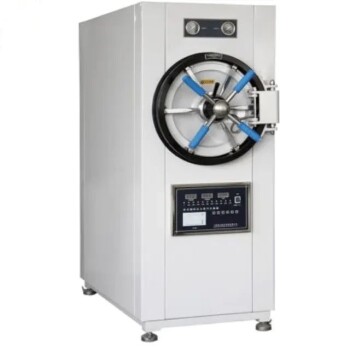
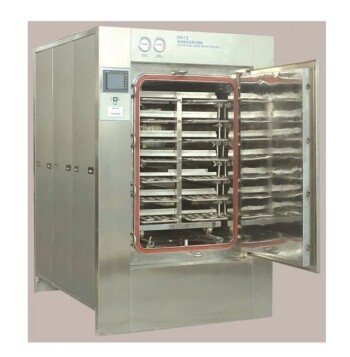
A high-pressure autoclave serves as the foundational testing vessel for Supercritical Water Oxidation (SCWO) research. It is essential because it is the only equipment capable of creating and sustaining the sealed environment required to push water past its critical point—specifically temperatures above 374°C and pressures exceeding 22.1 MPa. By maintaining these extreme parameters, the autoclave allows researchers to simulate the unique physical and chemical behaviors that cause accelerated material degradation in industrial systems.
The core challenge in SCWO research is maintaining a stable test environment where water behaves as a supercritical fluid rather than a standard liquid or gas. The high-pressure autoclave is the critical enabler for this, combining precision heating with extreme pressure containment to rigorously test material integrity against corrosion.
Creating the Supercritical Environment
Surpassing the Critical Point
Standard testing equipment cannot withstand the phase change required for SCWO. To achieve a supercritical state, water must be heated beyond 374°C and pressurized above 22.1 MPa.
Maintaining Stability Under Extremes
Reaching these conditions is not enough; they must be sustained. An autoclave provides the necessary seal to hold conditions such as 450°C and 26 MPa constant throughout the duration of a corrosion reaction.
Simulating Unique Fluid Properties
In this environment, the autoclave allows water to exhibit gas-like diffusivity and liquid-like density. This hybrid state significantly accelerates chemical interactions, allowing researchers to observe how corrosive agents penetrate materials more rapidly than in standard environments.
Simulating Industrial Degradation Mechanisms
Evaluating Structural Integrity
The autoclave acts as the core testing tool for assessing how materials hold up under stress. It enables the study of oxide layer growth, crack initiation, and general material degradation in real-time.
Testing Chemical Resistance
Reliable sealing ensures that alloy specimens remain in full contact with specific corrosive agents. Researchers can introduce phosphates, chloride ions, and oxygen into the autoclave to test how these elements interact with the material's surface.
Assessing Passivation Films
The controlled environment is vital for studying the stability of passivation films (protective surface layers). It allows researchers to analyze the influence of dielectric constants and anion concentrations on the cracking behavior of alloys.
Ensuring Experimental Integrity and Safety
Precision Control Systems
High-pressure autoclaves integrate heating systems with precision pressure controls. This ensures that the physical conditions mimic a Supercritical Water Reactor (SWCR) exactly, preventing fluctuations that could skew corrosion data.
Reactor Material Stability
To prevent the equipment from interfering with the experiment, the autoclave itself is often constructed from high-strength stainless steel or nickel-based alloys. This prevents the reactor walls from reacting with the corrosive medium, ensuring the chemical environment remains pure.
Understanding the Trade-offs
Equipment Material Limitations
While the autoclave tests your samples, the autoclave itself is subject to the same aggressive environment. If the reactor body is not made of superior corrosion-resistant alloys (like Nickel-based variants), it may corrode, potentially contaminating the test solution and invalidating results.
Sealing Challenges
The combination of high temperature (up to 600°C) and high pressure (up to 27 MPa) places immense stress on sealing structures. A compromised seal not only ruins the experiment by dropping pressure but poses significant safety risks in a laboratory setting.
Making the Right Choice for Your Goal
To select the correct experimental setup, you must align the equipment capabilities with your specific research objectives.
- If your primary focus is basic material screening: Prioritize an autoclave with a wide operating range (up to 600°C) to stress-test materials well beyond standard service conditions.
- If your primary focus is mechanism analysis: Ensure the system features high-precision pressure and temperature controls to maintain a stable environment for studying subtle passivation film changes.
- If your primary focus is long-term durability: Select an autoclave constructed from high-grade Nickel-based alloys to ensure the vessel itself does not degrade during extended exposure tests.
The high-pressure autoclave is not just a vessel; it is the simulator that bridges the gap between theoretical chemistry and industrial reality.
Summary Table:
| Feature | SCWO Research Requirement | High-Pressure Autoclave Function |
|---|---|---|
| Critical Point | Temp >374°C, Pressure >22.1 MPa | Sustains stable extreme conditions up to 600°C/27MPa |
| Fluid Dynamics | Gas-like diffusivity & liquid-like density | Simulates unique hybrid properties for rapid chemical interaction |
| Material Testing | Evaluation of oxide layers & passivation films | Provides a sealed, controlled reactor for industrial simulation |
| Safety & Purity | Prevention of leaks & vessel contamination | High-grade Nickel-alloy construction with precision sealing |
Elevate Your Supercritical Research with KINTEK
Ready to push the boundaries of material science? KINTEK specializes in high-performance laboratory equipment designed for the most demanding environments. Our industry-leading high-temperature high-pressure reactors and autoclaves provide the precision and durability required for rigorous SCWO studies and corrosive media analysis.
From advanced crushing and milling systems to our specialized range of high-temperature furnaces and hydraulic presses, we provide researchers with the tools needed for excellence.
Why choose KINTEK?
- Superior Material Integrity: Our autoclaves are crafted from premium corrosion-resistant alloys to ensure experimental purity.
- Precision Control: Maintain stable supercritical states with ease.
- Comprehensive Support: We provide the consumables, cooling solutions, and expertise to power your entire lab.
Contact KINTEK today to find the perfect autoclave for your research!
References
- Heng Lv, Xu Wang. Corrosion resistance of alloys: SS 316 Ni-based alloy 600 and titanium alloy TA10 used as candidate reactor materials in supercritical water. DOI: 10.22616/erdev.2022.21.tf171
This article is also based on technical information from Kintek Solution Knowledge Base .
Related Products
- Mini SS High Pressure Autoclave Reactor for Laboratory Use
- Stainless High Pressure Autoclave Reactor Laboratory Pressure Reactor
- Desktop Fast High Pressure Laboratory Autoclave Sterilizer 16L 24L for Lab Use
- High Pressure Laboratory Autoclave Reactor for Hydrothermal Synthesis
- Customizable High Pressure Reactors for Advanced Scientific and Industrial Applications
People Also Ask
- Why use high-pressure reactors for molecular sieve synthesis? Unlock Superior Crystallinity and Framework Control
- What are the advantages of using a high-pressure reactor like an autoclave? Maximize Liquefaction Speed & Yield
- What is the function of a high-pressure reactor autoclave? Enhancing Cu/N Co-Doped Carbon Catalyst Synthesis
- Why are high-pressure reactors or autoclaves necessary for the synthesis of new functional materials? Unlock Precision.
- How are high-pressure reactors used to prepare metaphosphate electrocatalysts? Master In-Situ Precursor Growth