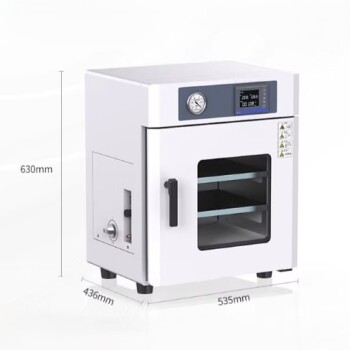
The primary function of a laboratory oven in this context is to serve as a precise dehydration chamber for the raw Meranti wood sawdust. By maintaining a temperature of approximately 60°C for a duration of two hours, the oven drives off moisture inherent in the biomass. This pretreatment is not merely a cleaning step; it is a fundamental requirement to prepare the chemical composition of the feedstock for efficient thermal decomposition.
Removing moisture is less about physical drying and more about protecting the quality of the reaction products. By eliminating water prior to pyrolysis, you prevent contamination that would otherwise degrade the bio-oil’s stability, lower its energy content, and complicate downstream processing.
The Impact on Bio-oil Quality
The presence of water in pyrolysis feedstock is detrimental to the final product. The laboratory oven mitigates these risks by ensuring the raw material enters the reactor in a "dry basis" state.
Prevention of Contamination
If sawdust is pyrolyzed while wet, the water vaporizes and re-condenses into the final liquid product. Using the oven removes this source of contamination before the reaction begins. This results in a purer bio-oil product free from excess aqueous dilution.
Enhancement of Heating Value
The utility of bio-oil is largely defined by its heating value—the amount of energy it releases when burned. Water acts as a thermal heat sink, significantly lowering this energy density. Pre-drying the sawdust ensures that the resulting bio-oil retains a high calorific value, making it a more viable fuel source.
Improvement of Stability
Bio-oil is chemically complex and can be unstable over time. Excess moisture accelerates aging and phase separation within the oil. Drying the feedstock increases the chemical stability of the bio-oil, extending its shelf life and usability.
Operational Efficiency Gains
Beyond the chemistry of the oil, the physical presence of water creates mechanical and processing challenges.
Simplifying Separation
Post-pyrolysis, the product stream must be separated into oil, char, and gas. Water often emulsifies with bio-oil, making these phases difficult to separate cleanly. By drying the sawdust first, you reduce the difficulty of these subsequent separation processes, saving time and resources.
Optimizing Reactor Conditions
While the oven handles moisture, the reactor (often a stainless steel tubular design) handles high-temperature decomposition. Introduction of wet biomass can cause temperature fluctuations within the reactor. Pre-drying ensures the reactor energy is used for pyrolysis (breaking chemical bonds) rather than evaporating waste water.
Understanding the Trade-offs
While drying is essential, it is only one part of the pretreatment equation. It is important to view the oven's role within the wider context of sample preparation.
Temperature Sensitivity
The specific temperature of 60°C is chosen carefully for wood sawdust. Higher temperatures (such as the 108°C often used for coal) might trigger premature release of volatile organic compounds (VOCs) in wood. Adhering to the moderate 60°C limit preserves the valuable volatiles while removing the unwanted water.
The Limits of Thermal Pretreatment
The oven solves the moisture problem, but it does not address particle geometry. Drying must be paired with a high-precision sieving system (e.g., to 0.297–0.542 mm) to ensure uniform heat transfer. A dry sample with irregular particle sizes will still yield inconsistent pyrolysis results.
Optimizing Your Pretreatment Protocol
To achieve the best results from your Meranti wood pyrolysis experiments, align your preparation steps with your specific data requirements.
- If your primary focus is Bio-oil Energy Content: Ensure the 2-hour drying window is strictly met to maximize the heating value of the final product.
- If your primary focus is Process Efficiency: Prioritize drying to prevent water-oil emulsions that complicate the final separation phases.
- If your primary focus is Experimental Consistency: Combine oven drying with strict particle sieving to ensure every batch reacts under identical thermal and physical conditions.
Proper drying is the invisible baseline that validates every subsequent measurement in your pyrolysis study.
Summary Table:
| Feature | Pretreatment Parameter/Benefit | Why It Matters |
|---|---|---|
| Temperature | 60°C | Removes moisture while preserving volatile organic compounds. |
| Duration | 2 Hours | Ensures a consistent 'dry basis' for the chemical reaction. |
| Energy Value | High Calorific Density | Prevents water from acting as a heat sink in the final bio-oil. |
| Separation | Reduced Emulsification | Simplifies the recovery of oil from char and gas phases. |
| Stability | Enhanced Shelf Life | Minimizes chemical aging and phase separation in stored bio-oil. |
Optimize Your Pyrolysis Results with KINTEK
Precision in pretreatment is the key to high-quality bio-oil. KINTEK provides the essential tools required for every stage of your biomass research. From high-performance laboratory ovens for moisture removal to precision sieving equipment for particle size uniformity, we ensure your feedstock is perfectly prepared.
Our extensive portfolio includes high-temperature furnaces (muffle, vacuum, and tube), stainless steel high-pressure reactors, and crushing and milling systems designed to withstand rigorous experimental conditions. Whether you are focusing on energy density or chemical stability, KINTEK offers the consumables and hardware—including crucibles and high-temperature reactors—to elevate your laboratory's efficiency.
Contact KINTEK today to enhance your research accuracy!
References
- Yeti Widyawati. Application of Central Composite Design in the Pyrolysis Process for Making Bio-Oil Based on Meranti Wood Sawdust (Shorea pinang). DOI: 10.37637/ab.v6i3.1457
This article is also based on technical information from Kintek Solution Knowledge Base .
Related Products
- Laboratory Scientific Electric Heating Blast Drying Oven
- 56L Vertical Laboratory Vacuum Drying Oven
- 23L Laboratory Vacuum Drying Oven
- 1200℃ Muffle Furnace Oven for Laboratory
- 1700℃ Muffle Oven Furnace for Laboratory
People Also Ask
- How does a laboratory electric drying oven contribute to the formation of the initial coating? Expert Insights
- What role does a precision laboratory drying oven play in the synthesis of GO-PANI nanocomposites? Protect Material Integrity
- What role does a laboratory drying oven play in the preparation of zinc oxide nanoparticle precursors?
- What is the necessity of using a laboratory drying oven when processing MoO3/GO composite nanopowders? Find out here.
- What is the role of a laboratory drying oven in cellulose citrate production? Ensure Material Stability & Purity