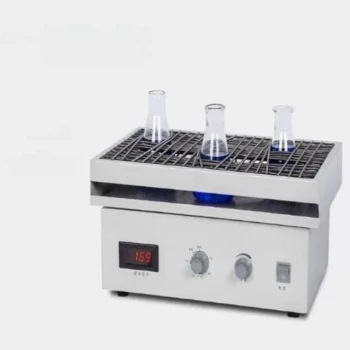
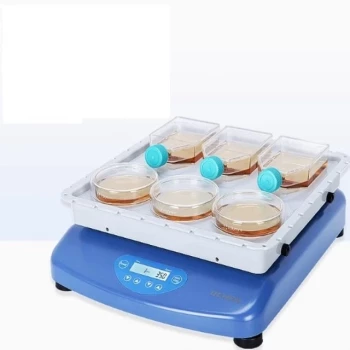
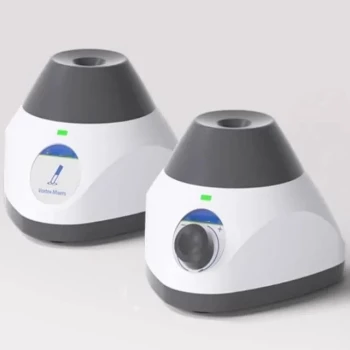
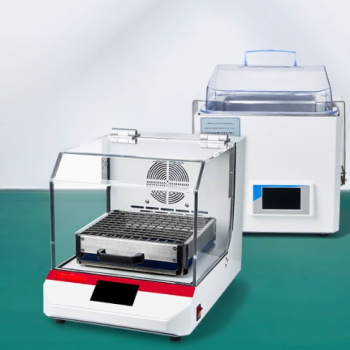
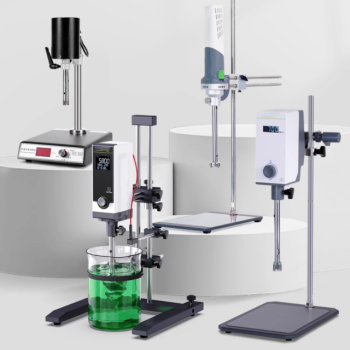
The laboratory shaker is the critical tool for achieving surface-ion equilibrium. It provides the sustained mechanical energy required to transition biochar micro-powders from a dry state into a uniformly dispersed suspension. Without this prolonged agitation, the surface functional groups cannot reach the necessary chemical balance with the solvent to yield accurate Zeta potential readings.
A laboratory shaker ensures biochar particles are fully wetted and reach ion exchange equilibrium with the solvent, providing a stable and representative suspension. This process is vital for capturing the true electrical characteristics of the material's surface, which is necessary for predictable performance in water treatment and microbial applications.
Achieving Kinetic and Chemical Equilibrium
Overcoming Particle Hydrophobicity
Biochar micro-powders often resist initial wetting due to their porous nature and potential surface hydrophobicity. The shaker provides continuous mechanical energy to force the solvent into the pores and break up particle clusters. This ensures every particle is uniformly dispersed throughout the distilled water rather than remaining clumped or floating on the surface.
Facilitating Ion Exchange Equilibrium
Beyond physical mixing, the shaker facilitates the ion exchange process between biochar surface functional groups and the water. Extended periods of balanced oscillation—typically around 12 hours—are required for these chemical interactions to reach a steady state. Once this equilibrium is established, the Zeta potential analyzer can record the true electrical characteristics of the material.
Impact on Data Accuracy and Reproducibility
Eliminating Concentration Gradients
Static mixtures suffer from local concentration gradients where solute levels vary throughout the container. The shaker’s uniform rotational or reciprocating motion ensures uniform solute diffusion across the entire volume. This controlled kinetic environment allows resulting adsorption capacity and equilibrium data to be both accurate and repeatable.
Stabilizing Suspensions for Analysis
Zeta potential measurements rely on the stability of the suspension during laser analysis. Constant motion prevents the premature settling of particles that could lead to skewed or noisy data. Maintaining a stable suspension is the only way to reveal how surface charge characteristics will influence interactions, such as initial bacterial attachment on an electrode.
Understanding the Trade-offs and Prerequisites
The Limitation of Mechanical Shaking Alone
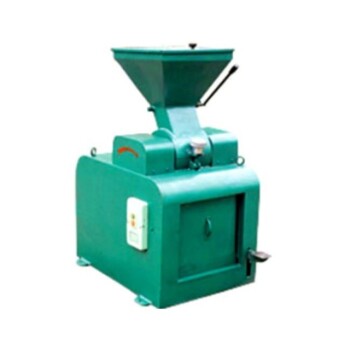
Shaking cannot compensate for poorly prepared raw material. Bulk biochar must first be processed in a pulverizing mill, often using tungsten carbide grinding jars, to reach a particle size below 10 μm. This mechanical refinement is a prerequisite for creating the stable suspension that the shaker then equilibrates.
Risks of Inadequate Agitation Time
Short-duration shaking is often insufficient for highly porous biochar. Inadequate agitation prevents the surface functional groups from fully equilibrating with the solvent. This results in data that reflects a "transient state" rather than the material's actual behavior in real-world water treatment applications.
How to Apply This to Your Project
Before beginning your analysis, ensure your preparation protocol aligns with your specific research or industrial objectives.
- If your primary focus is water treatment modeling: Use a minimum 12-hour shaking period to ensure the biochar reaches a complete ion exchange equilibrium with the solvent.
- If your primary focus is microbial attachment studies: Prioritize grinding the biochar to below 10 μm before shaking to accurately simulate the electrical interface between the material and microorganisms.
- If your primary focus is experimental repeatability: Utilize a constant temperature shaker to eliminate thermal variables and ensure uniform kinetic energy across all samples.
Properly executed shaking transforms a simple mixture into a scientifically valid suspension, enabling the precise characterization of biochar's electrochemical potential.
Summary Table:
| Feature | Impact on Biochar Preparation | Importance for Zeta Potential |
|---|---|---|
| Mechanical Energy | Overcomes hydrophobicity & breaks clusters | Ensures uniform particle dispersion |
| Extended Agitation | Facilitates ion exchange equilibrium (12h+) | Captures true surface electrical charge |
| Kinetic Uniformity | Eliminates local concentration gradients | Guarantees repeatable & accurate data |
| Suspension Stability | Prevents premature particle settling | Reduces signal noise during laser analysis |
Elevate Your Material Characterization Precision
Achieving accurate Zeta potential readings requires more than just a mixture—it requires a scientifically validated suspension. KINTEK specializes in providing high-performance laboratory equipment designed for the most demanding research environments.
From high-precision laboratory shakers that ensure perfect ion equilibrium to advanced crushing and milling systems for achieving particle sizes below 10 μm, our tools are engineered for reliability. Whether you are working on water treatment, microbial applications, or battery research, KINTEK offers a comprehensive range of solutions including:
- Sample Preparation: Pulverizing mills, sieving equipment, and hydraulic presses.
- Thermal Processing: Muffle, tube, vacuum, and atmosphere furnaces.
- Lab Utilities: Homogenizers, cooling solutions, and high-quality consumables like PTFE and ceramics.
Ready to optimize your biochar analysis? Contact our technical experts today to find the perfect equipment setup for your laboratory's needs.
References
- Shifa Zuhara, Gordon McKay. Pyrolysis of biosolids with waste cardboard: effect of operating parameters, feedstock size and blending ratio. DOI: 10.1007/s13762-023-04963-0
This article is also based on technical information from Kintek Solution Knowledge Base .
Related Products
- Laboratory Multifunctional Small Speed-Adjustable Horizontal Mechanical Shaker for Lab
- Laboratory Vibratory Sieve Shaker Machine for Dry and Wet Three-Dimensional Sieving
- Laboratory Oscillating Orbital Shaker
- Laboratory Vortex Mixer Orbital Shaker Multifunctional Rotation Oscillation Mixer
- Shaking Incubators for Diverse Laboratory Applications
People Also Ask
- How do static culture and shaking culture affect the morphology of BC? Optimize Lab Shaker Results
- What is the role of a laboratory shaker in silane sol preparation? Master Uniform Aramid Fabric Coating
- Why is a laboratory shaker required for continuous 24-hour catalyst treatment? Achieve Deep Uniform Impregnation
- What is the function of a laboratory shaker in evaluating Fe-C@C nanoparticles? Optimize Methylene Blue Adsorption
- How do laboratory shakers or stirrers influence the efficiency of hydrogen production during dark fermentation?