A laboratory ultrasonic homogenizer is essential for breaking down physical agglomerates that spontaneously form in silver-silica nanocomposite samples during synthesis and storage. Without this preparatory step, Dynamic Light Scattering (DLS) analysis will incorrectly measure these clusters as single large particles, leading to inaccurate data regarding the material's true properties.
The core purpose of ultrasonic homogenization is to transform a clustered mixture into a stable, dispersed suspension. By disintegrating soft agglomerates, you ensure that the Hydrodynamic Diameter and Polydispersity Index (PDI) reflect the actual nanocomposites, not the artifacts of storage.
The Mechanics of Accurate Particle Analysis
Combating Physical Agglomeration
Silver-silica nanocomposites rarely remain as discrete entities after synthesis. During both the creation process and subsequent storage, these particles naturally clump together to form physical agglomerates.
If you attempt to analyze the sample in this state, the instrument cannot distinguish between a single large particle and a cluster of many small ones.
Achieving True Dispersity
The ultrasonic homogenizer utilizes high-frequency vibrations to mechanically treat the diluted nanocomposite suspension.
This energy effectively shatters the bonds holding these agglomerates together. The result is a highly dispersed and stable uniform suspension where particles exist in their intended, individual state.
Ensuring Data Integrity
For methods like Dynamic Light Scattering (DLS), the physical state of the suspension dictates the quality of the data.
When the sample is properly homogenized, the resulting measurements—specifically the hydrodynamic diameter and the polydispersity index (PDI)—accurately represent the original particle distribution characteristics. This validates that your data reflects the chemistry of your material, not the history of its storage.
Understanding the Variables
The Role of Power and Time
Achieving the correct dispersion is not a binary "on/off" process. The primary reference highlights the necessity of controlling the ultrasonic power and processing time.
These parameters must be tuned to provide enough energy to break soft agglomerates without altering the fundamental structure of the silver-silica nanocomposites.
The Risk of Inadequate Treatment
If the ultrasonic energy is too low or applied for too short a duration, agglomerates will remain intact.
This leads to a "false positive" for larger particle sizes and a skewed PDI, rendering the DLS analysis effectively useless for characterizing the true nature of the nanocomposite.
Optimizing Your Analysis Workflow
To ensure your particle size analysis yields reliable, reproducible data, consider the following strategic approach to sample preparation:
- If your primary focus is Data Accuracy: Prioritize the removal of physical agglomerates to ensure your Hydrodynamic Diameter readings reflect individual particles, not clusters.
- If your primary focus is Method Validation: rigorous control of ultrasonic power and time is required to prove that your suspension is stable and uniform before measurement.
Correctly calibrated ultrasonic homogenization is the difference between measuring your sample's potential and measuring its storage defects.
Summary Table:
| Parameter | Influence on Analysis | Result of Optimization |
|---|---|---|
| Ultrasonic Power | Energy input level to break bonds | Efficient disintegration without damaging structures |
| Processing Time | Duration of energy application | Ensures complete dispersion and sample stability |
| Particle State | Agglomerated vs. Dispersed | Determines if DLS measures clusters or true particles |
| Data Output | Hydrodynamic Diameter & PDI | Reflects actual material properties vs. storage artifacts |
Elevate Your Material Research with KINTEK Precision
Don't let particle agglomeration compromise your data integrity. KINTEK specializes in advanced laboratory solutions designed for the most demanding research environments. Whether you are preparing silver-silica nanocomposites or complex chemical suspensions, our high-performance ultrasonic homogenizers ensure your samples achieve the perfect state for accurate analysis.
From high-temperature furnaces and vacuum systems to specialized crushing, milling, and homogenization equipment, KINTEK provides the tools necessary to maintain consistency across your workflow. Our portfolio also features high-pressure reactors, battery research consumables, and cooling solutions tailored for precision science.
Ready to achieve stable, uniform dispersions and reliable DLS results?
Contact KINTEK Today to Find Your Ideal Solution
References
- Aleksandra Strach, Sylwia Golba. Microwave Irradiation vs. Structural, Physicochemical, and Biological Features of Porous Environmentally Active Silver–Silica Nanocomposites. DOI: 10.3390/ijms24076632
This article is also based on technical information from Kintek Solution Knowledge Base .
Related Products
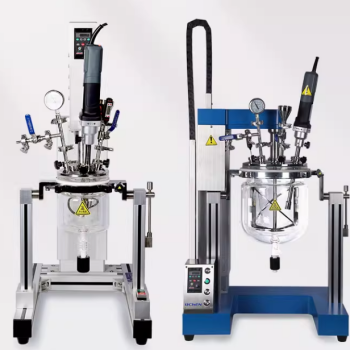
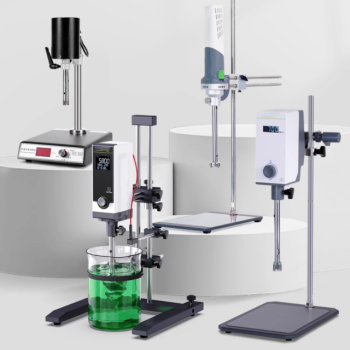
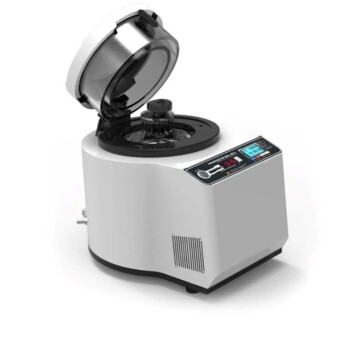
- High Performance Lab Homogenizer for Pharma Cosmetics and Food R&D
- High Shear Homogenizer for Pharmaceutical and Cosmetic Applications
- Lab Sterile Slapping Type Homogenizer for Tissue Mashing and Dispersing
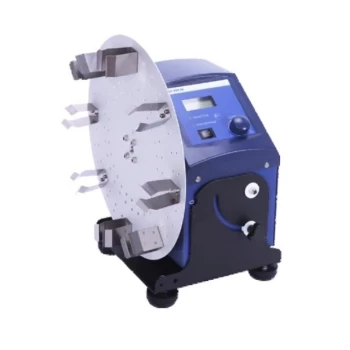
- Laboratory Disc Rotary Mixer for Efficient Sample Mixing and Homogenization
- Laboratory High Throughput Tissue Grinding Mill Grinder
People Also Ask
- Why is a high-performance homogenizer essential for Fe3O4@C9 anode slurries? Boost Battery Performance & Stability.
- What is the primary function of high-performance homogenizers for SAPO-34 MMMs? Ensure Superior Gas Separation Efficiency
- How do lab stirrers & homogenizers ensure uniform distribution? Optimize Your Complex Multiphase Chemical Mixing
- What role does a laboratory homogenizer play in radioactive cesium detection? Ensure Accuracy in Wildlife Sampling
- How does a laboratory automatic masticator or homogenizer facilitate the processing of biofilm samples? Optimize Accuracy