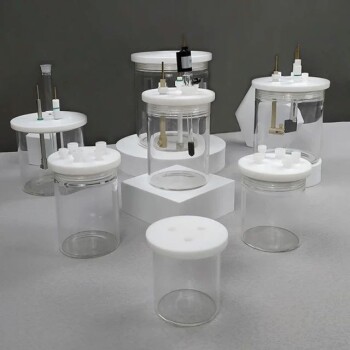
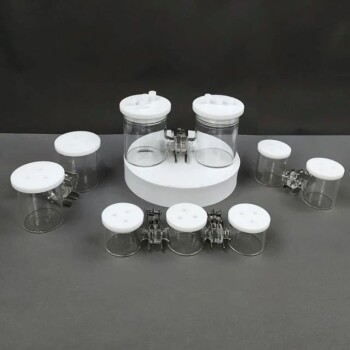
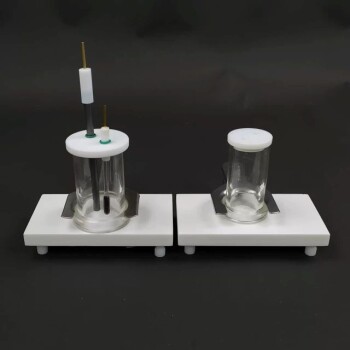
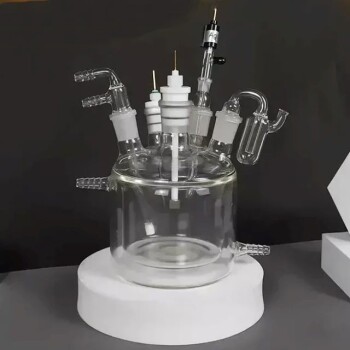
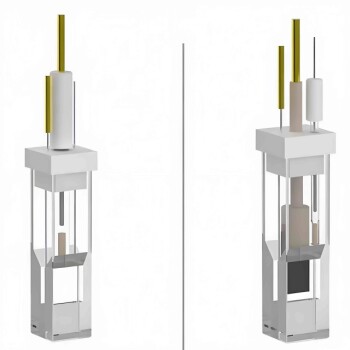
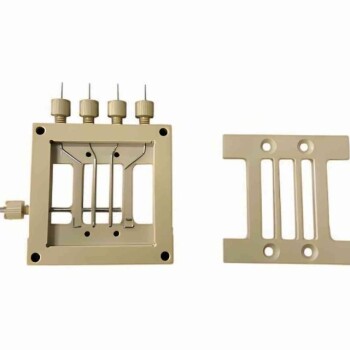
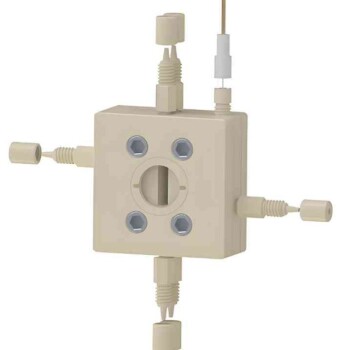
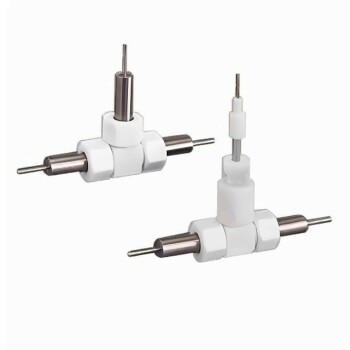
The design of the electrolytic cell is a fundamental determinant of data integrity for evaluating open-framework material thin films. It establishes the stable three-electrode environment required for accurate measurement and dictates whether reaction products interfere with the catalyst. Specifically, for reactions involving gas evolution, the cell geometry directly impacts the validity of your performance metrics.
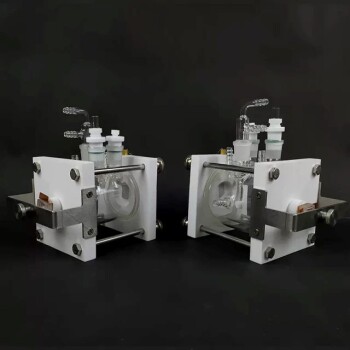
The electrolytic cell functions as the core control environment for electrochemical testing. For reactions that generate gases, such as the Hydrogen Evolution Reaction (HER) or Oxygen Evolution Reaction (OER), utilizing an H-type design to physically isolate the anode from the cathode is essential to prevent product cross-interference and ensure reproducible results.
Creating a Controlled Reaction Environment
The Foundation of the Three-Electrode System
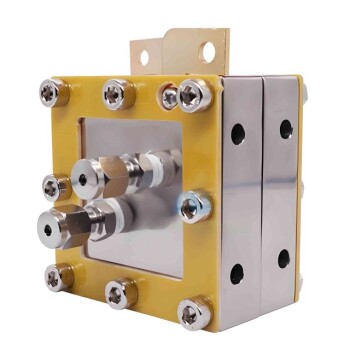
The primary function of the electrolytic cell is to provide a stable housing for the three-electrode setup. For open-framework thin films, the cell must ensure that the working electrode (the film), reference electrode, and counter electrode maintain a consistent geometric relationship. This stability is the prerequisite for obtaining accurate electrochemical data.
The Necessity of H-Type Cells for Gas Evolution
When evaluating catalysts for gas-evolving reactions like HER or OER, the production of bubbles introduces significant complexity. Standard single-chamber cells allow gases generated at the counter electrode to migrate freely. To address this, H-type electrolytic cells are specifically engineered for these applications.
Eliminating Cross-Interference
The H-type design physically separates the cathode and anode chambers, often connected by a membrane or bridge. This isolation is critical. It prevents the products evolved at the counter electrode from diffusing across the cell and interfering with the reaction occurring at the working electrode, which would otherwise skew the catalytic performance data.
Material Selection and Observation
Optical Transparency for Monitoring
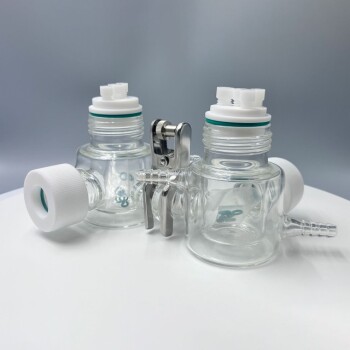
The physical material of the cell dictates your ability to monitor the reaction. High-transparency glass is preferred because it allows for clear, real-time observation. Researchers can visually confirm the physical stability of the thin film and monitor bubble formation dynamics without interrupting the experiment.
Chemical Resistance and Purity
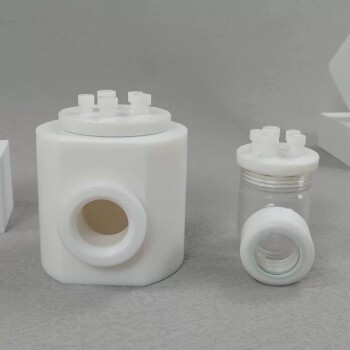
The electrolyte environment is often chemically aggressive. The cell structure must be made of corrosion-resistant plastic or glass to prevent the container itself from degrading. Degradation not only damages the equipment but introduces contaminants into the electrolyte that can ruin the experiment.
Critical Factors for Data Reliability
The Impact of Consumable Purity
A high-quality cell design is rendered useless if the internal components are substandard. The system must support the use of high-purity consumables, such as platinum counter electrodes. Low-purity components can dissolve and redeposit on your thin film, leading to false positives in catalytic activity.
Ensuring Repeatability
Data accuracy relies on the stability of the reference electrode within the cell. The design must accommodate high-quality reference electrodes to minimize potential drift. Without this stability, the data collected cannot be reliably repeated or compared across different experimental runs.
Making the Right Choice for Your Goal
To ensure your evaluation of open-framework material thin films is accurate, select your cell configuration based on the specific reaction type:
- If your primary focus is Gas Evolution (HER/OER): Prioritize an H-type electrolytic cell to physically separate chambers and prevent product cross-interference.
- If your primary focus is Visual Monitoring: Ensure the cell is constructed from high-transparency glass to allow for precise observation of electrode integrity and bubble mechanics.
By selecting the correct cell architecture, you eliminate environmental variables and isolate the true performance of your catalytic material.
Summary Table:
| Design Feature | Impact on Performance Evaluation | Recommended Application |
|---|---|---|
| H-Type Configuration | Prevents product cross-interference by isolating cathode/anode. | Gas Evolution Reactions (HER/OER) |
| High-Transparency Glass | Enables real-time visual monitoring of film stability and bubbles. | General Electrochemical Studies |
| Three-Electrode Setup | Maintains stable geometric relationships for accurate potential. | All Quantitative Measurements |
| Corrosion Resistance | Prevents electrolyte contamination and container degradation. | Aggressive Chemical Environments |
| High-Purity Components | Eliminates false positives from electrode redeposition. | Precision Catalytic Assessment |
Elevate Your Electrochemical Research with KINTEK Precision
Accuracy in catalytic evaluation starts with the right environment. KINTEK specializes in premium laboratory solutions, offering high-performance electrolytic cells and electrodes specifically designed to eliminate cross-interference and ensure data repeatability for open-framework materials.
Whether you are scaling battery research, conducting gas evolution studies, or optimizing high-temperature reactions with our muffle and vacuum furnaces, our comprehensive portfolio—from PTFE consumables and ceramics to advanced crushing and milling systems—is engineered to meet the rigorous demands of your lab.
Ready to achieve superior data integrity? Contact us today to find the perfect cell for your application!
References
- Weijin Li, Roland A. Fischer. Open Framework Material Based Thin Films: Electrochemical Catalysis and State‐of‐the‐art Technologies. DOI: 10.1002/aenm.202202972
This article is also based on technical information from Kintek Solution Knowledge Base .
Related Products
- PTFE Electrolytic Cell Electrochemical Cell Corrosion-Resistant Sealed and Non-Sealed
- Super Sealed Electrolytic Electrochemical Cell
- Electrolytic Electrochemical Cell with Five-Port
- H Type Electrolytic Cell Triple Electrochemical Cell
- Electrolytic Electrochemical Cell Gas Diffusion Liquid Flow Reaction Cell
People Also Ask
- What is the necessity of selecting a PTFE electrolytic cell? Ensure Precise Graphene Corrosion Testing Accuracy
- What is the proper method for cleaning the surface of an all-PTFE electrolytic cell? Ensure Accurate Results with a Pristine Surface
- How should an all-PTFE electrolytic cell be stored after use? Expert Maintenance Tips for Long-Lasting Performance
- What is the proper cleaning method for an all-PTFE electrolytic cell? Essential Tips for Surface Integrity
- What are the standard opening specifications for all-PTFE electrolytic cells? A Guide to Sealed vs. Non-Sealed Ports