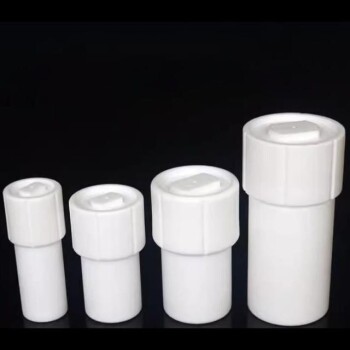
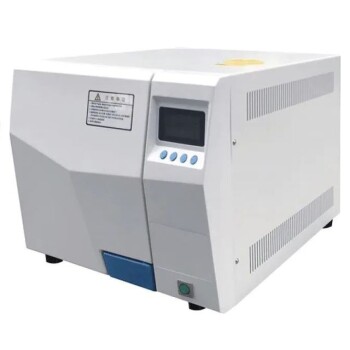
The necessity of a PTFE-lined autoclave in Mn3O4 synthesis lies in its ability to facilitate high-energy chemical reactions while maintaining extreme material purity. This specialized vessel allows the precursor solution to reach temperatures—specifically 140°C for Mn3O4—and pressures far exceeding the solvent's standard boiling point. The PTFE liner acts as a critical barrier, preventing corrosive precursors from attacking the metal reactor body and ensuring that no foreign metal ions contaminate the resulting nanoparticle crystal structure.
A PTFE-lined autoclave is essential because it creates a subcritical environment that drives crystal growth while providing a chemically inert shield. This dual functionality ensures that Mn3O4 nanoparticles achieve high purity and precise crystalline integrity without interference from the reactor's metallic components.
The Role of High Pressure in Hydrothermal Synthesis
Reaching the Subcritical State
By sealing the reaction environment, the autoclave allows the solvent to reach a subcritical state. In this state, the liquid's properties change, significantly increasing the solubility of precursors and accelerating chemical reaction rates.
Inducing Chemical Transformations
The high-pressure environment is necessary to trigger complex chemical processes like disproportionation and complexation. For Mn3O4, these conditions facilitate the precise transition of metal salts into stable oxide nanostructures that would be impossible at atmospheric pressure.
Morphological Control
The sealed, high-pressure system enables precise control over crystal growth. This allows researchers to achieve uniform particle sizes and regular morphologies, ensuring the Mn3O4 nanoparticles have the structural integrity required for technical applications.
The Critical Function of the PTFE Liner
Preventing Reactor Corrosion
The precursors used in manganese synthesis are often highly concentrated and can be chemically aggressive at 140°C. The polytetrafluoroethylene (PTFE) liner is used because it is exceptionally resistant to corrosion, protecting the stainless steel outer shell of the autoclave from damage.
Eliminating Ion Contamination
Without a liner, the metal walls of the autoclave would leach iron, nickel, or chromium ions into the solution. The PTFE liner ensures a metal-free environment, which is vital for maintaining the high purity of the Mn3O4 crystalline lattice.
Facilitating Clean Nucleation
By providing a non-reactive surface, the liner allows for in-situ nucleation to occur solely within the precursor solution. This prevents the formation of secondary phases or impurities that would otherwise degrade the performance of the nanomaterials.
Understanding the Trade-offs and Limitations
Temperature Constraints
While PTFE is highly inert, it has a functional temperature limit, typically around 200°C to 250°C. Exceeding these temperatures can cause the liner to soften or deform, potentially leading to a loss of the pressure seal or contamination from the decomposing polymer.
Thermal Lag During Heating
PTFE is an insulator, meaning it does not conduct heat as efficiently as the metal body of the autoclave. This creates a thermal lag, where the internal solution takes longer to reach the target 140°C than the external furnace temperature suggests.
Pressure Sealing Risks
The integrity of the synthesis depends entirely on the seal between the PTFE cup and the autoclave lid. High-pressure cycles can eventually wear down the PTFE gasket area, requiring regular inspection to prevent hazardous pressure leaks or "burping" during the synthesis.
Selecting the Right Parameters for Your Synthesis
How to Apply This to Your Project
To ensure the successful synthesis of Mn3O4 nanoparticles, you must balance the chemical requirements of the precursor with the physical limits of the autoclave.
- If your primary focus is Maximum Purity: Ensure the PTFE liner is thoroughly cleaned with acid between runs to remove any residual manganese ions that could seed the next reaction.
- If your primary focus is Morphological Uniformity: Maintain a consistent "fill degree" (typically 60-80% of the liner volume) to ensure stable pressure levels throughout the 140°C heating cycle.
- If your primary focus is Reactor Longevity: Always allow the autoclave to cool naturally to room temperature before opening to prevent thermal shock and deformation of the PTFE liner.
Utilizing a PTFE-lined autoclave correctly transforms a standard chemical mixture into a sophisticated, high-purity nanomaterial by mastering the intersection of high-pressure physics and inert chemistry.
Summary Table:
| Key Feature | Role in Synthesis | Primary Benefit |
|---|---|---|
| High-Pressure Environment | Creates subcritical state | Increases solubility and accelerates reaction rates |
| PTFE Liner | Provides chemically inert barrier | Prevents corrosion and eliminates metal ion contamination |
| 140°C Thermal Stability | Maintains target synthesis temperature | Ensures precise crystalline integrity and nucleation |
| Sealed System | Enables morphological control | Achieves uniform particle size and stable nanostructures |
Elevate Your Nanomaterial Synthesis with KINTEK
Achieving high-purity Mn3O4 nanoparticles requires equipment that can withstand extreme conditions without compromising material integrity. KINTEK specializes in advanced laboratory solutions, offering a premium range of high-temperature high-pressure reactors and autoclaves specifically designed for demanding hydrothermal synthesis.
Beyond our industry-leading reactors, we provide a comprehensive portfolio including muffle and vacuum furnaces, high-precision crushing and milling systems, and essential consumables like PTFE products and ceramics. Whether you are a researcher focused on crystalline purity or a lab manager seeking reliable, corrosion-resistant equipment, KINTEK delivers the durability and precision you need.
Ready to optimize your lab's performance? Contact our technical experts today to find the perfect autoclave solution for your synthesis requirements!
References
- Amal G. Mahdy, M. Rashad. Synthesis and Characterization of Li2Mn0.8Ni0.2SiO4/Mn3O4 Nanocomposite for Photocatalytic Degradation of Reactive Blue (RB5) Dye. DOI: 10.1007/s10904-023-02572-5
This article is also based on technical information from Kintek Solution Knowledge Base .
Related Products
- Laboratory High Pressure Horizontal Autoclave Steam Sterilizer for Lab Use
- Stainless High Pressure Autoclave Reactor Laboratory Pressure Reactor
- Portable High Pressure Laboratory Autoclave Steam Sterilizer for Lab Use
- Desktop Fast High Pressure Laboratory Autoclave Sterilizer 16L 24L for Lab Use
- Laboratory High Pressure Steam Sterilizer Vertical Autoclave for Lab Department
People Also Ask
- Why is a laboratory high-pressure autoclave sterilizer necessary? Ensure Accuracy in Antibacterial Research
- What is the role of a laboratory high-pressure autoclave in the conversion of furfural to piperidine? Optimize Yields
- What is the primary function of a laboratory autoclave in the pre-treatment of medical plastic waste for liquid fuel?
- What is an autoclave laboratory equipment? The Ultimate Guide to Steam Sterilization
- What is a laboratory autoclave? A Guide to Sterilization with Pressurized Steam