The laboratory high-pressure autoclave is the critical reaction vessel that enables the solvothermal synthesis of Polyacrylic Acid (PAA) and Melamine (MA) nanosheet combinations by providing a controlled environment for chemical bonding. By maintaining a closed system at temperatures typically around 110 °C, the autoclave facilitates intense electrostatic attraction and drives the formation of amide structures between the acidic PAA chains and high-nitrogen MA molecules.
Core Takeaway: The autoclave provides the high-pressure and high-temperature environment necessary to transform PAA and MA precursors into a chemically integrated framework. This process is vital for enhancing the thermal stability of the resulting material, ensuring high nitrogen retention during subsequent carbonization.
Driving Chemical Integration via Solvothermal Treatment
Facilitating Amide Bond Formation
In a standard atmospheric environment, the reaction between PAA and MA is often limited by the energy barriers of the liquid phase. The autoclave overcomes this by creating a high-pressure environment that forces the strongly acidic PAA and high-nitrogen MA molecules into close proximity.
This intense physical interaction promotes chemical reactions that lead to the development of stable amide structures. These structures are the foundational "glue" that holds the PAA and MA combination together at the molecular level.
Enhancing Precursor Thermal Stability
The primary goal of using an autoclave in this specific assembly is to prepare the material for future high-heat processing. The chemical bonds formed under pressure significantly increase the thermal stability of the PAA-MA precursor.
By stabilizing the assembly early, the material can withstand the carbonization process more effectively. This results in a final product that retains a higher concentration of nitrogen elements, which is often the desired functional outcome for these nanosheet combinations.
The Mechanics of the High-Pressure Environment
Increasing Solvent Reactivity and Boiling Points
A high-pressure autoclave allows solvents to reach temperatures well above their standard atmospheric boiling points. This creates supercritical or subcritical states that drastically increase the solubility of the precursors and the overall reactivity of the solution.
By operating at 110 °C or higher, the autoclave ensures that the PAA and MA molecules have sufficient kinetic energy to interact. This thermal field is uniform throughout the vessel, leading to a more homogeneous assembly of the nanosheets.
Protecting Material Purity with Specialized Liners
To ensure the integrity of the PAA-MA reaction, autoclaves often utilize a Teflon (PTFE) liner. This internal sleeve protects the stainless steel walls of the reactor from the corrosive nature of the acidic PAA.
The liner also prevents the introduction of metallic impurities into the synthesized polymer. This is critical for materials intended for high-performance applications where chemical purity dictates the final electronic or catalytic properties.
Understanding the Trade-offs
Temperature Sensitivity and Over-Processing
While heat is necessary for amide formation, excessive temperatures can lead to the premature degradation of the PAA chains. Maintaining the temperature near the 110 °C threshold is a delicate balance; exceeding it may cause uncontrolled cross-linking that destroys the desired nanosheet morphology.
Pressure Limitations and Safety
High-pressure synthesis requires rigorous safety protocols and precise equipment calibration. If the internal pressure is not monitored correctly, it can lead to vessel failure or inconsistent crystalline structures that do not meet the performance standards required for advanced materials research.
How to Apply This to Your Project
Recommendations for Material Assembly
- If your primary focus is maximizing nitrogen retention: Prioritize the solvothermal step in the autoclave at 110 °C to ensure the amide structures are fully formed before carbonization.
- If your primary focus is preventing metallic contamination: Always utilize a Teflon-lined autoclave to isolate your acidic PAA reactions from the reactor's metal surfaces.
- If your primary focus is controlling nanosheet morphology: Carefully calibrate the autoclave's thermal field to ensure uniform energy distribution, which prevents uneven growth or clumping.
The laboratory high-pressure autoclave is not merely a heater, but a precision tool that dictates the chemical architecture and functional potential of PAA-MA nanosheet combinations.
Summary Table:
| Key Parameter | Requirement/Value | Functional Impact on PAA-MA Assembly |
|---|---|---|
| Core Process | Solvothermal Synthesis | Enables chemical integration of PAA chains and MA molecules. |
| Temperature | ~110 °C | Provides kinetic energy for amide bond formation without degradation. |
| Environment | High-Pressure (Closed) | Increases solvent boiling point and forces electrostatic attraction. |
| Liner Material | Teflon (PTFE) | Protects reactor from acidic PAA and prevents metallic impurities. |
| Final Benefit | Enhanced Stability | Ensures high nitrogen retention during the carbonization phase. |
Elevate Your Material Research with KINTEK Precision
Are you looking to optimize your PAA and MA nanosheet synthesis or other advanced solvothermal processes? KINTEK specializes in high-performance laboratory equipment designed for the most demanding research environments.
We offer a comprehensive range of high-temperature high-pressure reactors and autoclaves, alongside muffle, tube, and vacuum furnaces for precise carbonization. Our portfolio also features essential consumables such as PTFE liners and ceramics, ensuring your reactions remain pure and efficient. From hydraulic presses for pellet preparation to ULT freezers for cooling, KINTEK provides the integrated solutions needed to drive your innovation forward.
Ready to enhance your lab's efficiency? Contact us today to discuss your specific requirements with our experts and discover how our specialized equipment can deliver superior results for your project!
References
- Zongheng Cen, Shaohong Liu. Two-Dimensional Molecular Brush-Based Ultrahigh Edge-Nitrogen-Doped Carbon Nanosheets for Ultrafast Potassium-Ion Storage. DOI: 10.3390/batteries9070363
This article is also based on technical information from Kintek Solution Knowledge Base .
Related Products
- High Pressure Laboratory Autoclave Reactor for Hydrothermal Synthesis
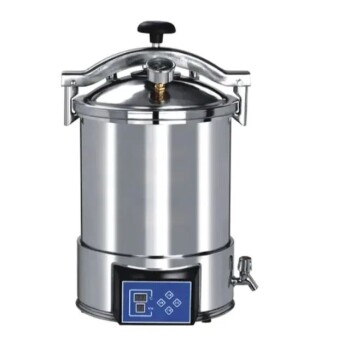
- Desktop Fast High Pressure Laboratory Autoclave Sterilizer 16L 24L for Lab Use
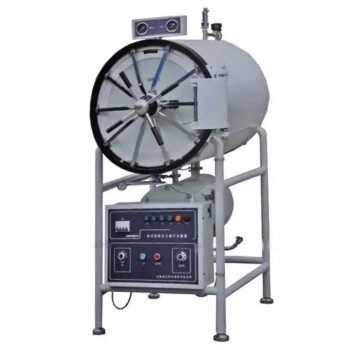
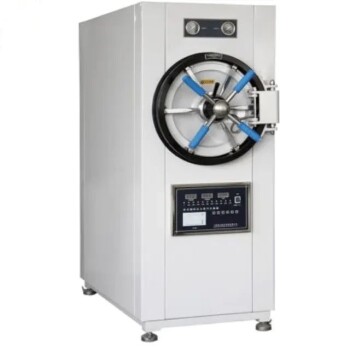
- Laboratory High Pressure Horizontal Autoclave Steam Sterilizer for Lab Use
- Portable High Pressure Laboratory Autoclave Steam Sterilizer for Lab Use
- Stainless High Pressure Autoclave Reactor Laboratory Pressure Reactor
People Also Ask
- What role does a high-pressure reactor (autoclave) play in the synthesis of NiCuFe-LDH? Master Hydrothermal Growth
- What Role Does a High-Pressure Reactor or Autoclave Play in HA Catalyst Synthesis? Achieve High Surface Area Materials
- What equipment is required for hydrothermal synthesis of Ga0.25Zn4.67S5.08? Optimize Your Semiconductor Production
- What is the function of a high-pressure reactor in the hydrothermal synthesis of boehmite? Expert Process Insights
- What role does an autoclave play in the synthesis of MnO2 nanofibers? Mastering Hydrothermal Growth