Vacuum drying is a critical pretreatment step used to ensure the structural integrity and processability of CoCrFeNiMn high-entropy alloy powder. By treating the powder at 90 °C for 2 hours in a vacuum, you effectively strip away trace moisture adsorbed on the particle surfaces. This specific preparation is essential to ensure the powder flows smoothly during the spreading phase and to prevent the water from chemically decomposing into harmful gases during the high-heat laser melting process.
The central purpose of this treatment is to eliminate moisture-induced defects. By removing water prior to printing, you prevent the formation of hydrogen gas pores and oxide inclusions, securing the mechanical performance of the final component.
The Critical Role of Moisture Removal
Eliminating Surface Adsorption
Metal powders, including CoCrFeNiMn, naturally adsorb moisture from the surrounding environment. This creates a thin film of water on the particle surface that is often invisible to the naked eye.
Preventing Chemical Decomposition
When the high-energy laser hits the powder, any remaining water instantly vaporizes and decomposes. This splits the water molecules into hydrogen and oxygen gases within the melt pool.
Impact on Processability and Flow
Ensuring Uniform Spreading
Moisture acts like a glue, causing powder particles to agglomerate or clump together. This drastically reduces flowability, making it difficult for the printer's recoater to lay down a smooth, even layer of powder.
Consistency in Layer Density
Vacuum drying restores the powder's free-flowing nature. This ensures that every layer spread during the Laser Powder Bed Fusion (PBF) process is uniform in density, which is a prerequisite for a dimensionally accurate part.
Preventing Structural Defects
Reducing Gas Porosity
The hydrogen gas generated from decomposing water often becomes trapped as the molten metal solidifies. This results in internal gas pores (spherical voids) that weaken the material and can lead to premature failure.
Minimizing Oxidative Inclusions
The oxygen released during decomposition reacts with the alloy elements at high temperatures. This forms oxide inclusions—ceramic-like impurities—within the metal matrix that act as stress concentrators and brittle points.
Understanding the Trade-offs
Temperature Sensitivity
While 90 °C is effective for CoCrFeNiMn, it is a relatively low drying temperature compared to other alloys. You must be careful not to overheat high-entropy alloys containing volatile elements (like Manganese or Chromium), as excessive heat under vacuum can lead to the evaporation of these active elements rather than just the moisture.
Process Efficiency vs. Quality
Implementing a 2-hour drying cycle adds time to the manufacturing workflow. However, skipping this step creates a high risk of scrapping the entire build due to porosity, making the time investment negligible compared to the cost of failure.
Making the Right Choice for Your Goal
To maximize the quality of your CoCrFeNiMn components, align your preparation steps with your specific performance requirements:
- If your primary focus is fatigue strength: Prioritize vacuum drying to eliminate gas pores, as these voids initiate cracks under cyclic loading.
- If your primary focus is dimensional accuracy: Ensure the drying cycle is complete to guarantee maximum flowability for perfectly even powder layering.
- If your primary focus is material purity: Strictly control the drying temperature to 90 °C to remove moisture without volatizing active alloy elements.
Treating your powder is not just a cleaning step; it is the first line of defense against internal structural failure.
Summary Table:
| Feature | Impact of Vacuum Drying (90°C, 2h) | Benefit to PBF Process |
|---|---|---|
| Moisture Content | Removes adsorbed surface water | Prevents hydrogen gas pores and oxide inclusions |
| Powder Flowability | Eliminates particle agglomeration | Ensures smooth, uniform powder spreading by recoater |
| Chemical Stability | Maintains Manganese/Chromium levels | Prevents volatilization of active alloy elements |
| Structural Integrity | Reduces internal spherical voids | Enhances fatigue strength and mechanical performance |
Elevate Your Material Research with KINTEK
Precision in additive manufacturing starts before the laser hits the powder. KINTEK specializes in high-performance laboratory equipment designed for the rigorous demands of metallurgy and 3D printing research.
Whether you need advanced vacuum drying ovens for moisture-sensitive alloys, crushing and milling systems for powder preparation, or high-temperature furnaces (vacuum, tube, and muffle) for post-processing, we provide the tools to ensure your components are defect-free and dimensionally accurate.
Don't let moisture compromise your high-entropy alloy builds. Contact KINTEK today to discover how our comprehensive range of laboratory solutions can optimize your workflow and secure your material's mechanical performance.
References
- Shulu Feng, Lei Han. Effect of Annealing and Hot Isostatic Pressing on the Structure and Hydrogen Embrittlement Resistance of Powder-Bed Fusion-Printed CoCrFeNiMn High-Entropy Alloys. DOI: 10.3390/met13030630
This article is also based on technical information from Kintek Solution Knowledge Base .
Related Products
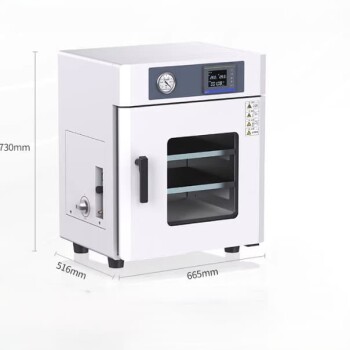
- 56L Vertical Laboratory Vacuum Drying Oven
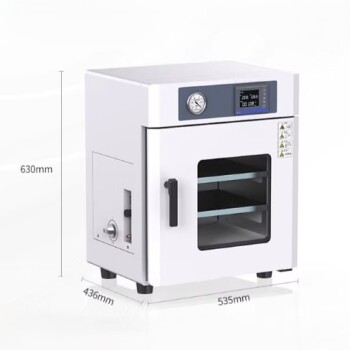
- 23L Laboratory Vacuum Drying Oven
- Laboratory Scientific Electric Heating Blast Drying Oven
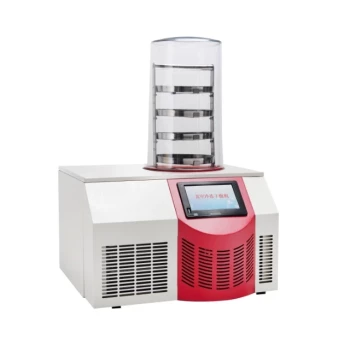
- Benchtop Laboratory Vacuum Freeze Dryer
- Vacuum Heat Treat Sintering Brazing Furnace
People Also Ask
- Why is a laboratory vacuum drying oven recommended for rice straw residues? Protect Your Biomass Integrity
- What role does a laboratory vacuum drying oven play in the preparation of modified multi-walled carbon nanotubes?
- What is the importance of using a laboratory vacuum drying oven? Preserving Slow-Release Microcapsule Integrity
- Why is a Laboratory Vacuum Drying Oven recommended for PBAT microspheres? Protect Sensitive Polymer Integrity
- What role does a laboratory vacuum drying oven play in processing nanoparticle powder samples? Protect Sample Integrity