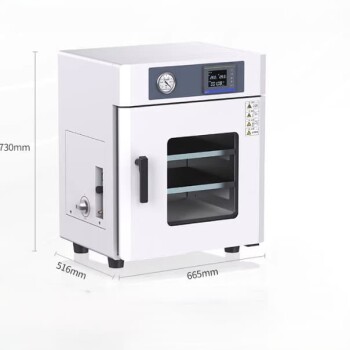
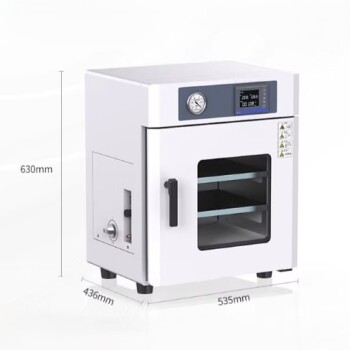
The primary function of a vacuum drying oven in this context is to thoroughly eliminate absorbed moisture from Norem02 iron-based alloy powder by heating it at 120 °C for several hours. This pretreatment is essential to ensure the powder flows smoothly during automatic feeding and to prevent moisture-induced defects—such as bubbles and pores—from compromising the density and structural integrity of the final laser-cladded coating.
Core Takeaway Laser cladding is highly sensitive to contaminants; even trace amounts of moisture within the powder feedstock can vaporize instantly under the laser, causing catastrophic porosity. Vacuum drying mitigates this risk entirely, transforming a variable raw material into a stable, high-flow feedstock capable of producing dense, defect-free coatings.
Optimizing Physical Properties for Processing
Before the powder ever reaches the laser, it must travel through a feeding system. The physical state of the powder dictates the success of this transport.
Enhancing Powder Flowability
Raw metal powders, including Norem02, have a tendency to adsorb ambient humidity. This moisture creates capillary forces between particles, causing them to clump or agglomerate.
Vacuum drying removes this moisture, breaking the capillary bridges. The result is a free-flowing powder that behaves consistently. This is critical for automatic feeding systems, which rely on uniform flow rates to ensure the cladding layer is deposited evenly.
Prevention of Feed Line Clogging
Moist powder is sticky and prone to bridging or clogging within the hopper or delivery nozzles. A blockage during a laser cladding operation causes inconsistent deposition or forces a complete production shutdown.
By ensuring the powder is chemically dry, you guarantee uninterrupted operation and consistent material delivery to the melt pool.
Ensuring Metallurgical Integrity
The most critical impact of vacuum drying occurs at the point of laser interaction. The high energy of the laser creates a specific set of risks if water is present.
Eliminating Porosity and Bubbles
When the laser beam hits moist powder, any trapped water instantly turns into steam. Because the melting process happens rapidly, this gas often gets trapped within the solidifying metal.
This results in bubbles or pores inside the cladding layer. These voids act as stress concentrators, significantly weakening the mechanical strength and fatigue resistance of the Norem02 coating.
Preventing Splashing and Oxidation
While the primary reference highlights porosity, the physics of laser processing suggests further benefits. Rapid vaporization of moisture can cause the melt pool to "splash" or eject material, leading to surface roughness.
Furthermore, at laser temperatures, water molecules can dissociate into hydrogen and oxygen. Removing moisture minimizes the risk of internal oxidation or hydrogen embrittlement, ensuring the final coating maintains its intended chemical composition and density.
Common Pitfalls and Operational Trade-offs
While vacuum drying is beneficial, it introduces specific operational constraints that must be managed.
Storage Sensitivity Post-Drying
Once Norem02 powder has been dried, it becomes highly hygroscopic (water-absorbing). If left exposed to air after the drying cycle, it will rapidly re-absorb moisture, negating the pretreatment.
Dried powder must be used immediately or stored in a sealed, desiccated environment to maintain its "dry" state.
Process Time and Throughput
Vacuum drying at 120 °C takes several hours. This adds a significant time buffer to the production workflow.
Operators must plan for this latency. Attempting to speed up the process by raising temperatures excessively could lead to powder sintering or oxidation, while shortening the time may leave residual moisture deep within the particle pores.
Making the Right Choice for Your Goal
Whether you are optimizing for speed or absolute quality, understanding the role of vacuum drying allows you to make informed decisions.
- If your primary focus is Coating Density: Prioritize the duration of the drying cycle; ensuring zero moisture is the only way to guarantee a pore-free microstructure.
- If your primary focus is Process Stability: Focus on the flowability benefits; drying ensures your automatic feeders run without jamming or surging.
- If your primary focus is Surface Finish: Ensure the powder is dried to prevent the "splashing" caused by rapid steam expansion in the melt pool.
By strictly adhering to the vacuum drying protocol, you convert the uncertainty of raw powder into the reliability required for high-performance engineering components.
Summary Table:
| Feature | Impact of Vacuum Drying on Norem02 Powder | Benefit to Laser Cladding |
|---|---|---|
| Moisture Content | Eliminates absorbed water & prevents steam formation | Prevents bubbles, pores, and internal oxidation |
| Flowability | Removes capillary forces between particles | Ensures consistent, clog-free automatic powder feeding |
| Structural Integrity | Guarantees high-density solidification | Enhances mechanical strength and fatigue resistance |
| Surface Quality | Prevents melt pool splashing | Produces a smooth, uniform, and precise coating layer |
Elevate Your Material Processing with KINTEK Precision
Don't let moisture compromise your laser cladding integrity. KINTEK specializes in high-performance laboratory equipment designed for the most demanding research and industrial applications. Our advanced vacuum drying ovens and high-temperature furnaces ensure your powders, like Norem02, achieve the perfect physical state for defect-free results.
From crushing and milling systems to high-pressure reactors and battery research tools, KINTEK provides the comprehensive toolkit you need for metallurgical excellence.
Ready to eliminate porosity and optimize your workflow? Contact our experts today to find the ideal thermal solution for your lab!
References
- Zixue Wang, Yonghao Lu. Microstructure and Properties of Electromagnetic Field-Assisted Laser-Clad Norem02 Iron-Based Cemented Carbide Coating. DOI: 10.3390/ma16206774
This article is also based on technical information from Kintek Solution Knowledge Base .
Related Products
- 56L Vertical Laboratory Vacuum Drying Oven
- 23L Laboratory Vacuum Drying Oven
- Laboratory Scientific Electric Heating Blast Drying Oven
- Benchtop Laboratory Vacuum Freeze Dryer
- Dental Porcelain Zirconia Sintering Ceramic Vacuum Press Furnace
People Also Ask
- Why is a laboratory vacuum drying oven recommended for rice straw residues? Protect Your Biomass Integrity
- What role does a laboratory vacuum drying oven play in the preparation of modified multi-walled carbon nanotubes?
- What is the importance of using a laboratory vacuum drying oven? Preserving Slow-Release Microcapsule Integrity
- Why is a Laboratory Vacuum Drying Oven recommended for PBAT microspheres? Protect Sensitive Polymer Integrity
- What role does a laboratory vacuum drying oven play in processing nanoparticle powder samples? Protect Sample Integrity