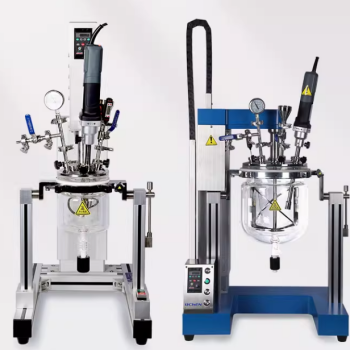
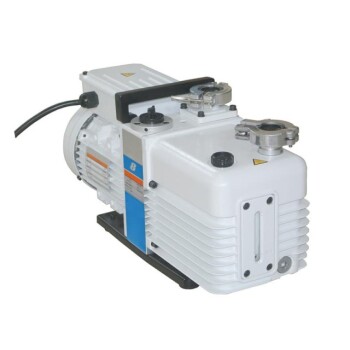
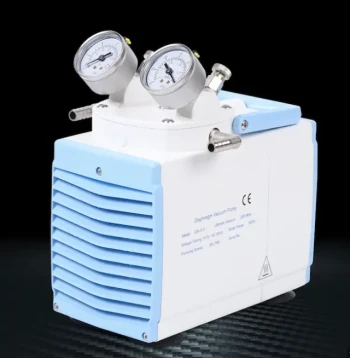
Using a vacuum reaction device is essential because it eliminates air interference, allowing gaseous silane to penetrate the complex, deep-pore structures of the natural fiber GDL. This environment ensures that the coupling agent can diffuse uniformly throughout the material, reacting with residual oxygen-based groups on the carbonized fibers to form strong covalent bonds without clogging the pores.
Core Takeaway: A vacuum environment is the critical "enabler" for gas-phase silanization; it removes physical barriers (air) to allow uniform chemical modification of deep internal surfaces while preserving the material's essential porosity.
The Mechanics of Deep-Pore Penetration
Eliminating Air Interference
Natural fiber gas diffusion layers (GDL) possess intricate, multi-scale pore structures that easily trap ambient air. In a standard pressure environment, this trapped air acts as a physical barrier, preventing gaseous silane molecules from reaching the innermost surfaces of the fiber network.
Facilitating Uniform Diffusion
By creating a vacuum, you remove these air pockets, allowing the silane coupling agent to move freely through the entire volume of the material. This results in a uniform hydrophobic treatment that covers both the exterior surface and the deep internal pores of the GDL.
Managing Surface Defects
Similar to vacuum-based diffusion bonding, a reduced-pressure environment helps manage tiny surface defects and ensures that the reactant gas has direct, unobstructed access to the fiber's surface. This is vital for achieving a consistent chemical reaction across the heterogeneous surface of carbonized natural fibers.
Chemical Bonding and Surface Integrity
Optimizing Covalent Bond Formation
The silanization process relies on gaseous silane molecules reacting with residual oxygen-based groups found on the surface of carbonized natural fibers. A vacuum ensures that these reaction sites are not shielded by air molecules, facilitating the formation of robust covalent bonds.
Achieving Superhydrophobicity
This deep-level chemical modification transforms the fiber surface to be superhydrophobic. Because the reaction occurs at the molecular level through gas-phase deposition, it provides comprehensive protection against water accumulation within the GDL.
Preserving Material Porosity
One of the primary advantages of gas-phase silanization in a vacuum is that it achieves modification without significantly reducing the material's porosity. Unlike liquid coatings that can "flood" and block pores, the vacuum-assisted gas phase only modifies the surface, leaving the gas transport pathways open.
Process Safety and Resource Efficiency
Recovery of Unreacted Reagents
A vacuum reaction system allows for the efficient recovery of unreacted residual gases once the silanization process is complete. This is similar to the xanthation process, where vacuum systems assist in capturing excess chemicals like carbon disulfide for reuse or safe disposal.
Ensuring Production Safety
By operating in a closed, reduced-pressure environment, the risk of hazardous silane vapors escaping into the production area is minimized. This creates a safer working environment and reduces the overall environmental footprint of the manufacturing process.
Understanding the Trade-offs
Equipment Complexity and Cost
Implementing a vacuum reaction device requires a significant upfront investment in specialized hardware, including vacuum pumps, pressure-rated vessels, and high-quality seals. Maintenance of these systems is more demanding than atmospheric-pressure alternatives.
Batch Processing Limitations
Vacuum-based silanization is typically a batch process, which can lead to lower throughput compared to continuous atmospheric treatment methods. Achieving the necessary vacuum level for each cycle adds "dwell time" to the overall production schedule.
Requirement for Precise Control
The effectiveness of the treatment depends heavily on the precision of the vacuum level and the dosage of the silane agent. Small leaks or fluctuations in pressure can lead to uneven treatment, potentially compromising the performance of the GDL in a fuel cell.
How to Apply This to Your Project
Recommendations for Implementation
- If your primary focus is Maximum Performance: Prioritize the use of a high-vacuum reaction device to ensure the deepest possible penetration and the most uniform superhydrophobic coating.
- If your primary focus is High-Volume Production: Consider a multi-chamber vacuum system that allows for loading and unloading while other chambers are under vacuum to minimize downtime.
- If your primary focus is Material Longevity: Ensure the vacuum system is capable of precise temperature control, as the covalent bonding of silane is often enhanced by specific thermal conditions during the vacuum phase.
By leveraging a vacuum environment, you ensure that your natural fiber GDL achieves the critical balance of high hydrophobicity and high gas permeability required for advanced electrochemical applications.
Summary Table:
| Feature | Vacuum Reaction Benefit | Impact on GDL Performance |
|---|---|---|
| Air Interference | Eliminates trapped air in deep pores | Ensures 100% surface coverage and modification |
| Diffusion | Facilitates free movement of gaseous silane | Achieving uniform superhydrophobicity throughout |
| Pore Integrity | Gas-phase deposition avoids liquid "flooding" | Preserves high gas permeability for fuel cells |
| Chemical Bond | Direct access to oxygen-based groups | Forms robust, long-lasting covalent bonds |
| Safety | Closed, reduced-pressure environment | Minimizes hazardous vapor escape and enables recovery |
Elevate Your Material Research with KINTEK Precision
Achieving the perfect superhydrophobic coating on natural fiber GDLs requires uncompromising vacuum integrity and precise control. KINTEK specializes in advanced laboratory solutions, offering high-performance high-temperature high-pressure reactors, autoclaves, and vacuum systems specifically designed for demanding gas-phase chemical modifications.
Whether you are scaling up fuel cell component production or optimizing lab-scale silanization, our team provides the equipment and expertise to ensure material consistency and process safety.
Ready to optimize your GDL modification process? Contact a KINTEK Specialist Today
References
- D.P. Leonard, Rodney L. Borup. Natural fiber-derived gas diffusion layers for high performance, lower cost PEM fuel cells. DOI: 10.1016/j.jpowsour.2022.232619
This article is also based on technical information from Kintek Solution Knowledge Base .
Related Products
- Vacuum Cold Mounting Machine for Sample Preparation
- Electric Heated Hydraulic Vacuum Heat Press for Lab
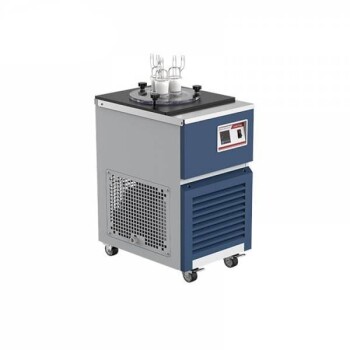
- Vacuum Cold Trap Chiller Indirect Cold Trap Chiller
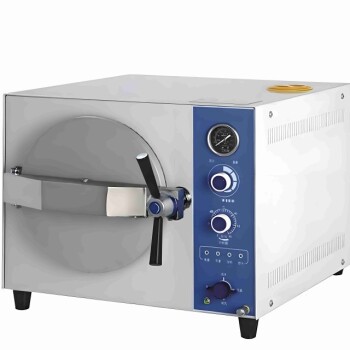
- Laboratory Sterilizer Lab Autoclave Pulsating Vacuum Desktop Steam Sterilizer
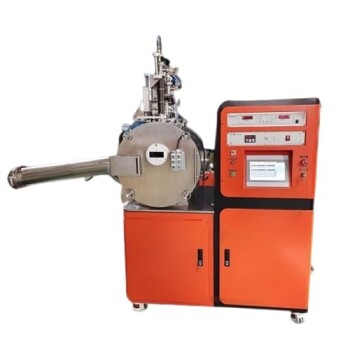
- Vacuum Induction Melting Spinning System Arc Melting Furnace
People Also Ask
- What is the purpose of sample preparation? Ensure Accurate & Reliable Analytical Results
- What sample preparation methods are used in labs? Master the Critical First Step for Reliable Analysis
- What is a vacuum press machine? Harness Atmospheric Pressure for Perfect Lamination
- What role does vacuum impregnation play with high-viscosity ionic liquids? Enhance Your Battery Performance Today
- What can you do with a vacuum press? Achieve Flawless Lamination and Clamping